174mm R4 Lower Bending Blade for Flexible Panel Bender
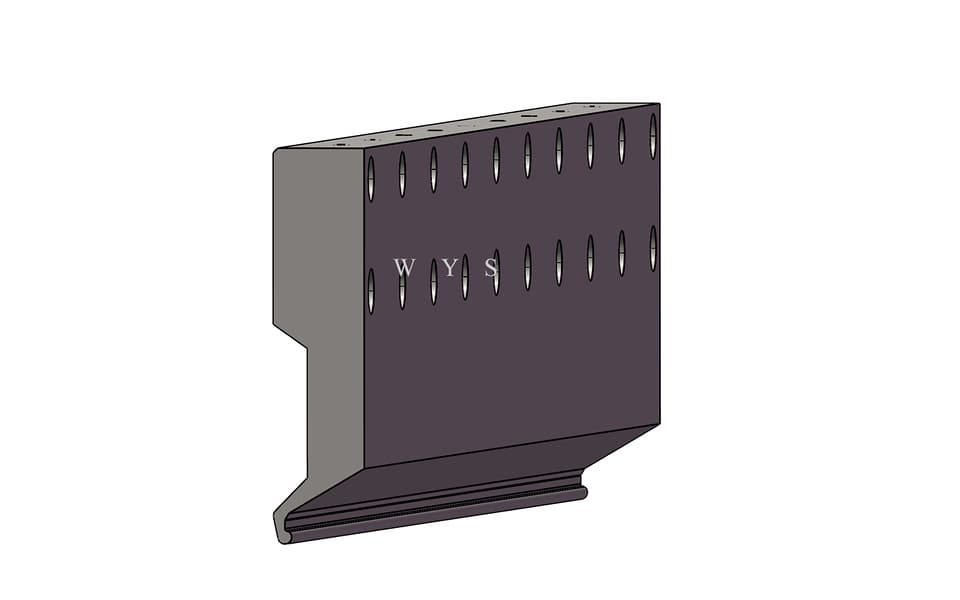
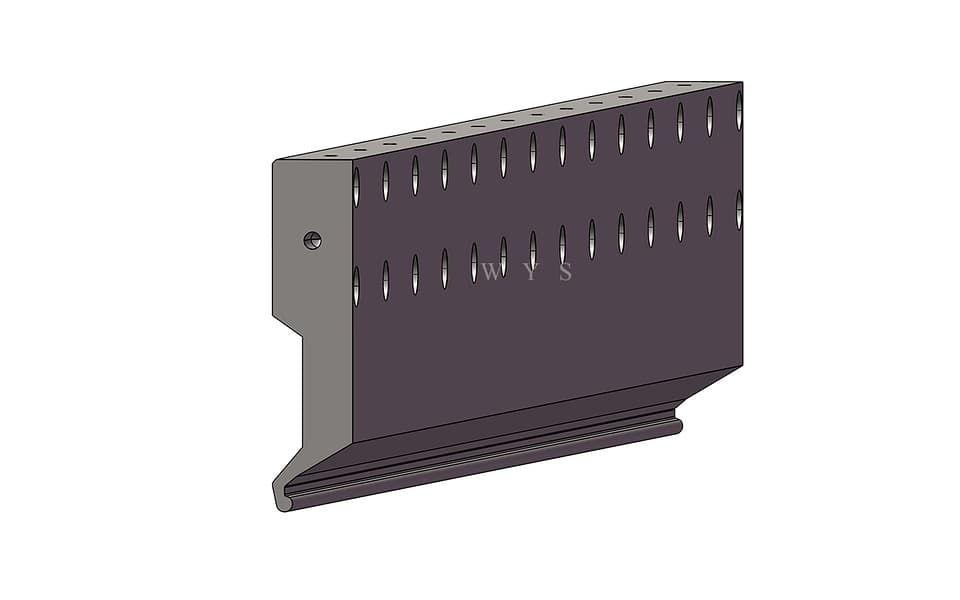
This 174 mm high R4 lower bending blade is designed for flexible panel benders and automated sheet metal bending centers. Its 1400 mm continuous length supports long-panel and extended bending-line applications, while the offset lower profile and R4 working edge provide controlled contact during upward bending. Manufactured from 42CrMo alloy steel and through-hardened to HRC46–52, the blade delivers reliable strength, dimensional stability and working-edge durability.
Please add the quotation and send it to us and get in touch with us immediately
- Global service 24/7
- Lowest price for all products
- Best quality with Production Process
- After-Sale Warranty
- Technical Support
Description
The 174mm R4 Lower Bending Blade is a precision long-format tool designed for flexible panel benders and CNC panel bending centers. Installed in the lower bending position, it approaches the projecting sheet flange from below and follows the programmed machine trajectory to produce controlled upward bends.
This panel bender lower blade has an overall height of 174 mm and a maximum width of 40 mm. The lower working section narrows to 25 mm and incorporates an offset profile that creates additional clearance around the bending zone. Its precision-machined R4 working edge provides smooth and stable contact with the underside of the sheet during forming.
With a continuous length of 1400 mm, the blade is suitable for processing longer panels, doors, cabinets, enclosures and industrial sheet metal components. Accurate straightness, parallelism and working-edge consistency are particularly important for maintaining uniform bending performance across this extended tool length.
The complete blade is manufactured from 42CrMo alloy steel, overall quenched and through-hardened to HRC46–52. This combination provides a reliable balance of structural strength, toughness, dimensional stability and resistance to repeated working-edge contact.
WYS Machinery can manufacture standard and customized lower bending blades according to original tooling drawings, machine-interface dimensions, physical samples or customer workpiece requirements.
Key Features
- Precision lower bending blade for flexible panel benders
- Overall tool height of 174 mm
- Maximum tool width of 40 mm
- Reduced lower section width of 25 mm
- Precision-machined R4 working radius
- Long continuous tool length of 1400 mm
- Designed for controlled upward sheet metal bending
- Offset working profile provides clearance around the bending zone
- Manufactured from 42CrMo alloy steel
- Overall quenched and through-hardened
- Finished hardness of HRC46–52
- Multiple mounting holes provide secure installation and alignment
- Suitable for long panels and extended bending lines
- Available as replacement or custom panel bender tooling
- Custom lengths, profiles, radii and hole patterns available
Technical Specifications
| Specification | Value |
|---|---|
| Product Type | Lower Bending Blade |
| Tooling Category | Panel Bender Tooling |
| Application | Flexible Panel Bender / CNC Panel Bending Center |
| Overall Height | 174 mm |
| Maximum Tool Width | 40 mm |
| Reduced Section Width | 25 mm |
| Working Radius | R4 |
| Standard Length | 1400 mm |
| Material | 42CrMo Alloy Steel |
| Heat Treatment | Overall Quenching / Through-Hardening |
| Hardness | HRC46–52 |
| Installation Position | Lower Bending Position |
| Typical Bending Direction | Upward Bending |
| Mounting Method | Multiple Mounting Holes |
| Construction | Long Continuous Blade |
| Custom Dimensions | Available |
| Custom Mounting Interface | Available |
| Machine Compatibility | According to Confirmed Interface Dimensions |
Function and Working Principle
During a typical panel bending cycle, the sheet metal is positioned between the upper blankholder and fixed counterblade. The blankholder secures the material against the counterblade and establishes the programmed bending line.
The lower bending blade then approaches the projecting flange from below. Instead of moving only vertically like conventional press brake tooling, it follows a CNC-controlled trajectory around the clamped edge of the sheet. This movement lifts and forms the flange to the required angle.
The lower blade works together with the other core panel bender tools:
| Tooling Component | Main Function |
|---|---|
| Blankholder Tool | Clamps and positions the sheet from above |
| Counterblade | Provides fixed lower support and bending reference |
| Upper Bending Blade | Produces controlled downward bends |
| Lower Bending Blade | Produces controlled upward bends |
| Special Panel Bender Tools | Support special clearance and forming requirements |
The coordinated use of upper and lower bending blades allows positive and negative bends to be produced without repeatedly turning the entire panel.
Difference Between a Lower Bending Blade and Counterblade
Although both components are positioned below or close to the sheet, they perform different functions.
The counterblade remains the fixed lower support that works with the blankholder to secure the sheet. The lower bending blade is the moving working tool that contacts the projecting flange from below and performs the upward bending movement.
Using accurate product terminology helps customers distinguish between:
- Lower bending blades
- Counterblades
- Lower support tools
- Blankholder tools
- Conventional press brake lower dies
A lower panel bender blade should not be described as a V-die because it does not use a conventional V-opening to form the sheet.
R4 Working Radius
The R4 rounded working edge provides a broader and smoother contact profile than a smaller-radius blade. As the blade follows its programmed trajectory, the R4 edge transfers forming force to the underside of the sheet.
The R4 profile can help provide:
- Smooth engagement with the sheet
- Controlled contact during upward bending
- Reduced concentration of pressure at the working edge
- Stable force transmission along the bending line
- Consistent operation over the 1400 mm length
- Suitability for applications requiring a larger blade radius
The final workpiece radius is also influenced by sheet thickness, material properties, clamping position, blade path and machine settings. An R4 tool edge does not automatically guarantee an R4 finished internal radius.
Alternative working radii can be produced according to customer drawings and actual forming requirements.
Offset Lower Working Profile
The lower section narrows to 25 mm and bends outward toward the R4 working edge. This offset geometry positions the working radius correctly beneath the sheet while providing clearance between the blade body and surrounding workpiece geometry.
The offset profile can help:
- Reduce interference near the forming area
- Provide clearance for the projecting flange
- Accommodate the programmed lower-blade trajectory
- Improve access around partially formed panels
- Support the production of cabinets and box-shaped components
- Maintain structural strength through the 40 mm upper body
WYS can customize the lower profile when the machine installation or finished component requires different clearance.
1400mm Long Continuous Blade
The 1400 mm continuous length supports long bending lines and larger sheet metal components. A one-piece blade eliminates intermediate joints across the working length and provides a continuous R4 contact edge.
Important quality requirements for a long lower bending blade include:
- Consistent overall height
- Accurate straightness
- Uniform R4 edge geometry
- Parallel mounting surfaces
- Correct mounting-hole positions
- Controlled heat-treatment deformation
- Reliable machine alignment
Alternative continuous lengths, matched sections and segmented blade sets can be supplied according to the machine configuration.
42CrMo Material and Heat Treatment
This lower bending blade is manufactured from 42CrMo alloy steel, selected for its strength, toughness and resistance to repeated mechanical loading.
The complete tool undergoes overall quenching and through-hardening to HRC46–52. Controlled heat treatment helps provide:
- Consistent hardness throughout the tool body
- Reliable resistance to repeated bending loads
- Improved working-edge wear resistance
- Stable mounting and working geometry
- Resistance to unwanted deformation
- A suitable balance between hardness and toughness
Heat-treatment control is particularly important for the 1400 mm continuous construction because excessive distortion could affect straightness and working-edge alignment.
Typical Applications
This R4 lower bending blade can support the production of:
- Electrical cabinets and control enclosures
- Long switchgear panels
- Elevator doors and interior panels
- Metal doors and frames
- HVAC and ventilation panels
- Server and communication cabinets
- Industrial equipment covers
- Storage cabinets and shelving
- Stainless steel kitchen equipment
- Appliance panels and housings
- Lighting enclosures
- Metal furniture components
- Long box-shaped sheet metal parts
- Multi-sided panels
- Precision sheet metal enclosures
- Custom industrial panels and profiles
Actual forming capability depends on the panel bender model, sheet material, material thickness, flange geometry, tooling configuration and programmed blade trajectory.
Product Details and Manufacturing Quality
Each lower bending blade can be manufactured according to an original technical drawing, physical sample or confirmed machine-interface data.
The manufacturing and inspection process may include:
- 42CrMo raw-material verification
- CNC profile machining
- Precision mounting-hole machining
- Controlled overall quenching
- Through-hardening
- Precision machining after heat treatment
- R4 working-radius inspection
- Overall height and width verification
- Reduced-section inspection
- Mounting-hole position verification
- Straightness inspection
- Parallelism inspection
- Working-edge consistency inspection
- Final dimensional and visual inspection
For a continuous 1400 mm blade, straightness and uniform working-edge geometry receive particular attention during production and final inspection.
Replacement Lower Bending Blades
This product can be supplied as a replacement lower blade for flexible panel benders and automated sheet metal bending centers with a corresponding mounting interface.
To confirm machine compatibility, customers should provide:
- Machine brand and model
- Original lower blade drawing
- Machine-interface drawing
- Existing tooling dimensions
- Mounting-hole pattern
- Physical tooling sample
- Installation photographs
- Required working length
- Finished workpiece drawing
Compatibility should be determined from the actual blade profile and interface dimensions rather than assumed from the machine brand alone.
Standard and Custom Panel Bender Tooling
WYS Machinery manufactures complete tooling solutions for flexible panel benders and CNC panel bending centers, including:
- Blankholder tools
- Counterblades
- Upper bending blades
- Lower bending blades
- Long continuous bending blades
- Matched upper and lower blade sets
- Segmented panel bender tools
- Special panel bender tooling
- Custom replacement tools
Available customization options include:
- Overall blade height
- Maximum width
- Reduced-section width
- Working radius
- Offset working profile
- Continuous tool length
- Segmented construction
- Mounting-hole quantity and position
- Machine installation interface
- Heat-treatment requirements
- Surface treatment
- Special clearance geometry
Customers can provide original tooling drawings, physical samples or finished sheet metal component drawings. WYS offers free tooling evaluation and design support to develop an appropriate panel bending solution.
Matched Upper and Lower R4 Blade Set
This lower blade can work as part of a matched tooling combination with the corresponding 174mm R4 Upper Bending Blade.
Using coordinated upper and lower blade profiles helps establish a complete tooling solution for:
- Upward and downward bending
- Long panel production
- Positive and negative flange forming
- Extended 1400 mm bending lines
- Replacement of worn upper and lower tools
- Customized flexible panel bender applications
Mounting interfaces, working positions and blade trajectories should be confirmed before producing a matched set.
Why Choose WYS Panel Bender Tooling
- Panel bender tools manufactured from drawings or samples
- 42CrMo alloy steel construction
- Controlled overall quenching and through-hardening
- Precision-machined R4 working edge
- Experience manufacturing long continuous blades
- Custom hole patterns and machine interfaces
- Continuous and segmented tool options
- Matched upper and lower bending blade sets
- Free tooling evaluation and design support
- Dimensional inspection before delivery
- Protective packaging for long industrial tooling
Frequently Asked Questions
What is a lower bending blade on a panel bender?
A lower bending blade is the moving tool installed in the lower bending position. It contacts the projecting sheet flange from below and follows a programmed trajectory to perform an upward bend.
Is a lower bending blade the same as a counterblade?
No. The counterblade provides fixed lower support. The lower bending blade moves against the sheet to perform the forming operation.
Is this product a press brake lower die?
No. A press brake lower die normally uses a V-opening. A panel bender lower blade follows a controlled trajectory around the sheet edge.
What is the working radius of this blade?
This model has an R4 working edge. Other radii can be manufactured according to customer drawings and forming requirements.
Does an R4 blade always produce an R4 finished bend radius?
No. The final radius also depends on the sheet material, thickness, clamping position, machine program and blade trajectory.
What is the advantage of the 1400 mm continuous length?
It provides an uninterrupted working edge for long bending lines and larger sheet metal panels.
Can this lower blade be matched with an upper blade?
Yes. It can form a matched tooling set with the corresponding 174 mm high, 1400 mm long R4 upper bending blade, subject to confirmation of the machine interface.
What material and hardness are used?
The blade is manufactured from 42CrMo alloy steel, overall quenched and through-hardened to HRC46–52.
Can the blade dimensions and mounting holes be customized?
Yes. Height, width, profile, working radius, length, mounting holes and machine interface can be customized.