Press Brake Protective Bending Film for Mark-Free Sheet Metal Bending
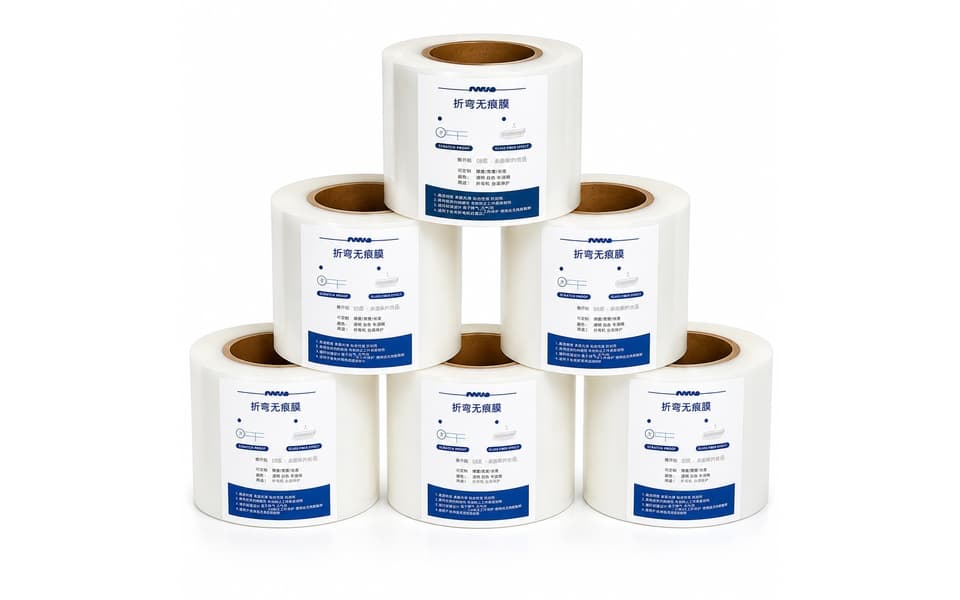
Press Brake Protective Bending Film is designed to be placed between the sheet metal workpiece and the lower press brake die during bending. It creates a flexible protective barrier that helps reduce scratches, die marks and surface damage caused by sliding friction between the sheet and tooling. It is especially suitable for bending stainless steel, aluminum, polished sheet, pre-painted metal and other surface-sensitive materials. Multiple widths, thicknesses and roll lengths are available to suit different V-dies and bending applications.
Please add the quotation and send it to us and get in touch with us immediately
- Global service 24/7
- Lowest price for all products
- Best quality with Production Process
- After-Sale Warranty
- Technical Support
Description
Press Brake Protective Bending Film for Scratch-Free and Mark-Free Bending
During press brake bending, the sheet metal moves and slides across the shoulders of the lower V-die as it is formed. This contact can leave scratches, friction marks, indentations or die witness marks on the workpiece surface.
The problem is particularly noticeable when bending stainless steel, brushed stainless steel, polished sheet metal, aluminum or pre-painted materials, where surface appearance is an important part of the finished product.
Our Press Brake Protective Bending Film is designed to be positioned between the workpiece and the lower die, creating a physical barrier between the metal sheet and the press brake tooling.
The film helps prevent direct metal-to-tool contact and reduces friction-related surface damage during bending. Protective bending films are widely used for this purpose in applications where cosmetic surface quality is important.
How Press Brake Protective Film Works
During air bending, the sheet contacts the shoulders of the lower die and moves slightly as the punch continues downward.
Without protection, this movement can cause the underside of the workpiece to rub directly against the die shoulders.
The press brake protective film is laid over the lower die before the workpiece is positioned. During bending, the film separates the sheet surface from the die and moves with the workpiece, helping reduce:
- Scratches
- Die witness marks
- Friction marks
- Surface scuffing
- Cosmetic damage to polished or finished sheets
It is a simple solution for achieving cleaner bending surfaces without changing the basic punch and die configuration.
Ideal for Stainless Steel Bending
Stainless steel is one of the most common applications for mark-free bending film.
Brushed, polished and mirror-finished stainless steel surfaces can reveal even minor scratches or tooling marks after bending. Industry guidance therefore commonly recommends an intermediate protective layer when appearance requirements are high.
By placing the bending film over the lower die, direct friction between the stainless steel and die shoulders is reduced, helping preserve the original surface finish of the workpiece.
Suitable Materials
The protective film can be used when bending a variety of surface-sensitive sheet materials, including:
Stainless Steel
Particularly suitable for brushed, decorative and polished stainless steel products.
Aluminum
Helps reduce scratches on softer aluminum surfaces during bending.
Pre-Painted Sheet Metal
Provides an additional barrier between coated surfaces and the lower die.
Polished or Decorative Sheet
Suitable for components where appearance is critical after forming.
Carbon Steel with Surface Finish Requirements
Can also be used where conventional sheet steel must be bent with minimal tooling marks.
Comparable mark-free bending films are also marketed for stainless steel, aluminum, carbon steel and pre-painted materials.
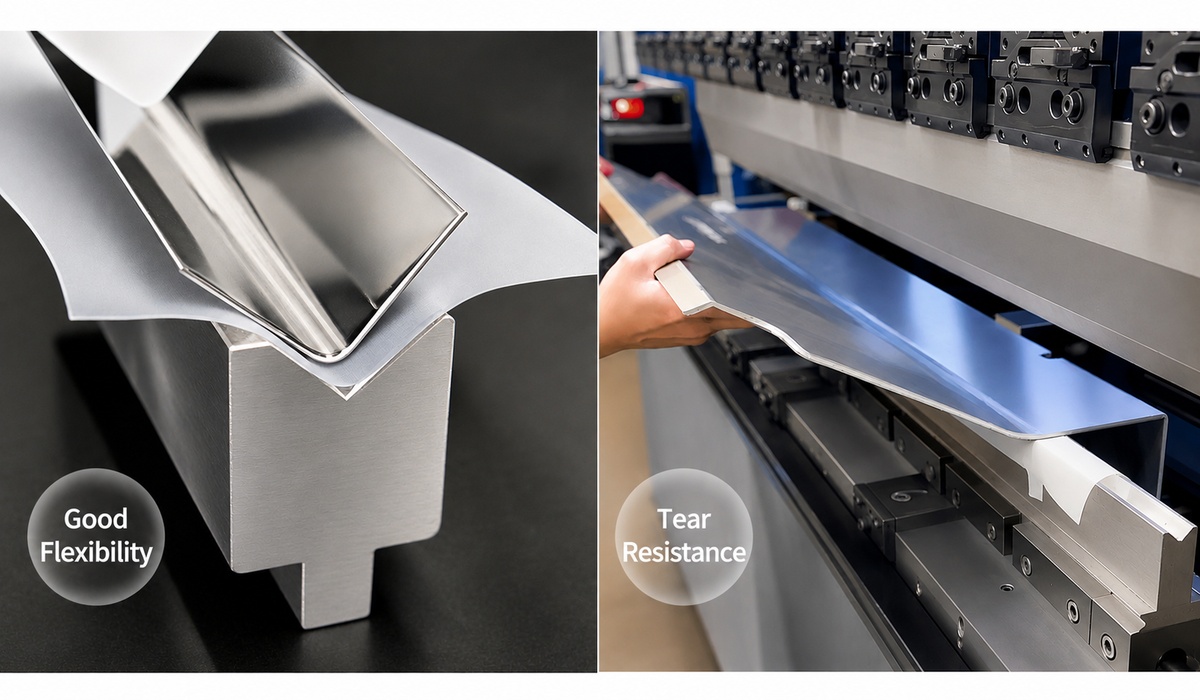
Good Flexibility for Bending Operations
The film is flexible enough to follow the sheet as it enters the V-opening during the bending cycle.
This flexibility allows the protective layer to conform to the tooling contact area without significantly interfering with normal bending operations when an appropriate film thickness is selected.
Tear and Wear Resistance
Press brake bending subjects the film to repeated pressure and sliding contact around the shoulders of the lower die.
The film is therefore designed with a balance of flexibility, toughness and tear resistance to withstand normal bending operations.
Depending on bending pressure, tooling condition, sheet material and application, the film may be reused for multiple bends before replacement or repositioning is required. Reusability is also a common characteristic of commercial die-protection films.
Helps Reduce Secondary Surface Treatment
When scratches or die marks appear on decorative stainless steel parts, manufacturers may need to perform additional grinding, polishing or reworking after bending.
Using press brake die protection film can help reduce these surface defects and therefore reduce unnecessary finishing or rework.
This is particularly valuable for:
decorative stainless steel panels, electrical cabinets, elevator components, kitchen equipment, architectural metalwork, display products and other sheet metal components where the finished surface remains visible.
Available Sizes
0.5 mm Thickness
| Width | Length | Thickness |
|---|---|---|
| 80 mm | 30 m | 0.5 mm |
| 100 mm | 30 m | 0.5 mm |
| 110 mm | 30 m | 0.5 mm |
| 120 mm | 30 m | 0.5 mm |
| 150 mm | 30 m | 0.5 mm |
| 180 mm | 30 m | 0.5 mm |
| 200 mm | 30 m | 0.5 mm |
| 100 mm | 50 m | 0.5 mm |
| 110 mm | 50 m | 0.5 mm |
0.8 mm Thickness
| Width | Length | Thickness |
|---|---|---|
| 80 mm | 1 m | 0.8 mm |
| 110 mm | 1 m | 0.8 mm |
| 120 mm | 1 m | 0.8 mm |
| 150 mm | 1 m | 0.8 mm |
| 180 mm | 1 m | 0.8 mm |
| 200 mm | 1 m | 0.8 mm |
| 80 mm | 5 m | 0.8 mm |
| 110 mm | 5 m | 0.8 mm |
| 120 mm | 5 m | 0.8 mm |
| 150 mm | 5 m | 0.8 mm |
| 180 mm | 5 m | 0.8 mm |
| 200 mm | 5 m | 0.8 mm |
1.0 mm Thickness
| Width | Length | Thickness |
|---|---|---|
| 110 mm | 1 m | 1.0 mm |
| 120 mm | 1 m | 1.0 mm |
| 150 mm | 1 m | 1.0 mm |
| 180 mm | 1 m | 1.0 mm |
| 200 mm | 1 m | 1.0 mm |
| 110 mm | 5 m | 1.0 mm |
| 150 mm | 5 m | 1.0 mm |
0.3 mm Thickness
| Width | Length | Thickness |
|---|---|---|
| 100 mm | 2 m | 0.3 mm |
| 120 mm | 2 m | 0.3 mm |
| 150 mm | 2 m | 0.3 mm |
| 180 mm | 2 m | 0.3 mm |
| 200 mm | 2 m | 0.3 mm |
| 120 mm | 10 m | 0.3 mm |
| 150 mm | 10 m | 0.3 mm |
| 180 mm | 10 m | 0.3 mm |
Note: Available widths, thicknesses and roll lengths may be supplied according to production requirements. Please confirm the required size before ordering.
Key Features
Protects Sheet Metal Surfaces
Creates a protective barrier between the workpiece and lower die to reduce scratching and tooling marks.
Designed for Mark-Free Bending
Ideal for applications where finished surface appearance is important.
Excellent for Stainless Steel
Particularly useful when bending brushed, polished or decorative stainless steel sheets.
Good Flexibility
Conforms naturally to the sheet and lower die during the bending process.
Good Tear Resistance
Designed to withstand pressure and sliding contact during repeated bending operations.
Multiple Sizes Available
Different widths, lengths and thicknesses are available for various press brake dies and bending requirements.
Easy to Use
Simply place the film over the lower die between the tooling and workpiece before bending.
Reduces Rework
Helps minimize polishing and surface finishing caused by bending scratches or die marks.
Typical Applications
Suitable applications include:
Stainless steel sheet bending, brushed stainless steel products, polished sheet metal components, aluminum sheet bending, pre-painted metal panels, decorative metal products, electrical cabinets, kitchen equipment, elevator panels, architectural metalwork and other non-marking press brake bending applications.
How to Use
Place the protective bending film over the lower press brake die, covering the die shoulders and V-opening.
Position the sheet metal workpiece on top of the film and perform the normal bending operation.
As the material enters the V-die, the film remains between the sheet and tooling contact surfaces, reducing direct friction.
For continuous production, inspect the film regularly and reposition or replace it once significant wear, cutting or tearing is visible.
Commercial suppliers describe essentially the same usage method: the film is cut to the required length and positioned over the lower die before forming.