TRUMPF Type Size I Emboss Forming Tooling
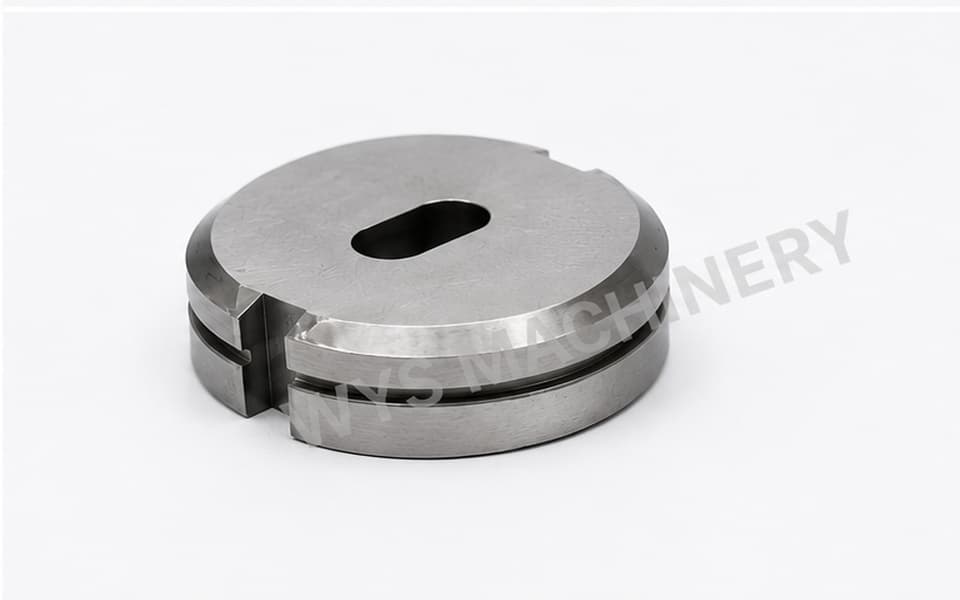
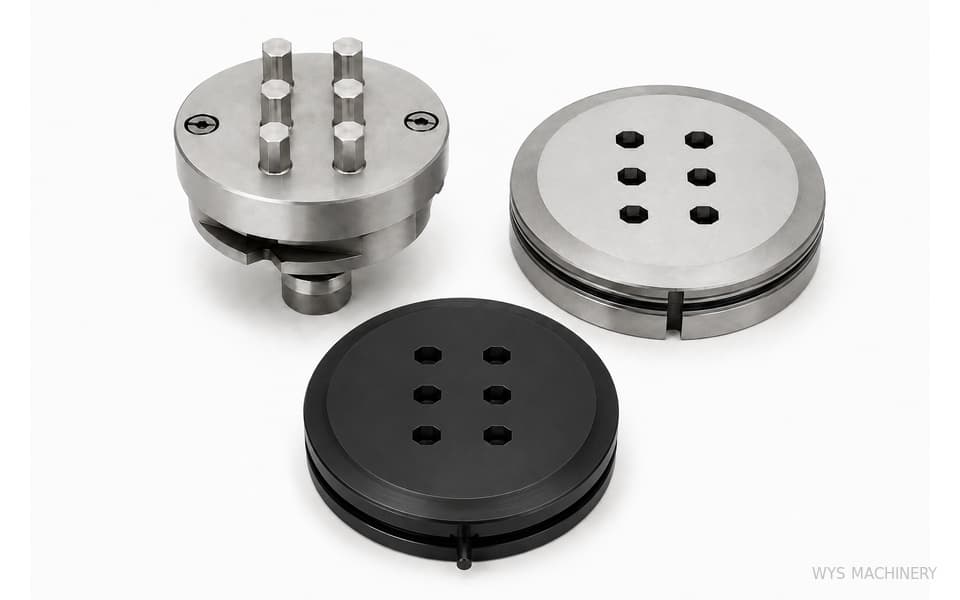
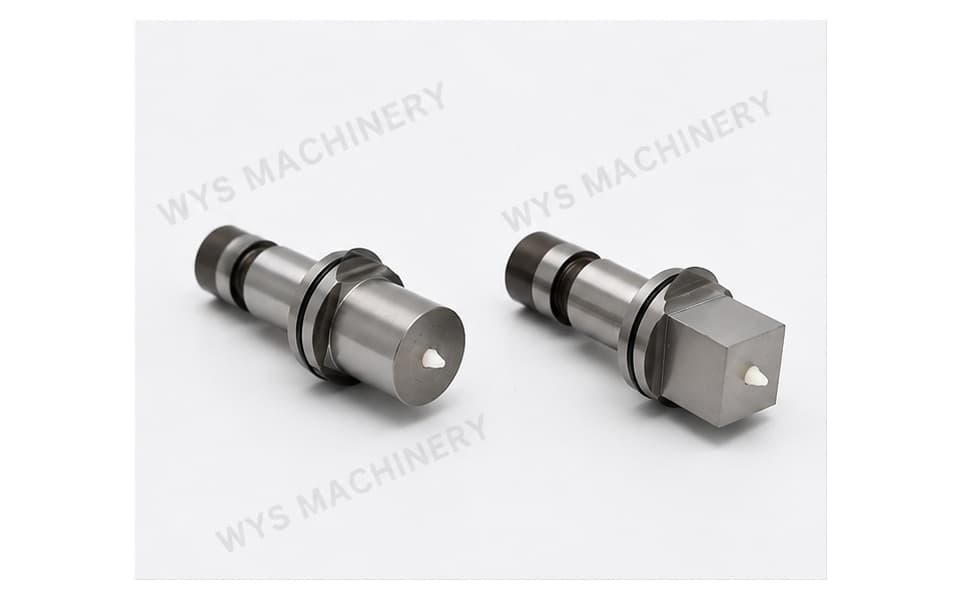
TRUMPF Type Size I emboss forming tooling for producing raised embossed features in sheet metal. The tooling consists of matched upper and lower forming components that plastically form the sheet into the required raised profile rather than simply cutting a hole. Emboss diameter, height, profile and tooling geometry can be customized according to the customer's part drawing, sheet material and thickness.
Please add the quotation and send it to us and get in touch with us immediately
- Global service 24/7
- Lowest price for all products
- Best quality with Production Process
- After-Sale Warranty
- Technical Support
Description
The TRUMPF Type Size I Emboss Forming Tooling is a sheet metal forming tool designed to produce controlled raised embosses and formed features on sheet metal components using TRUMPF-style Size I punch tooling systems.
Unlike conventional punching tools that remove material to create a hole, an embossing tool reshapes the sheet material through a matched forming action. The upper and lower tooling components work together to plastically deform the sheet and create a three-dimensional raised feature.
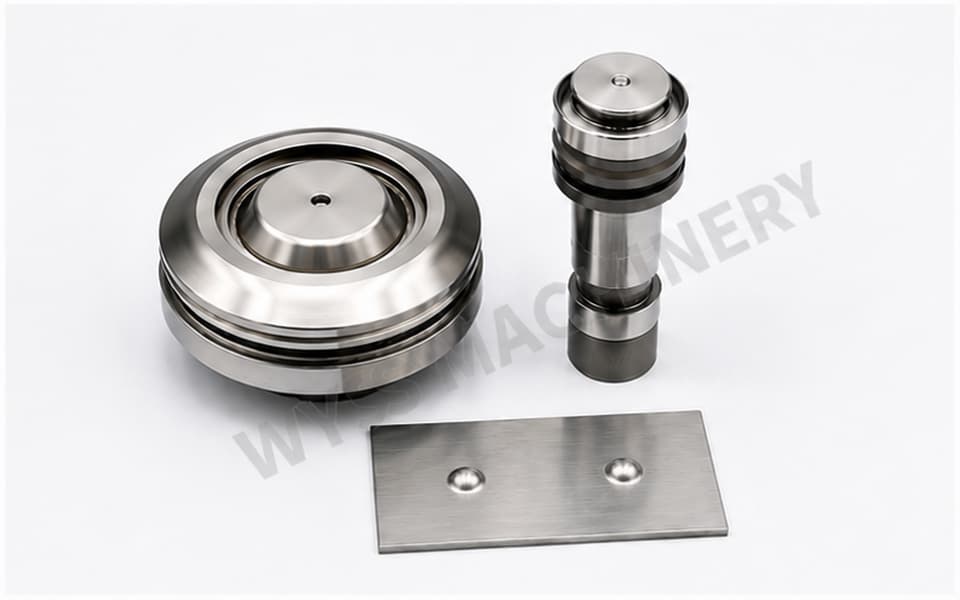
The photographs show the Size I forming tooling together with actual sheet metal samples after embossing. The resulting raised circular features demonstrate the forming action of the tool and provide a direct reference for the type of sheet metal feature that can be produced.
The emboss profile shown is a manufacturing sample. The emboss diameter, forming height, contour and tooling geometry can be customized according to the customer's component design and forming requirements.
Key Features
- Designed for TRUMPF Type Size I / Size 1 punch tooling systems
- Specialized embossing and sheet metal forming tool
- Produces raised three-dimensional features rather than conventional punched holes
- Matched upper and lower forming tooling
- Suitable for circular raised emboss applications
- Emboss diameter can be customized
- Emboss height and forming profile can be customized
- Tooling geometry can be designed according to the workpiece drawing
- Suitable for different sheet materials and thicknesses subject to application evaluation
- Custom forming tools available for non-standard sheet metal features
- Finished formed samples can be evaluated according to customer requirements
Technical Specifications
| Item | Specification |
|---|---|
| Product Type | Emboss Forming Tool |
| Tooling Category | Sheet Metal Forming Tooling |
| Tooling System | TRUMPF Type Punch Tooling |
| Tool Size | Size I / Size 1 |
| Forming Type | Raised Emboss |
| Sample Profile | Round / Circular Emboss |
| Emboss Diameter | Customizable |
| Emboss Height | Customizable |
| Forming Profile | Customizable |
| Sheet Material | According to application |
| Sheet Thickness | According to application |
| Upper Tool | Matched forming punch |
| Lower Tool | Matched forming die |
| Custom Tooling | Available according to drawing |
| Application | Sheet Metal Embossing & Forming |
What Is an Emboss Forming Tool?
An emboss forming tool is different from a standard cutting punch.
With conventional punch-and-die tooling, the material is sheared and a slug is removed to produce a hole. With emboss tooling, the objective is to form the sheet into a three-dimensional profile without creating a conventional through-hole.
The upper and lower forming surfaces apply controlled pressure to the sheet and reshape the material into the required emboss geometry.
This makes emboss tooling part of the broader category of sheet metal forming tools used on punching machines.
Raised Emboss Forming
The sample shown on this page produces a raised circular emboss on the sheet metal.
The finished sheet samples visible in the photographs clearly demonstrate the result: instead of a flat sheet or punched opening, the material is formed upward into a controlled three-dimensional feature.
Depending on the component design, the geometry of the emboss can be customized in terms of:
- Emboss diameter
- Forming height
- Radius
- Profile geometry
- Forming direction
- Sheet thickness
- Material type
Because these parameters interact during the forming process, custom emboss tooling should be designed around the actual workpiece requirements.
Emboss Punch and Die Working Principle
The forming operation is achieved through a matched emboss punch and forming die.
As the tooling closes, the sheet is progressively forced into the corresponding forming cavity. Instead of shearing the material around a cutting perimeter, the tooling controls material flow to generate the required three-dimensional profile.
For this reason, emboss tooling requires consideration of more than just a nominal diameter.
The tooling design may depend on:
- Required finished emboss dimensions
- Emboss height
- Sheet thickness
- Material properties
- Required forming radius
- Workpiece geometry
- Available forming direction
These parameters can be evaluated when designing a customized forming tool.
Custom Emboss Diameter and Height
The emboss shown in the photographs is intended as a sample of our forming-tool manufacturing capability, rather than a fixed standard size.
Different emboss dimensions can be produced according to customer requirements.
For example, customers may specify the required:
Diameter → Height → Profile → Radius → Sheet Material → Sheet Thickness
Based on these parameters and the workpiece drawing, the upper and lower forming components can be designed to create the required sheet metal feature.
This makes customized emboss tooling suitable for projects where standard punching profiles cannot produce the desired three-dimensional geometry.
Embossing Tool vs. Standard Punching Tool
The distinction between these two tooling types is important.
| Standard Punching Tool | Emboss Forming Tool |
|---|---|
| Primarily cuts material | Primarily forms material |
| Produces a hole or cut profile | Produces a 3D formed feature |
| Material slug is typically removed | Material is primarily displaced |
| Uses cutting punch and die | Uses matched forming surfaces |
| RO, SQ, RE, OB are typical profiles | Raised emboss is a typical formed feature |
This is why this product belongs to TRUMPF forming tooling, rather than simply being another round punch.
Typical Applications
TRUMPF Type Size I emboss forming tools can be used for forming functional or design features in:
- Electrical cabinets
- Control panels
- Sheet metal enclosures
- Machinery covers
- Equipment housings
- Mounting plates
- Sheet metal brackets
- HVAC components
- Industrial panels
- Automotive sheet metal components
- Mechanical assemblies
- Custom fabricated sheet metal parts
Depending on the component design, embossed features may be used for local reinforcement, positioning, spacing, clearance, assembly functions or other formed sheet metal features.
Custom TRUMPF Forming Tooling from Your Drawing
Forming tools are especially suitable for customization because the required tooling geometry depends directly on the final three-dimensional feature of the workpiece.
Customers can provide:
- DXF or CAD drawing
- Finished component drawing
- Required emboss diameter
- Required emboss height
- Sheet material
- Sheet thickness
- Forming direction
- Other dimensional requirements
Based on this information, we can design and manufacture a corresponding TRUMPF Type Size I emboss punch and die set for the required forming application.
In addition to raised emboss tooling, customized solutions can be developed for other sheet metal forming requirements according to the customer's component geometry.