Roller-Assisted Radius Bending Die for Scratch-Free Sheet Metal Forming
December 23, 2021
Roller-Assisted Radius Bending for Better Surface Protection
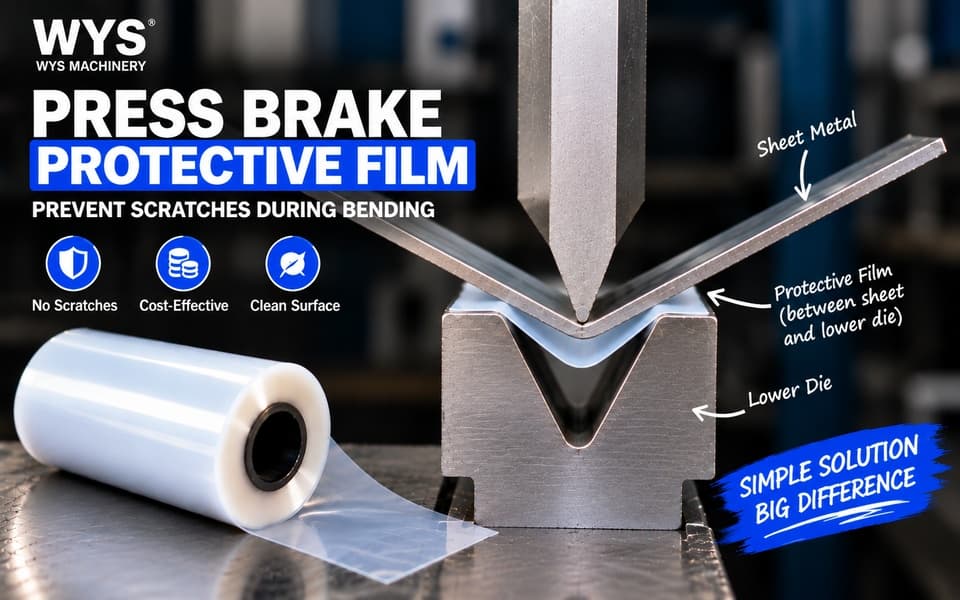
Surface scratching and marking are common challenges in sheet metal bending, particularly when forming thick plate or components that require a clean finished surface.
During conventional bending, the sheet moves across the contact areas of the lower die as it is progressively formed. The combination of high forming pressure and relative sliding between the sheet and die can leave visible scratches, drag marks or surface impressions on the workpiece.
The custom radius bending die shown in this video uses a different approach.
Rollers Installed at the Die Opening
Rollers are integrated on both sides of the die opening where the sheet contacts the tooling during forming.
As the workpiece moves downward and gradually follows the required radius, the rollers can rotate with the movement of the sheet. This changes part of the conventional sliding contact into rolling contact, helping reduce friction between the workpiece and the die.
Reducing Scratches and Surface Damage
Lower friction means less dragging of the sheet across fixed tooling surfaces. This can significantly reduce scratching and marking during the forming process.
The benefit becomes particularly noticeable when bending thicker plate, where higher forming forces can create greater contact pressure between the workpiece and tooling.
The roller-assisted structure can also be valuable for components where surface appearance is important and unnecessary tooling marks need to be minimized.
Radius Forming and Surface Protection in One Tooling Solution
This tooling is designed not only to create the required curved or radius profile but also to address an important practical problem during production: protecting the workpiece surface while it is being formed.
The roller arrangement, die geometry and required forming radius can be designed according to the workpiece dimensions, material thickness and final profile.
Typical applications can include large-radius sheet metal parts, thick plate components, curved profiles, structural components and other formed parts requiring reduced surface marking.
WYS Machinery develops custom press brake and sheet metal forming tooling according to customer drawings and forming requirements. For applications involving large-radius forming, thick plate or surface-sensitive components, roller-assisted tooling can be engineered to reduce friction, protect the workpiece surface and achieve the required formed profile.