R80 Radius Tool Design for Large-Radius Bending and Springback Control
February 16, 2024
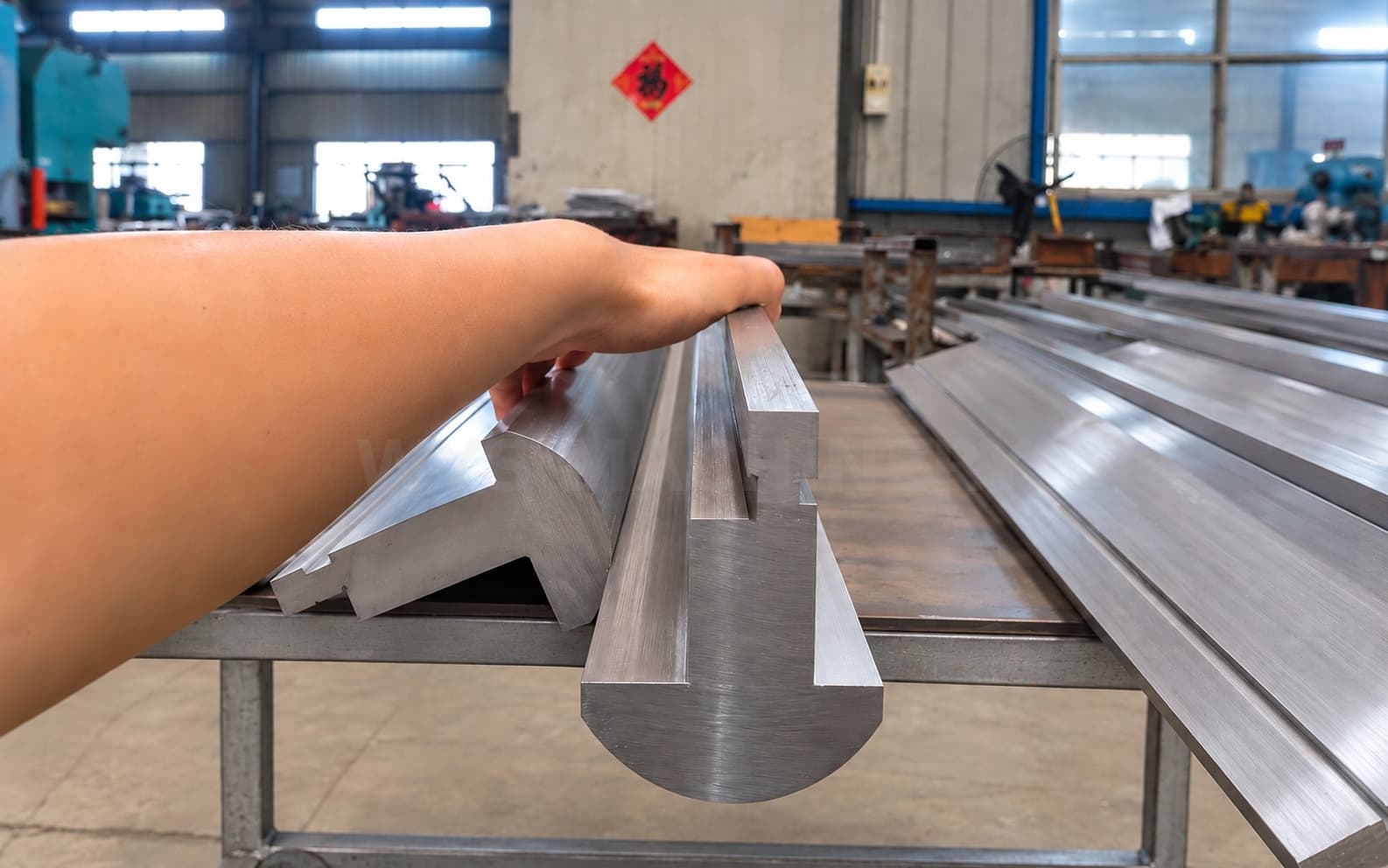
R80 Radius Tool Design for Large-Radius Bending
Producing a large-radius bend requires more than simply machining the tooling to the same radius shown on the finished workpiece drawing. Sheet metal springback changes the final radius after the bending force is released, making tooling design an important part of the forming process.
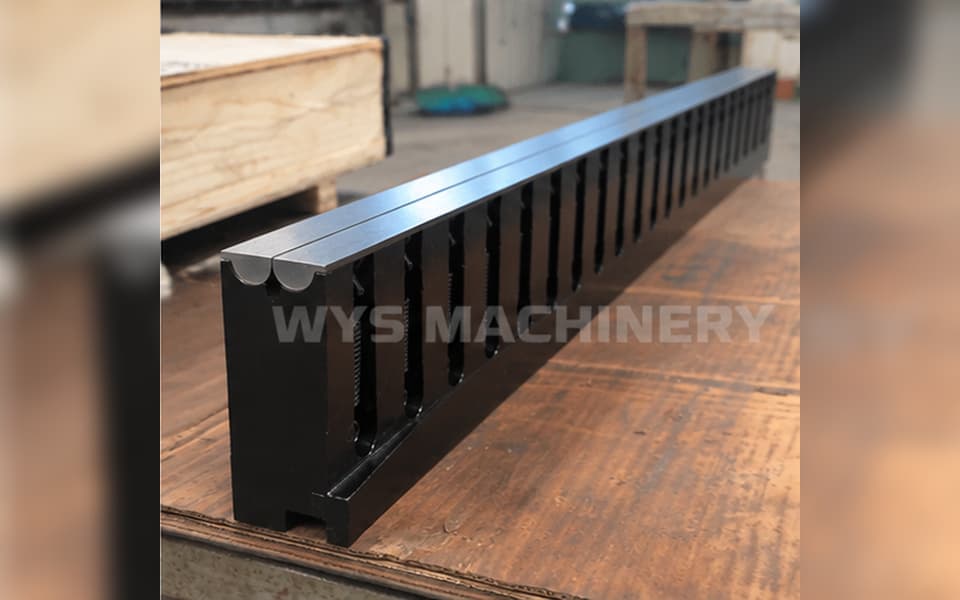
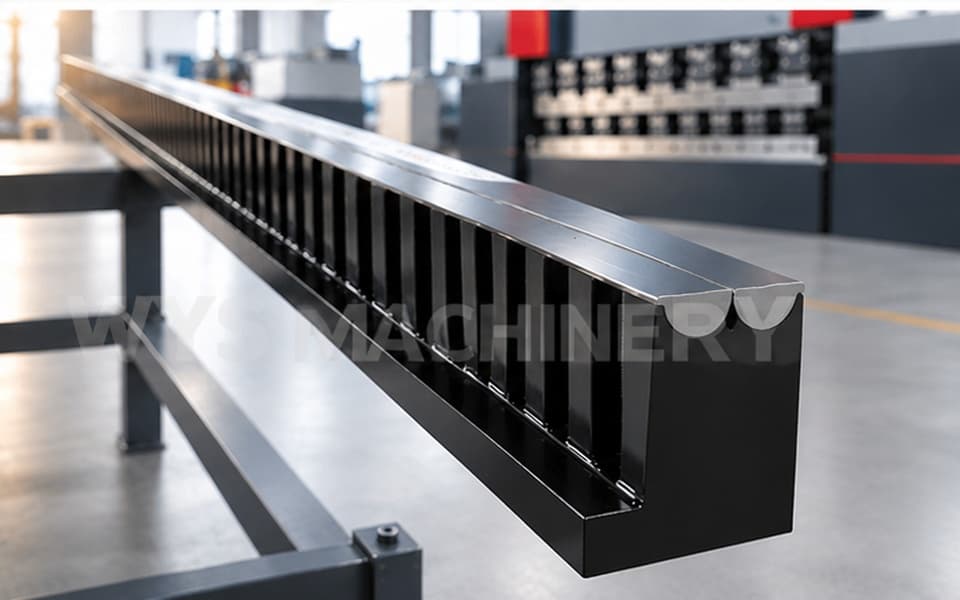
For this application, WYS Machinery manufactured an R80 one-piece radius press brake tool for large-radius sheet metal bending.
Why Must Springback Be Considered in Radius Tool Design?
During bending, the sheet undergoes both elastic and plastic deformation. After the forming force is removed, elastic recovery causes the workpiece to spring back, which can make the final bend radius larger than the radius achieved under load.
For this reason, the tooling geometry should be determined according to the required final workpiece radius, material, sheet thickness and forming conditions, rather than simply copying the nominal radius from the finished part.
WYS Machinery can evaluate the customer's workpiece drawing and bending requirements to design a suitable radius tooling solution.
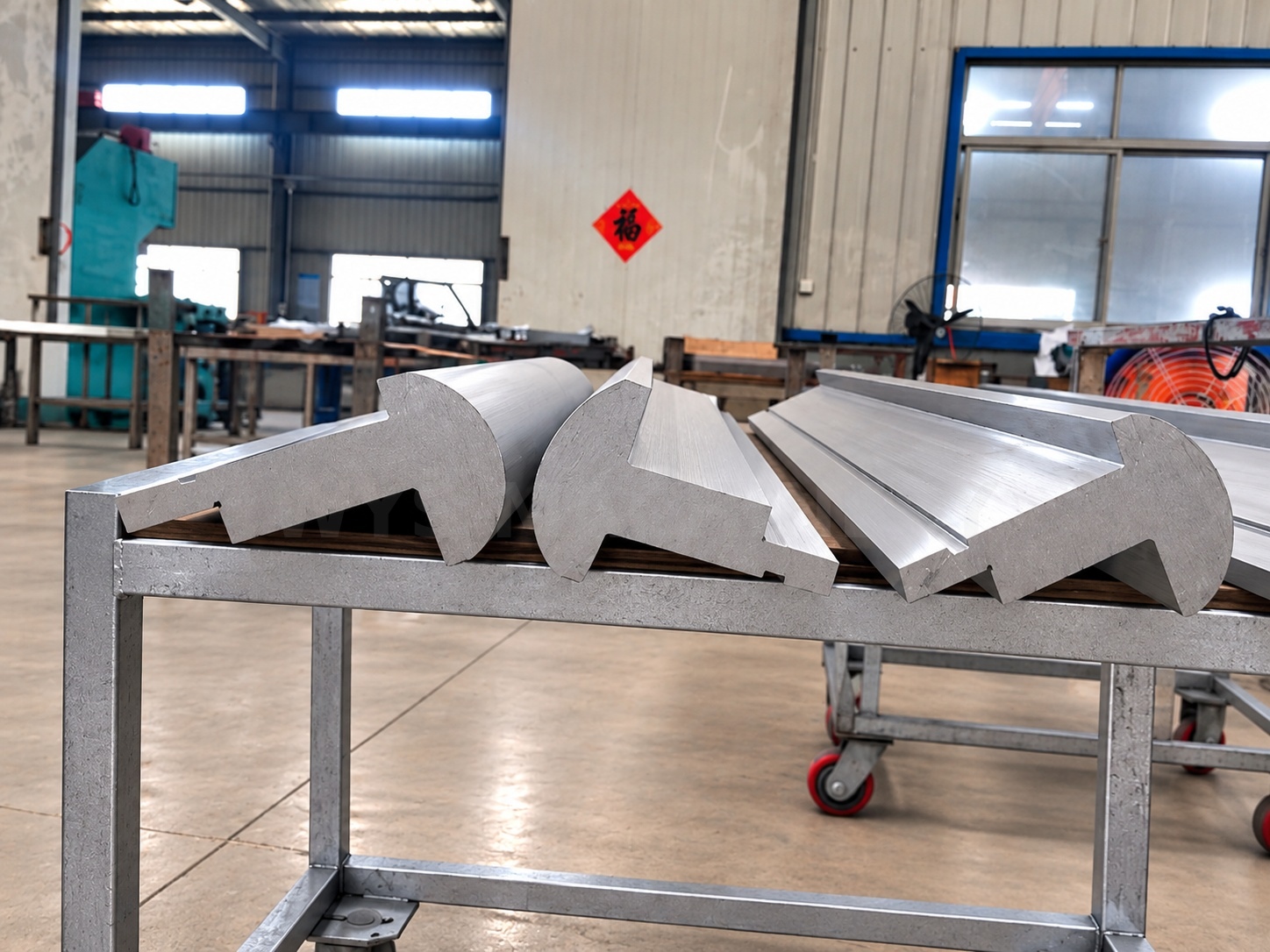
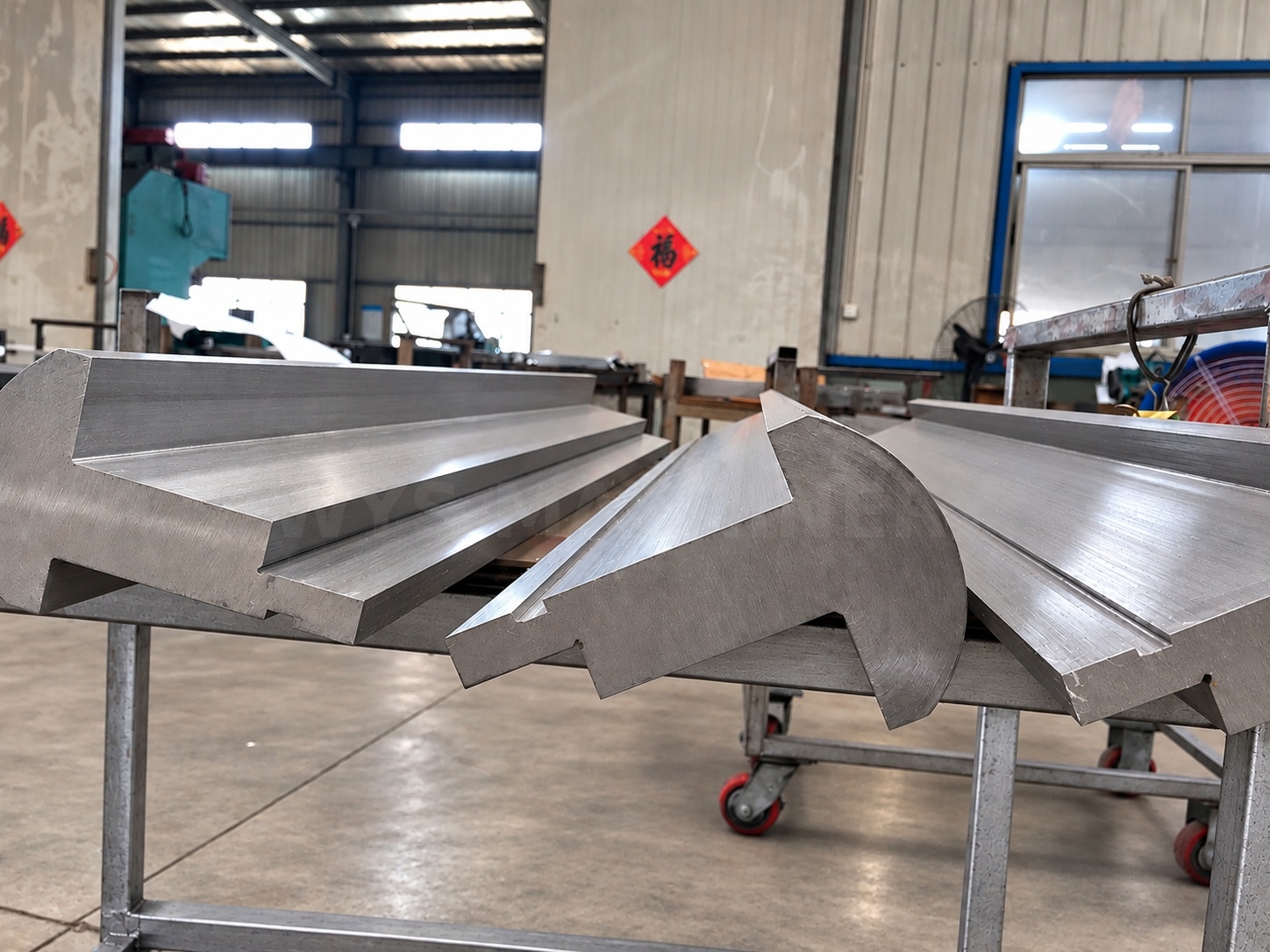
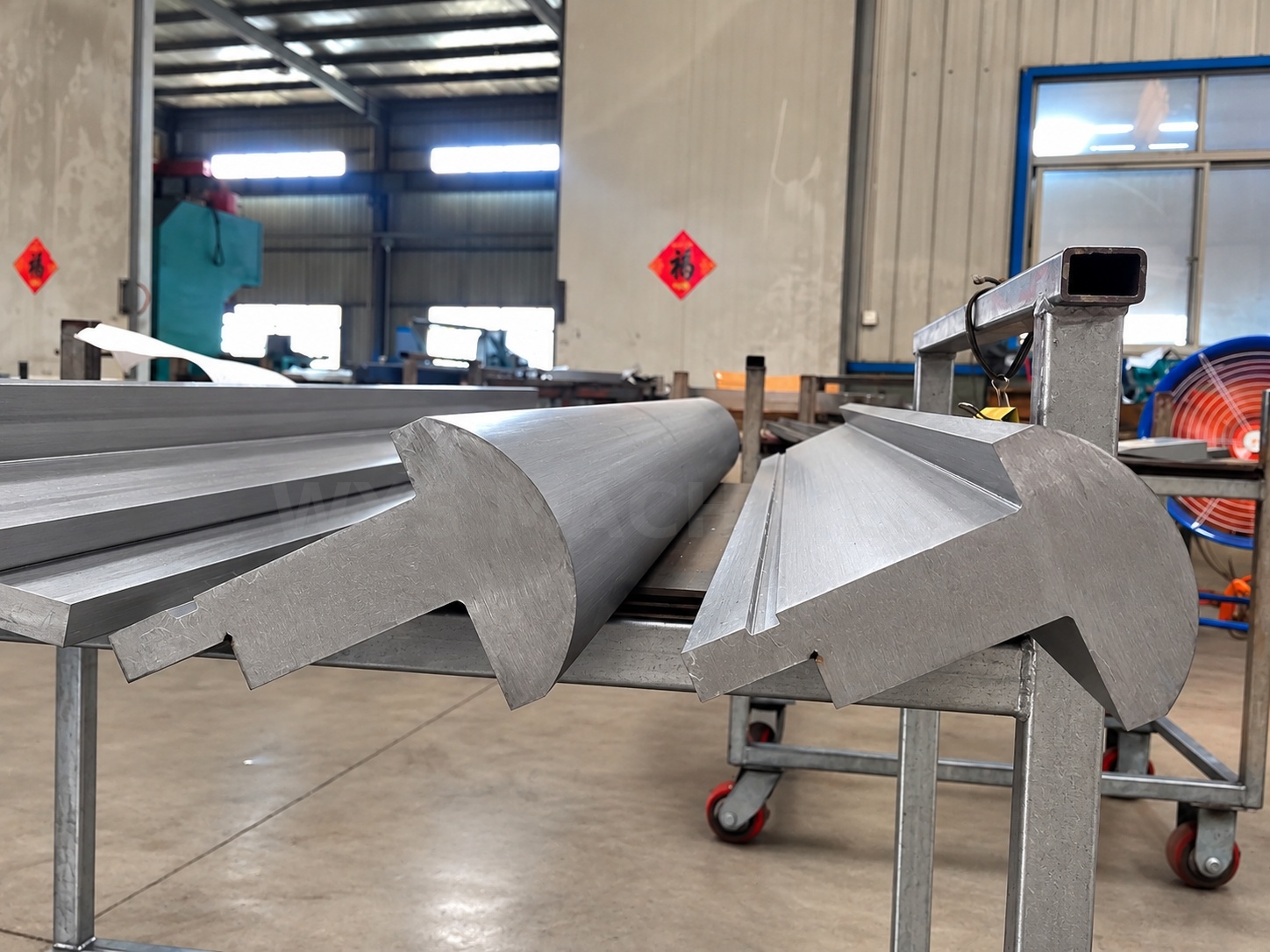
One-Piece R80 Radius Tooling
The tooling shown in this application uses a one-piece structure, providing a continuous large-radius forming profile along the working length.
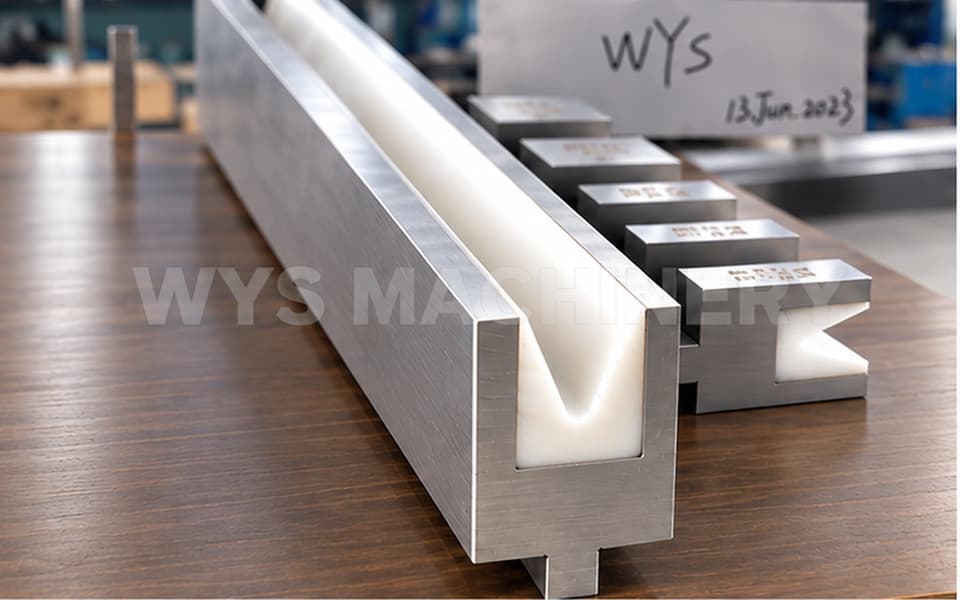
This differs from a modular design using a Punch Holder and Replaceable Radius Insert. The appropriate structure can be selected according to the required radius, tooling dimensions, production requirements and customer preference.
Custom Tooling Interfaces
The R80 tooling shown here represents one custom configuration. WYS Machinery can modify the tooling dimensions, radius profile and mounting structure according to the customer's press brake.
Tooling interfaces can also be designed for TRUMPF Type, WILA Type, BYSTRONIC Type and LVD Type systems.
Customers can provide their workpiece drawing, material, sheet thickness and press brake tooling interface, allowing our engineering team to develop a tooling solution according to the actual forming requirement.