30° R0.6 Sharp-Tip Press Brake Upper Punch for Thin Sheet Bending – 120 mm Height, 90 mm Working Height, 100 Ton/m
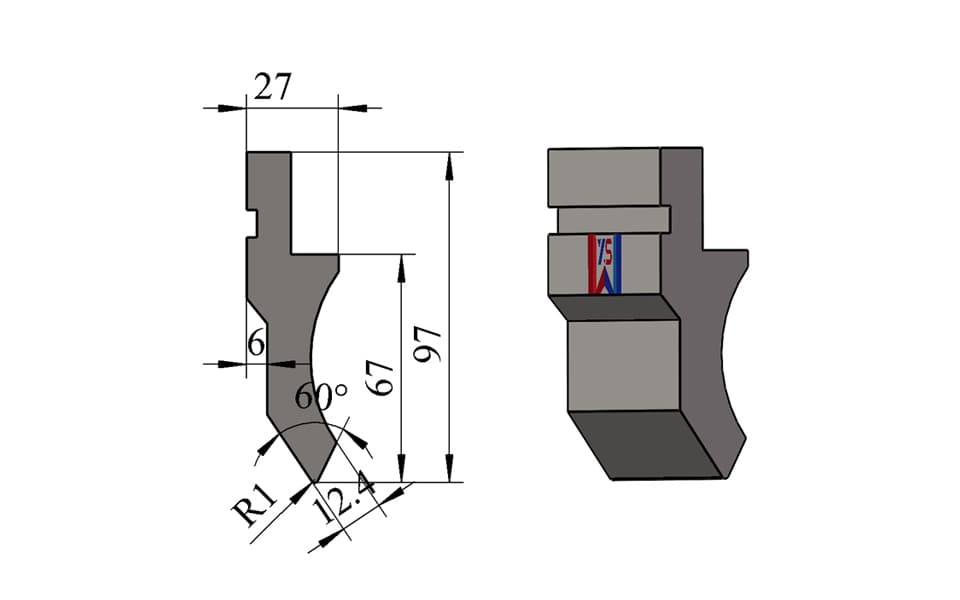
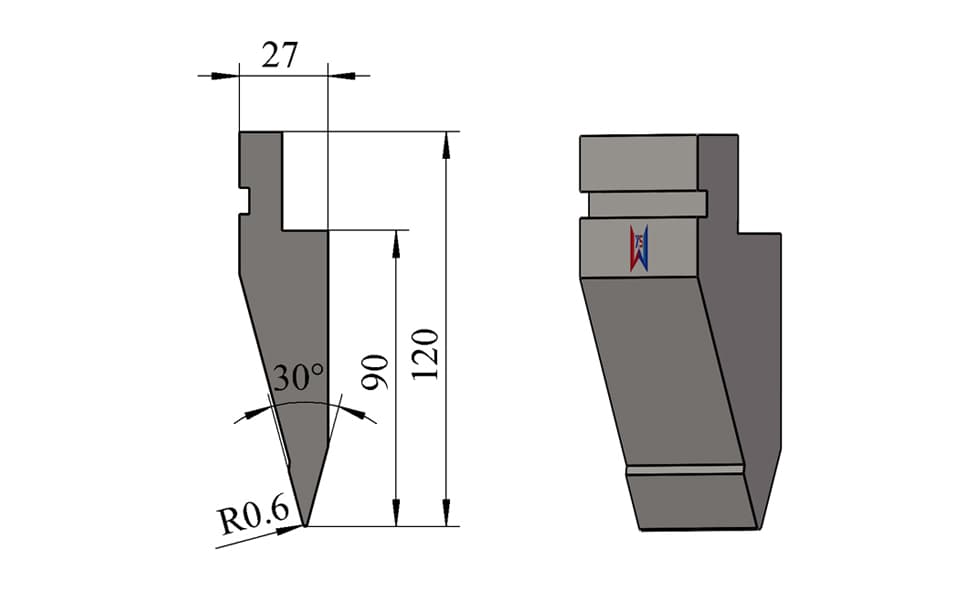
30° R0.6 sharp-tip press brake upper punch with a 120 mm overall height, 90 mm effective working height, 27 mm tooling width, and 100 ton/m load capacity. The sharp 30° profile and small R0.6 tip radius make it especially suitable for thin sheet metal bending where a smaller bend radius, finer edge definition, and more delicate formed profile are required. Custom configurations are available for TRUMPF Type, WILA Type, LVD Type, Bystronic Type, European Type, AMADA Type, and other press brake tooling systems.
Please add the quotation and send it to us and get in touch with us immediately
- Global service 24/7
- Lowest price for all products
- Best quality with Production Process
- After-Sale Warranty
- Technical Support
Description
30° Sharp-Tip Punch for Thin Sheet and Small-Radius Bending
This 30° R0.6 press brake upper punch is designed for precision bending applications where the workpiece requires a relatively sharp bend profile and a small formed radius.
The punch features a 120 mm overall height, 90 mm effective working height, and 27 mm overall width. Its 30° acute punch angle combined with a small R0.6 tip radius creates a very sharp working geometry.
Compared with larger-radius tooling, this smaller punch radius is particularly suitable for thin sheet metal and applications where the customer wants a finer bend line and smaller internal and external bend radii.
With a rated load capacity of 100 ton/m, the punch also retains good structural strength despite its sharp forming profile.
Its main technical positioning is:
30° Acute Angle + R0.6 Sharp Tip + Thin Sheet + Small Bend Radius + Fine Edge Forming
Key Features
- 30° acute punch angle
- R0.6 small tip radius
- Sharp punch-tip geometry
- 120 mm overall height
- 90 mm effective working height
- 27 mm overall tooling width
- 100 ton/m rated load capacity
- Especially suitable for thin sheet metal bending
- Helps create smaller inside bend radii
- Helps produce finer and more defined bent edges
- Suitable for precision sheet metal fabrication
- Suitable for acute-angle and controlled overbending applications
- Manufactured from 42CrMo alloy steel
- Working area hardened to approximately HRC 54 ± 2
- Punch angle and tip radius can be customized
- Tool height, width, length, and mounting interface can be customized
- Free tooling design support available
Technical Specifications
| Specification | Details |
|---|---|
| Tool Type | Sharp-Tip / Precision Press Brake Upper Punch |
| Punch Angle | 30° |
| Tip Radius | R0.6 |
| Overall Height | 120 mm |
| Effective Working Height | 90 mm |
| Overall Width | 27 mm |
| Load Capacity | 100 ton/m |
| Primary Application | Thin Sheet / Small-Radius Precision Bending |
| Material | 42CrMo Alloy Steel |
| Hardness | HRC 54 ± 2 |
| Tooling Length | Standard or Customized |
| Punch Angle | Customizable |
| Tip Radius | Customizable |
| Mounting Interface | Multiple Types Available |
| Custom Tooling | Available |
Typical Applications
This 30° R0.6 punch is especially suitable for applications where a small bending radius and precise edge quality are important.
Typical applications include:
- Thin sheet metal bending
- Small-radius bending
- Precision acute-angle bending
- Fine-edge forming
- Stainless steel thin sheet bending
- Carbon steel thin sheet bending
- Electrical enclosures
- Precision brackets
- Sheet metal housings
- Instrument panels
- Light machinery covers
- Small fabricated components
- Multi-step precision bending
- Customized sheet metal parts
Why R0.6 Is Suitable for Thin Sheet
The defining feature of this punch is its small R0.6 tip radius.
Compared with R1, R3, or R5 punches, the R0.6 tip creates a more concentrated forming zone at the bend.
For thinner materials, this can help produce:
- Smaller internal bend radii
- Tighter external bend profiles
- Finer edge definition
- More delicate bending lines
- More compact formed geometry
This is especially useful where the appearance and dimensional detail of the bent edge are important.
Its functional logic can be summarized as:
Thin Sheet → Small Radius Required → R0.6 Sharp Tip → Smaller Bend Profile → Finer Finished Edge
Sharp Tip for More Refined Edge Geometry
The 30° angle and R0.6 radius make the punch tip visually and functionally sharper than the larger-radius tools in the same series.
For certain thin-gauge sheet metal parts, a broad punch radius may produce a bend that looks too rounded or bulky.
A sharper tool can create a more refined profile, particularly when the product requires:
- Narrow edge folds
- Fine corner definition
- Compact bend geometry
- High visual quality
- Precision sheet metal appearance
This is why this model is especially suitable for thinner materials and parts where the final edge needs to look cleaner and more delicate.
Small Radius Requires Correct Material Selection
For this product, it is important to explain that a smaller punch radius is not automatically suitable for every material.
A very small bend radius may increase localized strain in the sheet.
Therefore, the punch should be selected according to:
- Material type
- Sheet thickness
- Material ductility
- Grain direction
- Required inside radius
- Lower-die opening
- Bending method
For materials with limited ductility or thicker sheets, an excessively small bend radius may increase the risk of cracking or surface damage.
This is why tooling selection should always be based on the actual workpiece and material.
30° Geometry for Precision Acute-Angle Forming
The 30° punch angle provides a sharper working geometry than conventional 35°, 60°, 85°, or 90° punches.
This makes it suitable for:
- Acute-angle forming
- Controlled overbending
- Springback compensation
- Fine edge preparation
- Precision multi-step forming
The final workpiece angle will depend on material springback, lower-die geometry, V-opening, and machine settings.
One Displayed Tool – Multiple Tooling Systems Available
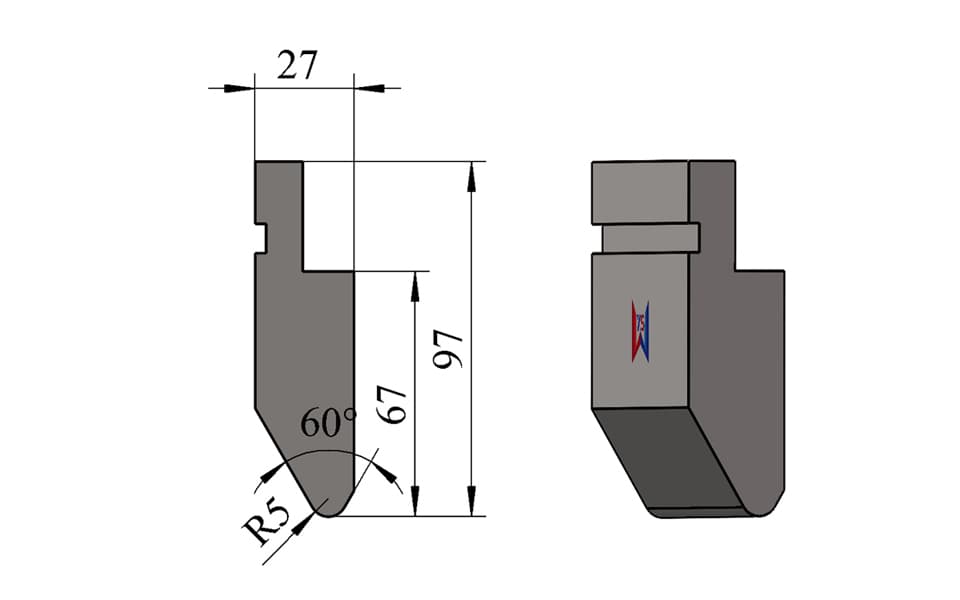
The tooling shown on this page represents one typical 30° sharp-tip punch configuration.
It does not mean that WYS can manufacture only this structure.
We can manufacture corresponding tooling for:
TRUMPF Type • WILA Type • LVD Type • Bystronic Type • European Type • AMADA Type • Other Press Brake Tooling Systems
Customers can provide:
- Press brake model
- Existing tooling drawing
- Clamping dimensions
- Tooling sample
- Workpiece drawing
- Material thickness
- Required bend radius
- Required bend angle
We can then adapt the tooling geometry and mounting interface accordingly.
Custom Punch Angle, Tip Radius and Dimensions
The 30° / R0.6 / H120 configuration shown here is only one example.
WYS can customize:
- Punch angle
- Tip radius
- Overall height
- Effective working height
- Tooling width
- Tooling length
- Segmentation
- Mounting interface
- Tip geometry
- Special relief structure
- Surface treatment
For thin sheet applications, the tip radius can be selected according to the customer's required inside bend radius and material characteristics.
Different acute-angle punches such as:
26° / 28° / 30° / 35° / 60°
can also be manufactured according to actual bending requirements.
Product Details & Manufacturing Quality
This 30° upper punch is manufactured from 42CrMo alloy steel, providing good strength, toughness, wear resistance, and dimensional stability.
The working area is heat treated to approximately HRC 54 ± 2.
For a sharp-tip punch like this model, precision machining is particularly important because small deviations in the tip radius can directly affect the bend profile.
The R0.6 radius is therefore carefully machined to maintain consistent geometry along the tooling length.
The punch is rated at 100 ton/m.
Actual allowable bending force should still be calculated according to material thickness, bending length, V-die opening, bending method, and press brake capacity.
Standard & Custom Press Brake Tooling
WYS manufactures both standard and customized press brake punches and dies.
Customers can send:
- 2D workpiece drawings
- 3D models
- Existing tooling drawings
- Bending drawings
- Press brake information
- Tooling samples
Our engineering team can provide a free tooling design service.
For thin sheet precision bending, we can evaluate:
- Material thickness
- Required internal radius
- Required external profile
- Material ductility
- Punch radius
- Lower-die opening
- Required bend angle
- Springback
- Surface quality requirements
- Press brake interface
This allows us to recommend a tooling solution that balances small bend radius, edge quality, tooling life, and material safety.
Request a Quote
Related Products