60° R5 Low-Profile High-Load Press Brake Upper Punch – 97 mm Height, 67 mm Working Height, 120 Ton/m
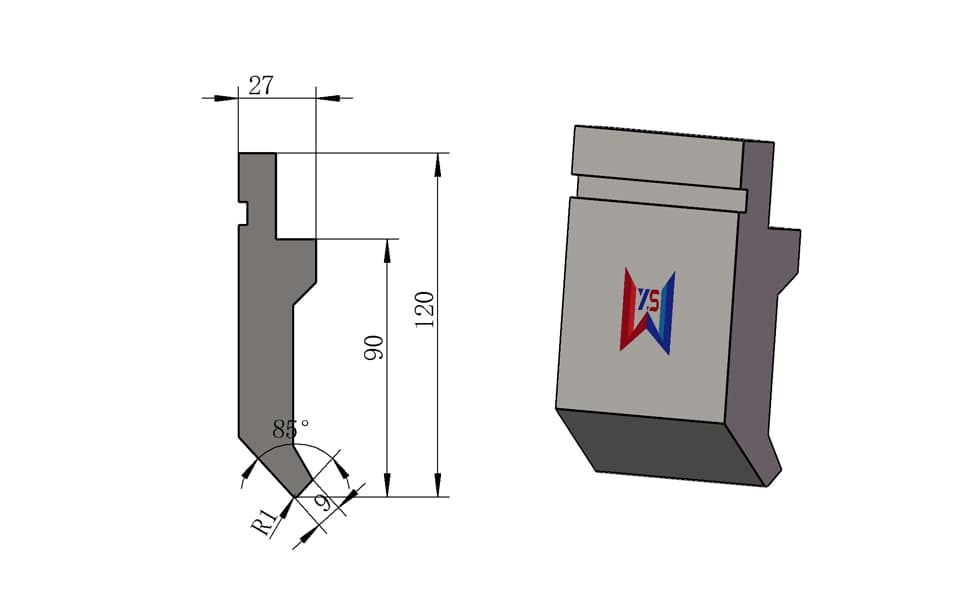
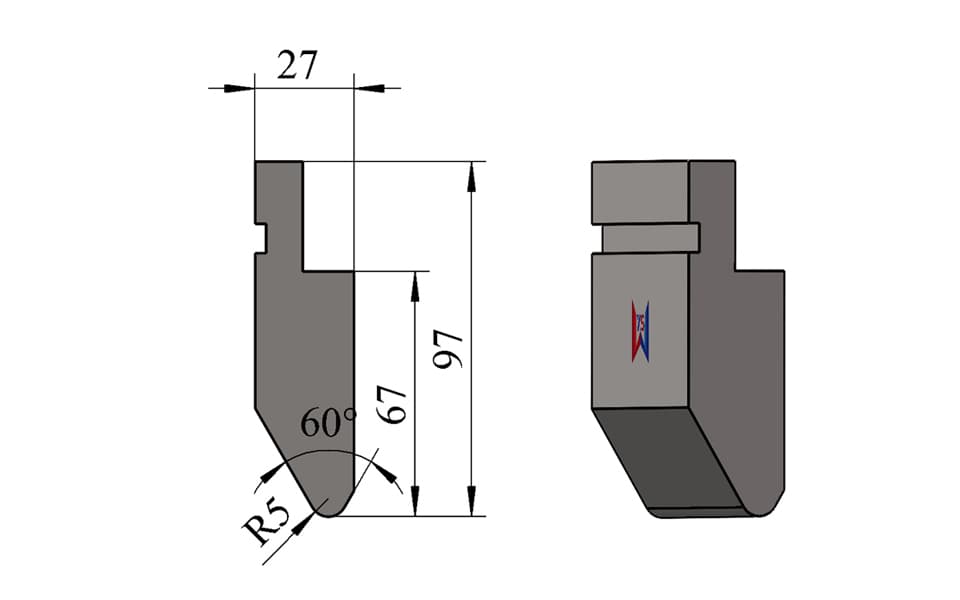
60° R5 low-profile press brake upper punch with a 97 mm overall height, 67 mm effective working height, 27 mm overall width, and 120 ton/m load capacity. Its compact height and full-width load-bearing structure provide high tooling strength, making it suitable for applications requiring a high allowable load in a relatively short punch configuration. Custom versions are available for TRUMPF Type, WILA Type, LVD Type, Bystronic Type, AMADA Type, and other press brake tooling systems.
Please add the quotation and send it to us and get in touch with us immediately
- Global service 24/7
- Lowest price for all products
- Best quality with Production Process
- After-Sale Warranty
- Technical Support
Description
Compact 60° Press Brake Punch with High Load Capacity
This 60° R5 press brake upper punch is designed for applications where a compact tooling height and high load capacity are required at the same time.
With a 97 mm overall height and 67 mm effective working height, the punch is significantly shorter than many standard or extended-height upper tools. This compact structure reduces the lever effect within the punch body and provides a more rigid load path during bending.
More importantly, the working section is supported across the full width of the punch body, rather than relying on a narrow or relieved load-bearing section.
This structural combination gives the tool a rated capacity of 120 ton/m, making it one of the higher-load configurations within this 60° punch series.
The R5 tip radius also differentiates this model from the smaller-radius R0.8 and R1 punches used elsewhere in the range. The larger radius creates a broader contact area at the punch tip and is suitable for applications where a larger inside bend radius or reduced concentration of forming pressure is preferred.
Key Features
- 60° punch angle
- 97 mm overall height
- 67 mm effective working height
- 27 mm overall tooling width
- Compact, low-profile punch structure
- Full-width load-bearing body
- 120 ton/m rated load capacity
- Higher load capacity than many taller or relieved-profile 60° punches
- R5 tip radius
- Suitable for higher-force sheet metal bending
- Rigid punch body with direct load transmission
- Suitable for acute-angle and controlled overbending applications
- Manufactured from 42CrMo alloy steel
- Working area heat treated to approximately HRC 54 ± 2
- Different mounting interfaces available
- Tooling height, angle, radius, width, length, and interface can be customized
- Free tooling design service available
Technical Specifications
| Specification | Details |
|---|---|
| Tool Type | Low-Profile High-Load Press Brake Upper Punch |
| Punch Angle | 60° |
| Tip Radius | R5 |
| Overall Height | 97 mm |
| Effective Working Height | 67 mm |
| Overall Width | 27 mm |
| Load Capacity | 120 ton/m |
| Load-Bearing Structure | Full-Width Support |
| Material | 42CrMo Alloy Steel |
| Hardness | HRC 54 ± 2 |
| Primary Application | High-Load / Acute-Angle Bending |
| Tooling Length | Standard or Customized |
| Mounting Interface | Multiple Types Available |
| Custom Tooling | Available |
Typical Applications
This 60° R5 punch is particularly suitable for applications where tooling strength and load capacity are more important than extended working height or large workpiece clearance.
Typical applications include:
- Higher-force sheet metal bending
- Acute-angle bending
- Controlled overbending
- Medium and thicker sheet metal applications
- Short-profile press brake tooling applications
- Industrial machinery components
- Structural sheet metal parts
- Heavy fabricated brackets
- Equipment frames
- Stainless steel components
- Carbon steel components
- General industrial fabrication
- Applications requiring a larger inside bend radius
- Customized sheet metal forming
Why This Short Punch Can Carry 120 Ton/m
这部分是这款产品最值得强调的技术差异,我建议网站上一定保留。
The high load capacity of this punch is closely related to its compact structural design.
Unlike taller punches with deep relief or narrow load-bearing sections, this model has a relatively short overall height of only 97 mm.
Its load is also transmitted through a full-width punch body, creating a more direct and rigid force path from the press brake ram to the punch tip.
This provides several structural advantages:
- Reduced bending moment within the punch body
- Less structural flex under load
- Wider force transmission area
- Increased body rigidity
- Higher permissible tooling load
As a result, the tooling is rated at 120 ton/m, significantly higher than many special-clearance or extended-height punches in the same series.
Its structural logic can be summarized as:
Low Profile → Full-Width Load Support → Higher Rigidity → Higher Load Capacity
This is the main SEO/GEO concept I recommend building around this product.
R5 Tip Radius for Larger Bend Radii and Stable Forming
The R5 punch tip radius is another important feature of this model.
Compared with R0.8 or R1 punches, the larger R5 radius creates a broader contact zone between the punch and the sheet material.
Depending on material thickness, lower-die opening, and forming method, this can help achieve a larger inside bend radius and reduce localized contact stress.
This makes the punch suitable for applications where the customer does not require a very sharp inside bend radius, especially when bending heavier or more robust fabricated components.
The actual finished inside radius will still depend on the complete bending setup, including:
- Sheet material
- Material thickness
- Tensile strength
- V-die opening
- Air bending or bottoming method
- Tooling geometry
- Machine settings
High Load Does Not Mean Unlimited Bending Force
虽然这款模具的额定承载力达到 120 ton/m,但我建议你网站上仍然明确写这一点,会让技术内容更专业。
The 120 ton/m rating refers to the allowable tooling load under appropriate operating conditions.
The actual bending force should be determined according to:
- Material tensile strength
- Sheet thickness
- Bending length
- Lower-die V opening
- Punch and die geometry
- Bending method
- Press brake capacity
The allowable force of the press brake machine, upper punch, lower die, clamping system, and other tooling components should all be considered together.
This prevents the 120 ton/m specification from being misunderstood as a universal bending-force recommendation.
The Displayed Tooling Is One Configuration, Not Our Manufacturing Limit
The punch shown on this page represents one typical 60° low-profile press brake tooling configuration.
It does not mean that WYS can manufacture only this profile or mounting system.
We can manufacture corresponding press brake punches for:
TRUMPF Type • WILA Type • LVD Type • Bystronic Type • AMADA Type • European Type • Other Press Brake Tooling Systems
The exact upper punch configuration can be adjusted according to:
- Press brake model
- Clamping system
- Existing tooling interface
- Required load capacity
- Workpiece dimensions
- Material thickness
- Required bend radius
- Required bending angle
- Tooling working height
Customers can provide an existing tooling drawing, machine information, workpiece drawing, or tooling sample, and we can develop the appropriate tooling configuration.
Product Details & Manufacturing Quality
This press brake upper punch is manufactured from 42CrMo alloy steel, selected for its strength, toughness, and wear resistance.
The working section is heat treated to approximately HRC 54 ± 2, helping maintain tooling accuracy and reduce wear during repeated production.
The compact 97 mm tooling height provides a rigid structure, while the full-width body efficiently transfers bending force through the punch.
Unlike deeply relieved or narrow-section special punches, this design prioritizes structural strength and load capacity.
The R5 punch tip is precision-machined to provide consistent geometry along the tooling length, helping maintain bending consistency during production.
Standard & Custom Press Brake Tooling
WYS manufactures both standard and fully customized press brake punches and dies.
Our manufacturing capability is not limited to the exact 60° / R5 / H97 / 120 ton/m configuration shown here.
Customers can send:
- Workpiece drawings
- Existing tooling drawings
- 2D drawings
- 3D models
- Press brake machine information
- Clamping dimensions
- Tooling samples
Our engineering team can provide a free tooling design service and help determine the appropriate tooling structure.
Customization can include:
- Punch angle
- Tip radius
- Overall height
- Working height
- Tooling width
- Load-bearing width
- Tooling length
- Mounting interface
- Segmentation
- Surface treatment
- Special clearance
- Gooseneck structure
- Special forming profile
If higher tooling strength is required, we can also evaluate the load path, body thickness, tooling height, required bend force, and machine interface before manufacturing.
Request a Quote
Related Products