60° R1 High Press Brake Upper Punch – 150 mm Height, 120 mm Working Height, 6 mm Tip, 70 Ton/m
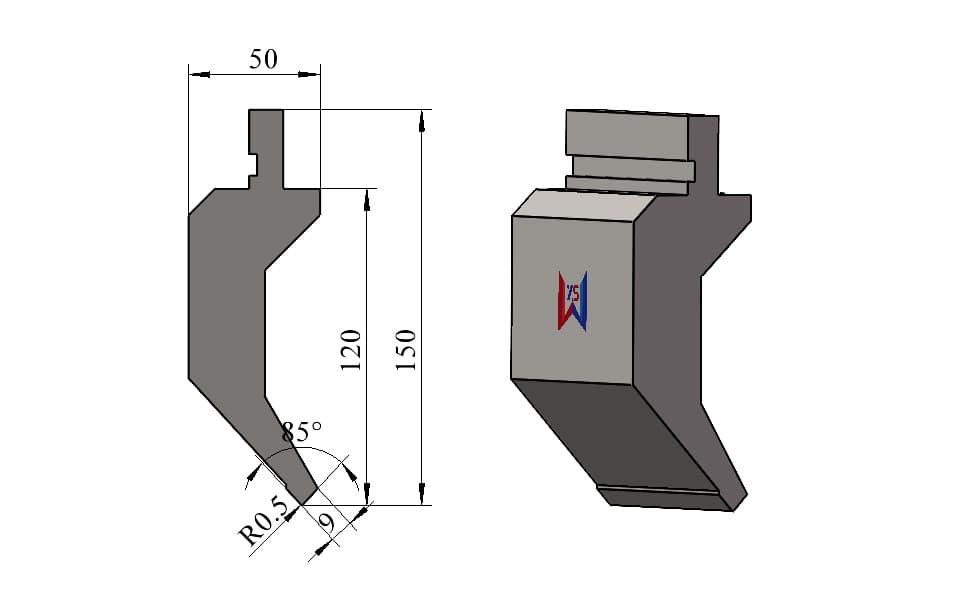
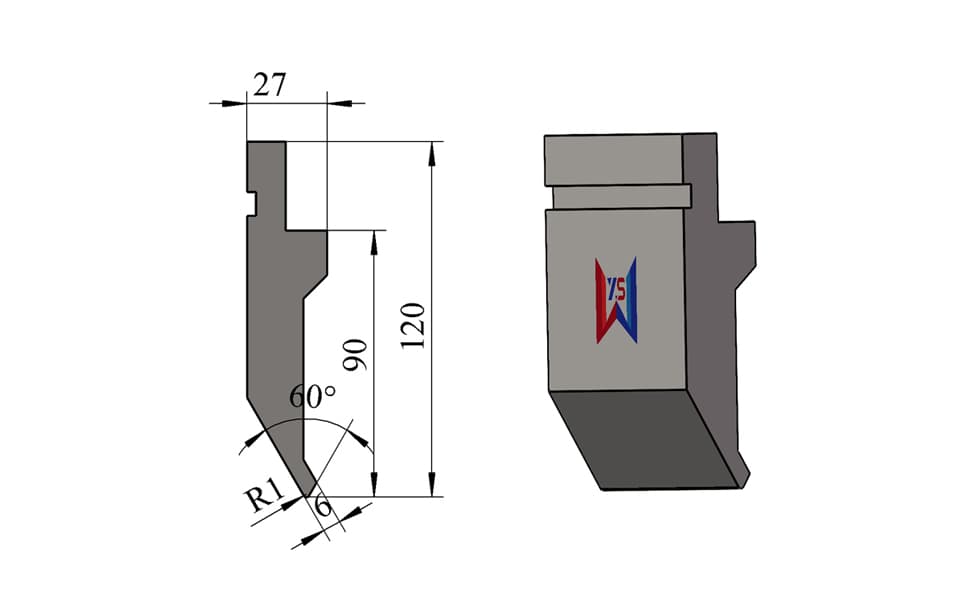
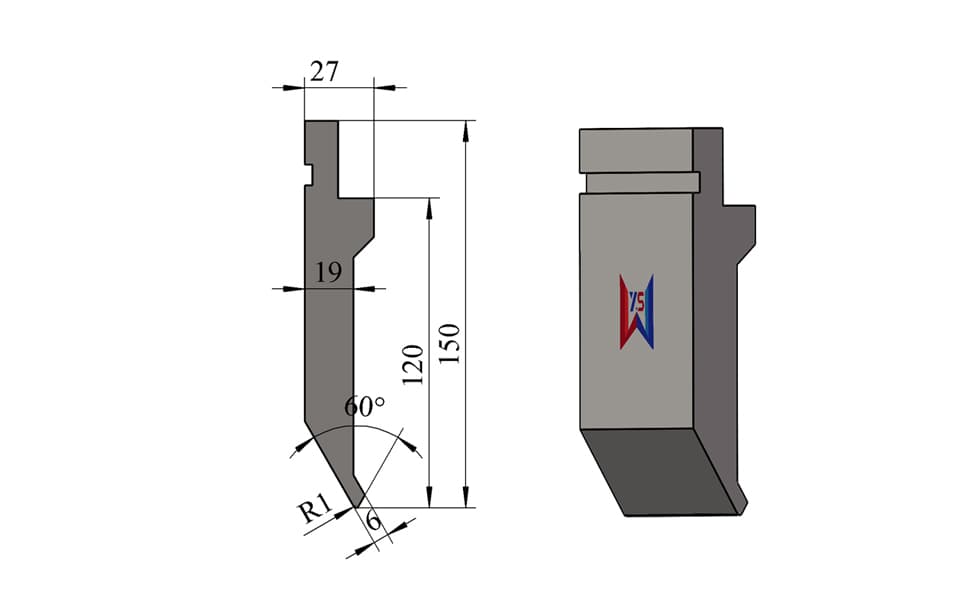
60° R1 high press brake upper punch featuring a 150 mm overall height, 120 mm effective working height, 6 mm tip width, and 70 ton/m load capacity. The taller profile provides increased working reach and clearance for acute-angle, deeper-profile, and precision sheet metal bending. Different heights, profiles, and mounting interfaces can be customized for TRUMPF Type, WILA Type, LVD Type, Bystronic Type, AMADA Type, and other press brake tooling systems.
Please add the quotation and send it to us and get in touch with us immediately
- Global service 24/7
- Lowest price for all products
- Best quality with Production Process
- After-Sale Warranty
- Technical Support
Description
High 60° Press Brake Punch for Acute-Angle and Precision Bending
This 60° R1 high press brake upper punch combines an acute punch angle with an extended tooling height for precision sheet metal bending applications.
The punch features a 150 mm overall height and 120 mm effective working height, providing greater working reach than shorter 60° punches. This additional height can be particularly useful when bending components that require increased tooling clearance or deeper access during the bending sequence.
The 60° punch angle is suitable for acute-angle forming and applications where overbending may be required to compensate for material springback.
An R1 tip radius and 6 mm tip width provide a compact working geometry suitable for controlled and precise bending, while the 70 ton/m rated load capacity supports a broad range of industrial sheet metal applications.
The product shown here represents one typical tooling configuration. WYS can manufacture 60° punches in different heights, tip geometries, profiles, tooling lengths, and mounting systems according to the customer's press brake and workpiece.
Key Features
- 60° acute-angle punch geometry
- 150 mm overall height
- 120 mm effective working height
- Taller profile provides increased working reach
- Suitable for deeper-profile and precision bending applications
- R1 tip radius
- 6 mm tip width
- 27 mm overall tooling width
- 19 mm body section as shown in the tooling drawing
- 70 ton/m rated load capacity
- Suitable for acute-angle forming
- Can be used for appropriate springback-compensation and overbending applications
- Manufactured from 42CrMo alloy steel
- Heat treated to approximately HRC 54 ± 2
- Standard and customized tooling lengths available
- Multiple press brake mounting interfaces available
- Customized punch profiles available
- Free tooling design support based on customer workpiece drawings
Technical Specifications
| Specification | Details |
|---|---|
| Tool Type | High / Extended-Height Press Brake Upper Punch |
| Punch Angle | 60° |
| Tip Radius | R1 |
| Overall Height | 150 mm |
| Effective Working Height | 120 mm |
| Overall Width | 27 mm |
| Body Width | 19 mm |
| Tip Width | 6 mm |
| Load Capacity | 70 ton/m |
| Material | 42CrMo Alloy Steel |
| Hardness | HRC 54 ± 2 |
| Primary Application | Acute-Angle & Precision Bending |
| Tooling Length | Standard or Customized |
| Mounting Interface | Multiple Types Available |
| Custom Tooling | Available |
Typical Applications
The combination of a 60° acute punch angle and 120 mm effective working height makes this tooling suitable for applications requiring both precision forming and additional working reach.
Typical applications include:
- Acute-angle sheet metal bending
- Precision CNC press brake bending
- Deeper-profile bending
- Components requiring increased tooling reach
- Overbending for springback compensation
- Multi-step sheet metal bending
- Stainless steel fabrication
- Mild steel and carbon steel bending
- Electrical cabinets
- Metal enclosures
- Machinery covers
- Industrial equipment panels
- Precision brackets
- Sheet metal housings
- Structural sheet metal components
- Customized fabricated parts
150 mm High Profile with 120 mm Effective Working Height
One of the primary advantages of this model is its increased tooling height.
Compared with the previous 120 mm-high 60° punch, this version increases:
Overall Height: 120 mm → 150 mm
Effective Working Height: 90 mm → 120 mm
The additional working height provides more reach between the press brake clamping system and the punch tip.
This can be beneficial when forming components with deeper profiles or when the existing geometry of the workpiece requires additional tooling clearance.
For customers comparing different 60° punches, this model should therefore be understood as an extended-height 60° press brake punch, rather than simply another variation of the same standard punch.
60° Geometry for Acute-Angle Bending
The 60° punch geometry provides a sharper working angle than conventional 85°, 88°, or 90° press brake punches.
This makes it particularly useful for acute-angle bending and selected applications where the workpiece needs to be intentionally overbent to compensate for elastic springback.
The actual finished angle depends on multiple factors, including:
- Material grade
- Material thickness
- Tensile strength
- Grain direction
- Lower die angle
- V-die opening
- Bending method
- Press brake settings
- Material springback
For this reason, the 60° upper punch and corresponding lower die should be selected according to the complete bending application rather than the punch angle alone.
The Displayed Tool Is One Configuration – Not Our Manufacturing Limit
这一部分继续建议作为你未来这些产品页面的固定核心模块,但每个页面稍微调整表达,避免完全重复。
The 60° punch displayed on this page is one representative tooling configuration from our manufacturing range. It does not mean that WYS is limited to this profile, dimension, or mounting system.
We manufacture press brake punches and dies for different tooling systems and machine interfaces, including:
TRUMPF Type • WILA Type • LVD Type • Bystronic Type • AMADA Type • European Type • Other Press Brake Tooling Systems
The exact tooling structure can be manufactured according to the customer's:
- Press brake model
- Clamping system
- Existing tooling dimensions
- Tooling drawings
- Workpiece geometry
- Required bending angle
- Material and thickness
- Bending sequence
- Required working clearance
Therefore, customers looking for a 60° TRUMPF Type punch, 60° WILA Type punch, 60° LVD Type tooling, 60° Bystronic Type tooling, or another mounting configuration can contact us with their tooling or workpiece information.
Product Details & Manufacturing Quality
This high 60° upper punch is manufactured from 42CrMo alloy steel, providing a suitable combination of strength, toughness, wear resistance, and dimensional stability for industrial press brake tooling.
The working area is heat treated to approximately HRC 54 ± 2 to improve wear resistance and help maintain the punch geometry during repeated bending operations.
The R1 radius and 6 mm tip width provide a compact forming area suitable for precision bending, while the 150 mm overall height and 120 mm effective working height provide additional reach for applications requiring a taller punch.
The rated load capacity is 70 ton/m.
Actual allowable bending force must be determined according to material type, tensile strength, sheet thickness, bending length, lower-die opening, bending method, and press brake specifications.
Standard & Custom Press Brake Tooling
WYS manufactures both standard press brake tooling and customized press brake punches and dies.
For special bending applications, customers can send us:
- Workpiece drawings
- 2D drawings
- 3D models
- Bending drawings
- Existing tooling drawings
- Tooling samples
- Press brake model information
Our engineering team can provide free tooling design support and help determine a suitable punch-and-die solution.
Customization can include:
- Punch angle
- Overall height
- Effective working height
- Overall width
- Tip width
- Tip radius
- Tooling length
- Mounting interface
- Tool segmentation
- Special relief
- Workpiece clearance
- Gooseneck geometry
- Special forming profiles
- Surface treatment
For complex parts, we can evaluate the customer's workpiece geometry, bending sequence, springback, clearance requirements, interference risk, required tonnage, and press brake interface before designing the tooling.
The objective is not simply to supply a standard punch, but to provide a press brake tooling solution matched to the customer's actual bending application.
Request a Quote
Related Products