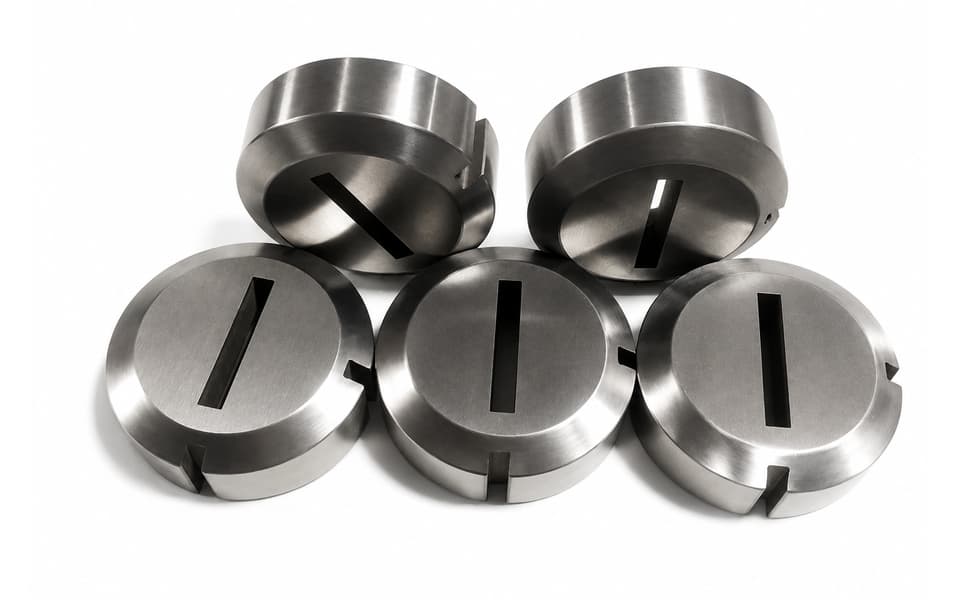
85 Series D Station RE8X50 Rectangular Parting Die
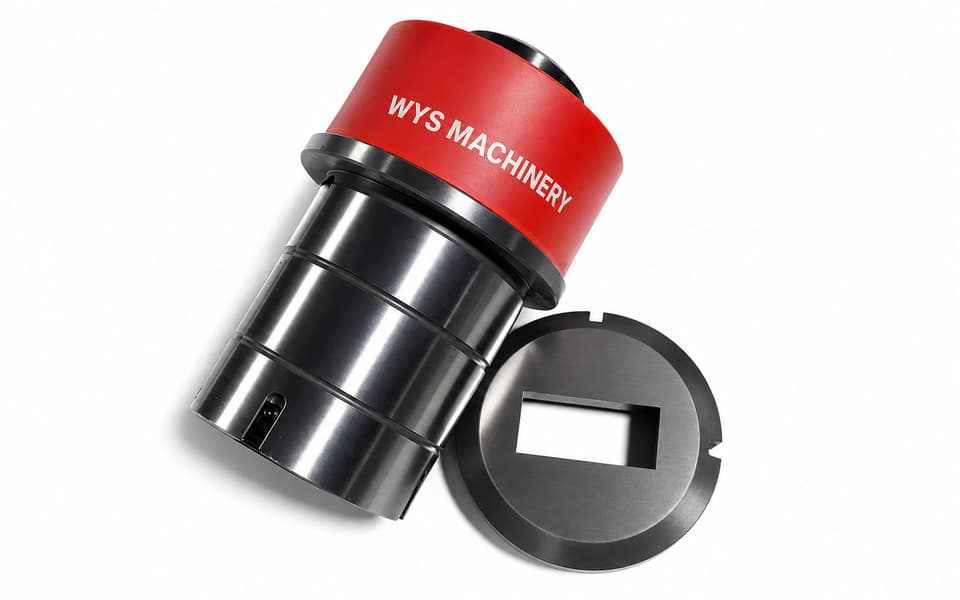
The 85 Series D Station RE8X50 rectangular parting die is designed for sheet metal parting, edge trimming and blank-sizing operations on compatible thick turret punch presses. It matches a nominal 8 × 50 mm rectangular punch profile, while the actual die opening and clearance are customized according to the customer’s sheet material, thickness and processing requirements. Manufactured from DC53 tool steel and heat-treated to HRC 58–60, this lower die provides reliable cutting support, dimensional stability and wear resistance in continuous sheet metal production.
Please add the quotation and send it to us and get in touch with us immediately
- Global service 24/7
- Lowest price for all products
- Best quality with Production Process
- After-Sale Warranty
- Technical Support
Description
The 85 Series D Station RE8X50 Rectangular Parting Die is a thick turret lower die developed for sheet metal parting, edge trimming and blank-sizing applications. “RE8X50” is the tooling shape designation: “RE” identifies the rectangular profile, while “8X50” represents the nominal 8 × 50 mm profile of the matching punch.
This product is a lower die rather than a complete punch assembly. It is used together with a compatible D Station RE8X50 punch to perform controlled cutting operations. By progressively punching along the four outer edges of a sheet or panel, the matched tooling can remove excess material and produce a blank with the required overall length and width.
The RE8X50 profile is commonly selected as a parting-tool configuration because its 50 mm cutting length improves productivity when trimming straight edges. Compared with using a small round or square tool for repeated nibbling, the rectangular cutting profile can reduce the number of punching strokes required for long edges when the tooling layout, machine capacity and sheet conditions are suitable.
The lower die is manufactured from DC53 tool steel and heat-treated to a working hardness of HRC 58–60. Precision machining, controlled heat treatment and finish grinding help maintain dimensional stability, cutting-edge accuracy and resistance to wear or chipping during repeated production.
Because RE8X50 identifies the nominal punch profile, the actual die opening is not necessarily exactly 8 × 50 mm. Appropriate punch-to-die clearance must be added to the die opening. WYS Machinery calculates and manufactures this clearance according to the customer’s sheet material, material thickness, tensile strength and required cut quality.
Customers should provide the machine model, station specification, sheet material, sheet thickness and required profile when ordering. WYS Machinery can supply the RE8X50 lower die separately as a replacement component or provide matching punches, guides and complete D Station thick turret tooling sets.
Key Features
- 85 Series thick turret tooling configuration
- D Station rectangular lower die
- RE8X50 tooling designation
- Matches a nominal 8 × 50 mm rectangular punch profile
- Designed for sheet parting and edge-trimming operations
- Suitable for progressively trimming the four edges of sheet metal blanks
- Helps produce panels and blanks with the required overall dimensions
- DC53 tool steel construction
- Working hardness of HRC 58–60
- Precision-ground die opening and cutting edges
- Customized die clearance for different materials and thicknesses
- Suitable for stainless steel, mild steel and other sheet metals
- Available as an individual replacement die
- Matching punch and complete tooling set available
- Optional TiN or TiCN coating subject to the application
- Free tooling design support based on customer drawings
Technical Specifications
| Specification | Details |
|---|---|
| Tool Category | Thick Turret Punch Tooling |
| Product Type | Rectangular Lower Die |
| Tooling Function | Parting, Edge Trimming and Blank Sizing |
| Station | D Station |
| Series | 85 Series |
| Shape Designation | RE8X50 |
| Profile | Rectangular |
| Nominal Matching Punch Size | 8 × 50 mm |
| Actual Die Opening | Nominal Punch Size Plus Specified Die Clearance |
| Die Material | DC53 Tool Steel |
| Working Hardness | HRC 58–60 |
| Applicable Materials | Stainless Steel, Mild Steel and Other Sheet Metals |
| Die Clearance | Customized According to Sheet Material and Thickness |
| Optional Coating | TiN or TiCN, Subject to Application Requirements |
| Supply Type | Individual Replacement Lower Die |
| Matching Components | RE8X50 Punch, Guide and D Station Assembly |
| Customization | Clearance, Dimensions, Orientation, Coating and Tool Configuration |
Sheet Parting and Edge-Trimming Function
The RE8X50 parting die is generally paired with a matching rectangular punch for trimming excess material from the perimeter of a sheet metal workpiece. The machine progressively positions the sheet so that the tooling can cut along its four edges and produce the required blank or panel dimensions.
Typical operations include:
- Trimming excess material from sheet metal blanks
- Cutting straight exterior edges
- Separating finished parts from surrounding sheet material
- Correcting the overall length or width of a panel
- Producing rectangular blanks in the required finished size
- Parting adjacent components in an optimized nesting layout
- Removing edge scrap after other punching operations
The exact processing method depends on the part layout, machine program, sheet thickness, required edge quality and available machine tonnage.
Customized Die Clearance
Correct punch-to-die clearance is essential for achieving stable cutting performance, acceptable burr height and reasonable tooling life. Since the RE8X50 designation refers to the nominal punch profile, the lower-die opening must be manufactured with the required clearance around the cutting profile.
WYS Machinery can customize the die clearance according to:
- Sheet material
- Sheet thickness
- Material tensile strength
- Punching direction
- Required edge quality
- Acceptable burr level
- Machine condition and alignment
- Production volume
- Customer-specific processing requirements
An unsuitable clearance may cause excessive burrs, poor fracture quality, high punching force, slug problems or premature damage to the punch and die. Customers should therefore provide accurate material and thickness information before production.
Ordering Information Required
To select and manufacture the correct RE8X50 lower die, customers should provide:
| Required Information | Purpose |
|---|---|
| Punch Press Manufacturer and Model | Confirms machine and tooling compatibility |
| Tooling Series | Confirms the 85 Series configuration |
| Station | Confirms the D Station dimensions |
| Matching Punch Profile | Confirms the nominal RE8X50 geometry |
| Sheet Material | Supports clearance and material selection |
| Sheet Thickness | Determines the appropriate die opening |
| Tensile Strength, if Available | Helps optimize clearance for demanding materials |
| Required Cutting Direction | Confirms tooling orientation |
| Part Drawing or Layout | Supports parting and edge-trimming design |
| Coating Requirement | Determines whether TiN or TiCN is appropriate |
Typical Hits Before Regrinding
| Sheet Material | Typical Reference Interval |
|---|---|
| Stainless Steel | Approximately 300,000 hits |
| Mild Steel | Approximately 500,000 hits |
These figures are general reference values for correctly matched and properly maintained thick turret cutting tooling. They are not guaranteed limits for the individual lower die.
The actual regrinding interval depends on the sheet material, thickness, tensile strength, punch-to-die clearance, lubrication, machine alignment, overlap between strokes, punching speed and maintenance practices. Parting operations involving repeated edge overlap may produce wear patterns that differ from ordinary single-hit punching.
Typical Tool Service Life
| Tool Profile | Approximate Reference Service Life |
|---|---|
| Round Cutting Tooling | Approximately 800,000 hits |
| Shaped Cutting Tooling | Approximately 600,000–700,000 hits |
| RE8X50 Rectangular Tooling | Refer to the Shaped Tooling Range |
The RE8X50 profile is classified as shaped tooling. Actual service life depends on operating conditions and should be assessed for the matched punch-and-die combination rather than the lower die alone.
Timely regrinding, correct die clearance and accurate machine alignment can help preserve cutting quality and extend the usable life of the tooling.
Optional TiN and TiCN Coatings
TiN Coating
TiN provides a hard, low-friction surface that can help reduce adhesive wear and improve tooling durability in general sheet metal applications. Its suitability for the lower die should be evaluated according to the material, cutting conditions and required service life.
TiCN Coating
TiCN offers increased hardness and resistance to abrasive and adhesive wear. It may be considered for stainless steel, higher-strength materials or demanding production conditions.
Coating selection should be based on the sheet material, thickness, punching frequency, lubrication and observed wear mechanism. For many applications, correct die clearance and cutting-edge preparation have a greater influence on performance than coating alone.
Typical Applications
The D Station RE8X50 rectangular parting die is suitable for producing or trimming sheet metal components used in:
- Electrical cabinets and control enclosures
- Switchgear and power-distribution equipment
- Sheet metal housings and panels
- HVAC and ventilation systems
- Metal furniture and storage equipment
- Elevator and escalator components
- Automotive sheet metal parts
- Machinery guards and protective covers
- Stainless steel equipment
- General precision sheet metal fabrication
It is particularly useful when a rectangular cutting profile is required for straight-edge trimming, part separation or blank-size adjustment.
Manufacturing Quality
The RE8X50 lower die is manufactured using selected DC53 tool steel, controlled heat treatment, precision machining and finish grinding. The working section is heat-treated to HRC 58–60 to provide a balance of wear resistance, compressive strength, toughness and dimensional stability.
Special attention is given to the straightness and consistency of the 50 mm cutting length. Accurate grinding helps the lower die work correctly with the matching punch, reducing uneven loading and localized wear.
Quality control can include inspection of:
- Die opening dimensions
- Customized punch-to-die clearance
- Profile straightness
- Cutting-edge condition
- Station dimensions
- Orientation and locating features
- Working hardness
- Surface finish
- Compatibility with the specified punch profile
Maintenance and Regrinding
The lower die should be inspected regularly for edge rounding, chipping, galling, uneven wear and changes in burr formation. Regrinding should be performed before excessive wear affects the finished edge or increases the load on the matching punch.
Recommended maintenance practices include:
- Keep the die surface and opening clean
- Remove slugs and metal particles regularly
- Verify punch and die alignment
- Monitor burr height on the processed sheet
- Use suitable lubrication where required
- Avoid excessive overlap or unsuitable programming
- Regrind before severe edge rounding develops
- Maintain consistent regrinding height across matched tooling
- Replace the die if chipping or structural damage cannot be safely repaired
Standard and Custom Thick Turret Punch Tooling
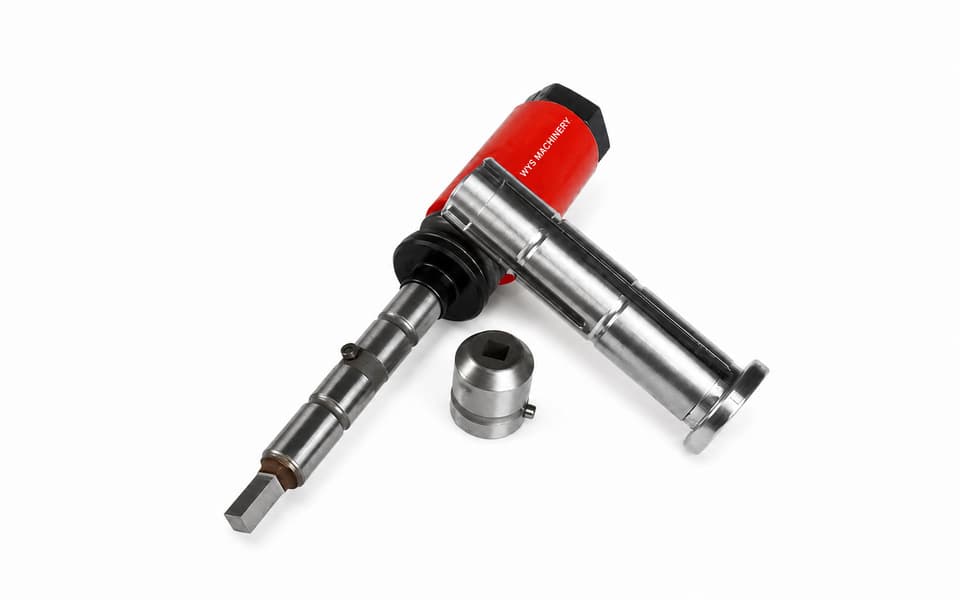
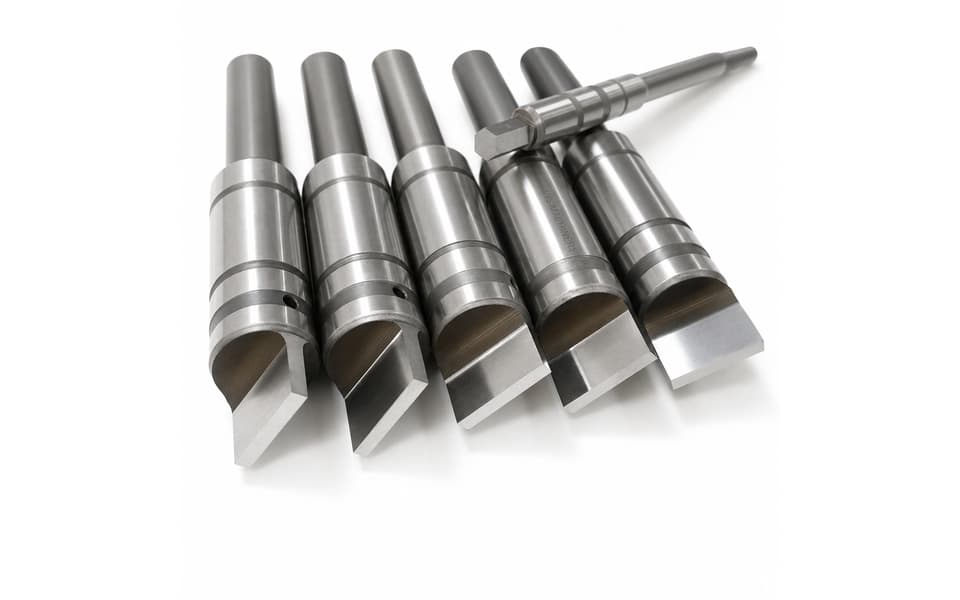
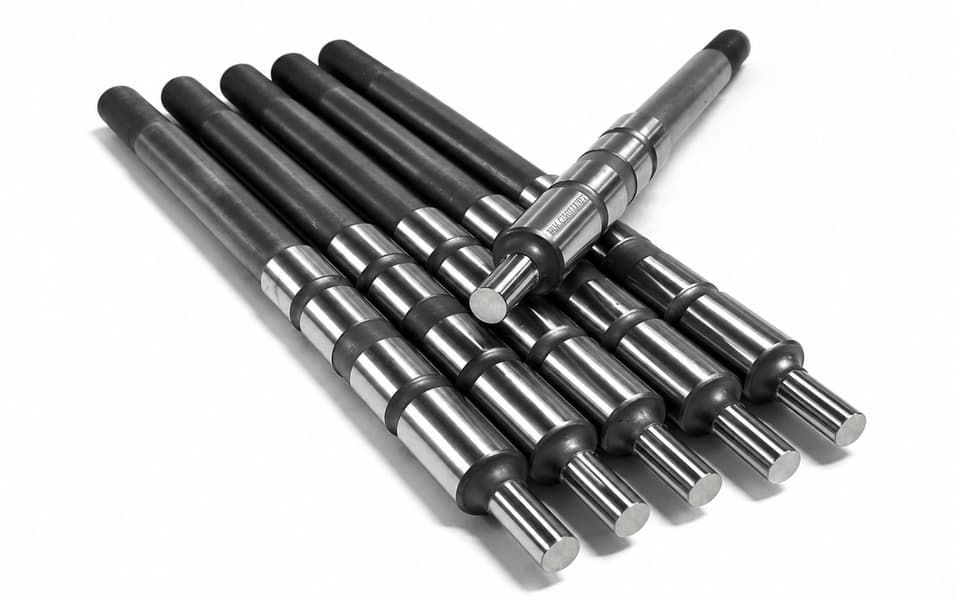
In addition to the standard D Station RE8X50 rectangular parting die, WYS Machinery supplies replacement components and complete thick turret tooling for round, square, rectangular, obround and special-shaped applications.
Available customization options include:
- Custom rectangular punch and die dimensions
- Material-specific die clearance
- Parting-tool configurations
- Special cutting-edge geometry
- Custom tool orientation
- TiN and TiCN coatings
- Replacement punches and lower dies
- Complete punch, guide and die assemblies
- Tooling manufactured from customer part drawings
- OEM and private-label production
Customers can send their finished-part drawing, sheet material, material thickness and machine information. Our engineering team can recommend a suitable station, cutting profile, die clearance and tooling configuration.
Custom Forming Tool Capabilities
WYS Machinery can also design and manufacture thick turret forming tools, including:
- Cluster Tools
- Knockout Tools
- Embossing Tools
- Extrusion Forming Tools
- Extrusion and Tapping Tools
- Bridge Forming Tools
- Pedestal Extrusion and Embossing Tools
- Louver Forming Tools
- Multi-Scribe Tools
- Sheet Marking Tools
- Lance-and-Form Tools
- Progressive Rib Tools
- Up-Bending Tools
- Hinge Tools
- Roller Pinching Tools
- Roller Shear Tools
- Rolling Rib Tools
- Rolling Offset Tools
Forming tooling can be developed according to the finished-part drawing, sheet material, material thickness, forming dimensions and machine configuration.
Product Identification for Buyers and Search Engines
What is an RE8X50 parting die?
An RE8X50 parting die is a rectangular thick turret lower die designed to work with a nominal 8 × 50 mm matching punch. It is commonly used for sheet parting, straight-edge trimming and blank sizing.
Is the die opening exactly 8 × 50 mm?
Not necessarily. RE8X50 identifies the nominal matching punch profile. The actual die opening includes punch-to-die clearance calculated according to the sheet material and thickness.
Can this lower die cut sheet metal by itself?
No. The lower die must work with a compatible RE8X50 punch. The punch and die together perform the cutting operation.
Can the die clearance be customized?
Yes. WYS Machinery can manufacture the lower-die opening according to the customer’s sheet material, thickness, tensile strength and required cutting quality.