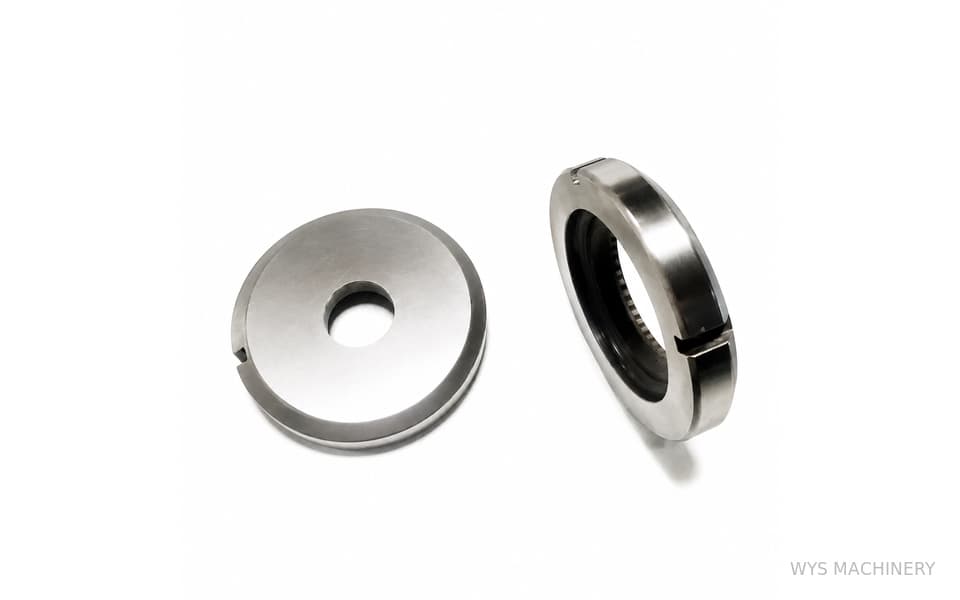
JFY Type D Station RO35 and RO68.5 Thin Turret Round Lower Dies
The JFY Type D Station RO35 and RO68.5 Thin Turret Round Lower Dies are designed for use with matching Ø35 mm and Ø68.5 mm round punches on compatible thin turret punch presses. Manufactured with precision-ground cutting edges and customized punch-to-die clearance, these lower dies support medium- and large-diameter circular-hole punching in electrical panels, machinery covers, ventilation components and other sheet metal products. Die material, opening size, clearance and surface treatment can be customized according to the sheet material, thickness and machine configuration.
Please add the quotation and send it to us and get in touch with us immediately
- Global service 24/7
- Lowest price for all products
- Best quality with Production Process
- After-Sale Warranty
- Technical Support
Description
The JFY Type D Station RO35 and RO68.5 Thin Turret Round Lower Dies are precision die components developed for medium- and large-diameter circular-hole punching on compatible thin turret punch presses.
The product group includes two specifications:
- RO35 lower die, used with a nominal Ø35 mm round punch
- RO68.5 lower die, used with a nominal Ø68.5 mm round punch
In these tooling designations, “RO” identifies the round punching profile, while the number indicates the nominal diameter of the corresponding punch in millimeters.
RO35 and RO68.5 describe the nominal punch sizes rather than the exact lower-die opening dimensions. The actual opening of each lower die must be larger than its matching punch because the required punch-to-die clearance is added according to the processed material and sheet thickness.
Both lower dies use a D Station thin turret configuration. Compared with smaller stations, the D Station provides the physical size and structural support required for larger punching profiles. However, station designation alone is not sufficient to guarantee compatibility. The die outside diameter, thickness, seating structure, locating features and machine model should be confirmed before manufacturing.
The RO35 lower die is suitable for medium-diameter round-hole applications. The RO68.5 lower die is designed for substantially larger openings and works with a much longer cutting perimeter. When RO68.5 tooling is used, the available machine tonnage, material strength and sheet thickness must be checked carefully.
The lower dies can be manufactured from DC53 tool steel for high compressive strength, dimensional stability, wear resistance and resistance to cutting-edge chipping. Working areas can be heat-treated to approximately HRC 58–60 and finish-ground to achieve the required opening dimensions and surface quality.
WYS Machinery manufactures each die opening according to the customer’s matching punch size, sheet material, thickness and required clearance. Complete punch-and-die sets or individual replacement lower dies can be supplied.
These products are manufactured by WYS Machinery as compatible replacement tooling. References to JFY describe the applicable tooling configuration and do not imply original manufacture, authorization or official affiliation.
Key Features
- JFY Type thin turret punch press compatibility
- D Station lower-die configuration
- Two round specifications: RO35 and RO68.5
- Used with nominal Ø35 mm and Ø68.5 mm punches
- Designed for medium- and large-diameter circular holes
- Precision-ground round die openings
- DC53 tool steel construction available
- Working hardness of HRC 58–60
- Customized punch-to-die clearance
- Controlled opening roundness and concentricity
- Suitable for mild steel, stainless steel and other sheet metals
- No angular indexing required for the round profile
- Replacement lower dies available separately
- Complete punch-and-die sets available
- Custom manufacturing from drawings or samples
- Free tooling selection and design support
Technical Specifications
| Specification | RO35 Lower Die | RO68.5 Lower Die |
|---|---|---|
| Product Category | Thin Turret Lower Die | Thin Turret Lower Die |
| Compatibility Type | JFY Type | JFY Type |
| Station | D Station | D Station |
| Shape Designation | RO35 | RO68.5 |
| Die Profile | Round | Round |
| Matching Nominal Punch Diameter | Ø35 mm | Ø68.5 mm |
| Actual Die Opening | Customized with Clearance | Customized with Clearance |
| Primary Application | Medium-Diameter Round Holes | Large-Diameter Round Holes |
| Die Material | DC53 Tool Steel | DC53 Tool Steel |
| Working Hardness | HRC 58–60 | HRC 58–60 |
| Angular Orientation | Not Required | Not Required |
| Die Clearance | Customized | Customized |
| Applicable Materials | Mild Steel, Stainless Steel and Other Sheet Metals | Mild Steel, Stainless Steel and Other Sheet Metals |
| Supply Option | Individual Die or Complete Set | Individual Die or Complete Set |
| Customization | Opening, Clearance, Material and Configuration | Opening, Clearance, Material and Configuration |
RO35 D Station Round Lower Die
The RO35 lower die is designed to work with a nominal Ø35 mm round punch. Its actual die-opening diameter includes the clearance required for the specified material and thickness.
RO35 is suitable for medium-diameter circular openings such as:
- Cable-entry holes
- Conduit-clearance holes
- Electrical component mounting holes
- Instrument openings
- Pipe-clearance holes
- Ventilation openings
- Access holes
- Circular locating features
- Openings in machinery panels
Compared with RO68.5, the RO35 profile has a shorter cutting perimeter and therefore generally requires less punching force under the same material and thickness conditions.
RO68.5 Large-Diameter Round Lower Die
The RO68.5 lower die is designed for use with a nominal Ø68.5 mm round punch. It is intended for large circular openings in panels, enclosures and industrial sheet metal components.
Typical RO68.5 applications include:
- Large cable-entry openings
- Fan and ventilation holes
- Instrument and gauge openings
- Pipe and duct clearance
- Large access ports
- Equipment-panel openings
- Circular assembly interfaces
- Openings in electrical cabinets
- Machinery-cover openings
The 68.5 mm punch creates a much longer cutting perimeter than the 35 mm punch. As a result, the punching force is significantly higher. Machine tonnage and D Station capacity must be verified before production.
Nominal Punch Size and Actual Die Opening
RO35 and RO68.5 indicate the nominal sizes of the matching punches. They do not indicate the exact finished dimensions of the lower-die openings.
The relationship can be understood as:
Actual die opening = Nominal punch size + Required total clearance
The exact opening depends on whether the customer defines clearance per side or as total clearance. This should be confirmed before manufacturing to prevent errors.
For example:
- RO35 uses a nominal Ø35 mm punch, while the lower-die opening is slightly larger
- RO68.5 uses a nominal Ø68.5 mm punch, while the lower-die opening is slightly larger
The finished-hole size is mainly determined by the punch profile, although material properties, elastic recovery, tool wear and machine condition may also affect the result.
Customized Punch-to-Die Clearance
WYS Machinery manufactures each lower-die opening according to the required punch-to-die clearance.
Clearance selection considers:
- Sheet material
- Sheet thickness
- Material tensile and shear strength
- Punch diameter
- Required edge quality
- Acceptable burr height
- Punching force
- Slug-release requirements
- Tool wear
- Lubrication
- Machine alignment
- Production requirements
Suitable clearance helps:
- Reduce excessive punching force
- Control burr formation
- Improve fracture consistency
- Reduce die-edge chipping
- Improve slug release
- Reduce material adhesion
- Extend punch and die service life
- Maintain more consistent hole quality
Clearance that is too small may increase punching force and accelerate cutting-edge wear. Excessive clearance may cause larger burrs, tapered hole walls and reduced dimensional accuracy.
Roundness and Concentricity
Round lower dies do not require the 0° or 45° orientation used for square and rectangular tooling. Their cutting profile remains unchanged when rotated.
However, accurate concentricity between the punch and lower die remains essential.
Incorrect concentricity may cause:
- Uneven clearance around the hole
- Burrs concentrated on one side
- Localized cutting-edge wear
- Punch-to-die contact
- Chipping of the die edge
- Poor hole roundness
- Punch deflection
- Premature tooling damage
For RO68.5, uniform clearance around the entire large cutting perimeter is particularly important.
Punching Force Considerations
The required punching force depends primarily on:
- Cutting perimeter
- Sheet thickness
- Material shear strength
- Punch-to-die clearance
- Cutting-edge condition
- Machine and tooling alignment
- Cutting-edge shear geometry, if applicable
For a round punch, the cutting perimeter increases directly with the punch diameter. Therefore, under the same material and sheet thickness, an RO68.5 tool requires considerably more punching force than an RO35 tool.
Before ordering or operating RO68.5 tooling, customers should confirm:
- Punch press tonnage
- Maximum station capacity
- Sheet thickness
- Material strength
- Tooling dimensions
- Required die clearance
- Machine condition
If the calculated force is close to the machine or station limit, a suitable shear design or alternative processing strategy may need to be considered.
Slug Support and Removal
Reliable slug removal is important when punching medium- and large-diameter holes. The lower-die geometry should allow the punched slug to pass through or be discharged according to the machine configuration.
Poor slug removal may cause:
- Slug pulling
- Slug stacking
- Damage to the workpiece surface
- Double punching
- Punch or die damage
- Machine stoppage
- Reduced production efficiency
The internal die geometry, relief and discharge path can be manufactured according to the customer’s existing tooling structure and machine requirements.
Typical Applications
The RO35 and RO68.5 D Station thin turret lower dies are suitable for manufacturing:
- Electrical cabinets and control enclosures
- Switchgear and distribution equipment
- HVAC and ventilation components
- Machinery guards and protective covers
- Electronic equipment cabinets
- Industrial control panels
- Stainless steel equipment
- Automotive sheet metal components
- Instrument panels
- Metal furniture
- Pipe and duct components
- General precision sheet metal products
They are suitable for customers requiring compatible replacement lower dies for medium- and large-diameter circular-hole punching.
Manufacturing Quality
The lower dies are manufactured using selected tool steel, controlled heat treatment, precision machining and finish-grinding processes.
Quality inspection can include:
- Die-opening diameter measurement
- Opening-roundness inspection
- Opening-concentricity inspection
- Cutting-edge condition inspection
- Customized-clearance verification
- Outside-diameter measurement
- Die-thickness measurement
- Seating-surface flatness inspection
- Locating-feature inspection
- Working-hardness testing
- Internal-relief inspection
- Surface-finish inspection
Accurate control of the opening diameter and concentricity helps maintain uniform punch clearance and consistent hole quality.
Typical Hits Before Regrinding
| Sheet Material | General Reference Before Regrinding |
|---|---|
| Stainless Steel | Approximately 300,000 hits |
| Mild Steel | Approximately 500,000 hits |
These figures are general references rather than guaranteed limits. Actual regrinding intervals depend on:
- Punching diameter
- Sheet material and thickness
- Material strength
- Die clearance
- Machine alignment
- Lubrication
- Punching frequency
- Cutting-edge condition
- Maintenance practices
RO68.5 has a longer cutting perimeter and a higher total cutting load per stroke, so actual inspection and maintenance intervals may differ from those of RO35.
Maintenance and Regrinding
The lower dies should be inspected regularly for:
- Cutting-edge rounding
- Localized chipping
- Uneven wear
- Material adhesion
- Excessive burr formation
- Slug accumulation
- Damage to the internal relief
- Seating-surface contamination
- Punch and die misalignment
Regrinding should be performed before excessive edge wear increases the punching force or affects hole quality.
After regrinding:
- Confirm the remaining die height
- Remove grinding burrs
- Inspect the cutting edge
- Verify the die opening
- Clean the slug-discharge area
- Confirm the installation and machine setup
- Perform a controlled test stroke
Thin Turret Tooling Compatibility
Thin turret and thick turret dies are not interchangeable. Even if they share the same D Station or RO35 designation, their outside dimensions, seating structures, locating features and installation interfaces may be different.
Before manufacturing, customers should provide:
- Punch press manufacturer
- Exact machine model
- Existing tooling series
- Station information
- Existing lower-die dimensions
- Existing tooling drawing or sample
- Matching punch diameter
- Sheet material
- Sheet thickness
- Required clearance
- Finished-part drawing
WYS Machinery can manufacture compatible replacement lower dies after verifying the customer’s machine and tooling information.
Ordering Information Required
| Required Information | Purpose |
|---|---|
| Punch Press Manufacturer and Model | Confirms machine compatibility |
| Tooling Structure | Confirms thin turret configuration |
| Station | Confirms D Station dimensions |
| Required Size | Selects RO35 or RO68.5 |
| Matching Punch Diameter | Confirms the nominal profile |
| Existing Die Dimensions | Confirms installation compatibility |
| Sheet Material | Supports clearance selection |
| Sheet Thickness | Determines the die opening |
| Material Strength | Supports force evaluation |
| Required Clearance | Determines the finished die opening |
| Existing Sample or Drawing | Supports replacement manufacturing |
| Required Quantity | Confirms the production scope |
Standard and Custom Thin Turret Lower Dies
WYS Machinery supplies standard and custom thin turret lower dies for round, square, rectangular, obround and special-shaped punching applications.
Available options include:
- RO35 D Station lower dies
- RO68.5 D Station lower dies
- Other customized round die openings
- Individual replacement lower dies
- Complete punch-and-die sets
- Material-specific die clearance
- Customized outside dimensions
- Customized thickness and seating structure
- Special internal relief
- Slug-discharge optimization
- Tooling manufactured from existing samples
- Tooling developed from machine drawings
- Tooling designed from finished-part drawings
- OEM and private-label manufacturing
Customers can provide their machine model, existing lower-die dimensions, matching punch information, sheet material and thickness. Our engineering team can recommend the appropriate die material, opening size, clearance and structural configuration.
Product Identification and Frequently Asked Questions
What do RO35 and RO68.5 mean?
“RO” identifies a round punching profile. RO35 is used with a nominal Ø35 mm punch, while RO68.5 is used with a nominal Ø68.5 mm punch.
Are RO35 and RO68.5 two different shapes?
No. Both are round dies. They have the same basic profile type but different nominal diameters.
Are the die openings exactly 35 mm and 68.5 mm?
Normally, no. These numbers identify the matching nominal punch diameters. The actual lower-die openings are slightly larger because the required clearance must be included.
Are these upper punches or lower dies?
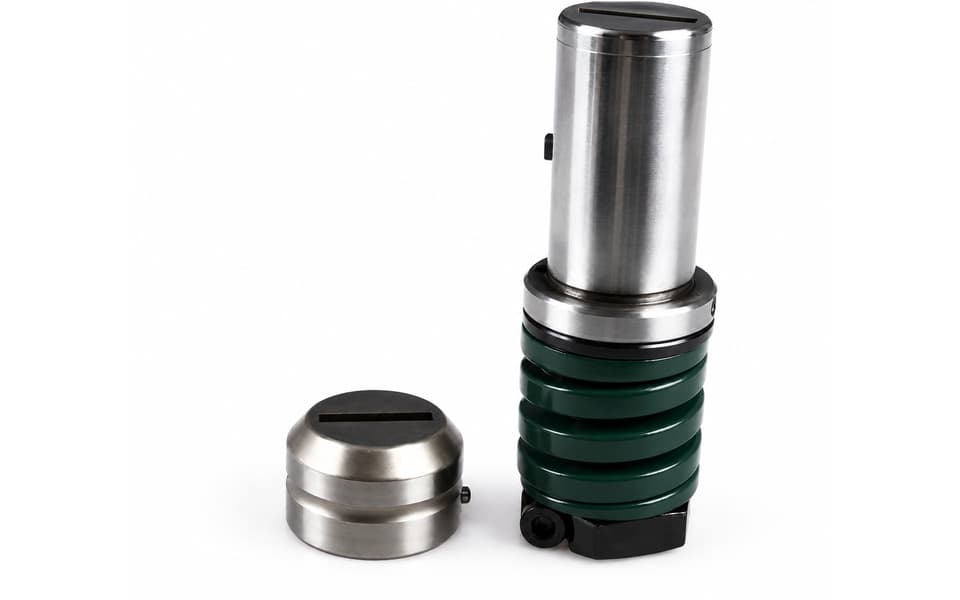
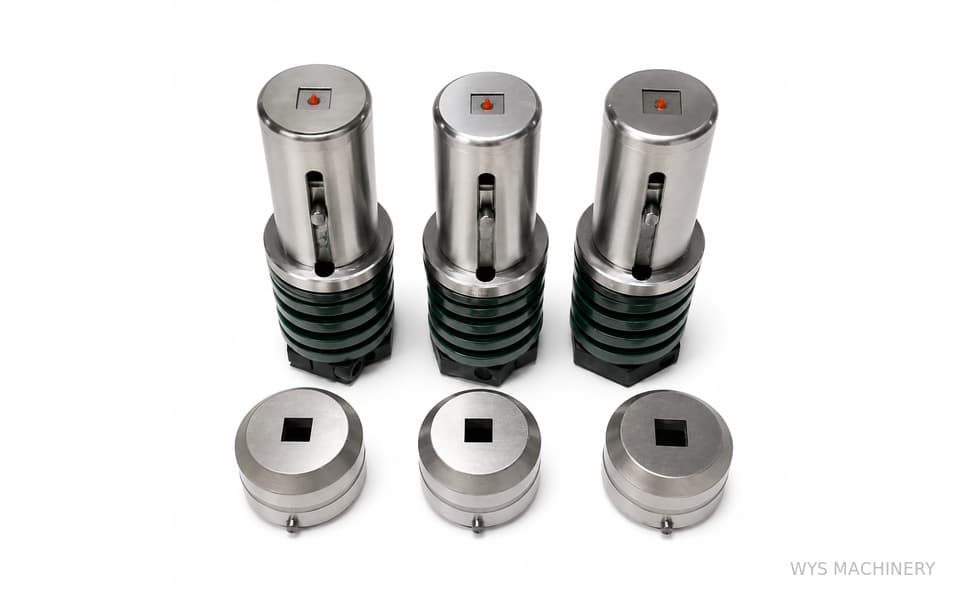
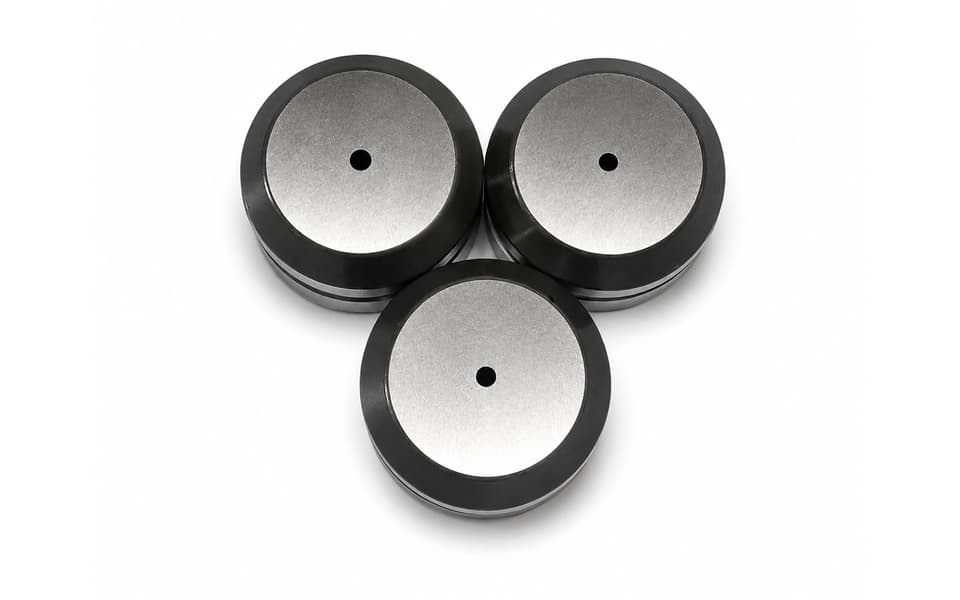
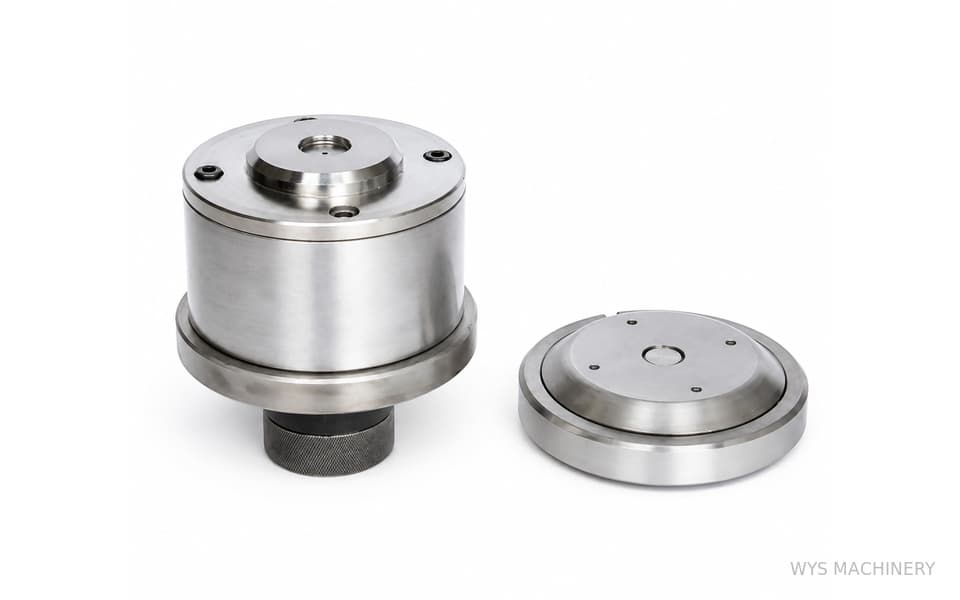
The products shown in these pictures are D Station lower dies.
Are the matching punches included?
The pictures show lower dies only. Matching punches can be supplied separately or as part of a complete punch-and-die set.
Does round tooling require a 0° or 45° orientation?
No. A round profile remains unchanged when rotated, so angular indexing is not required. Accurate punch-and-die concentricity is still essential.
Can RO68.5 be used with any sheet thickness?
No. Its long cutting perimeter produces relatively high punching force. Machine tonnage, station capacity, sheet thickness and material strength must be verified.
Can the lower-die clearance be customized?
Yes. The die opening is manufactured according to the matching punch, sheet material, thickness and required processing quality.
Is this original JFY tooling?
No. It is compatible replacement tooling manufactured by WYS Machinery. The JFY reference describes compatibility and does not imply original manufacture or official affiliation.