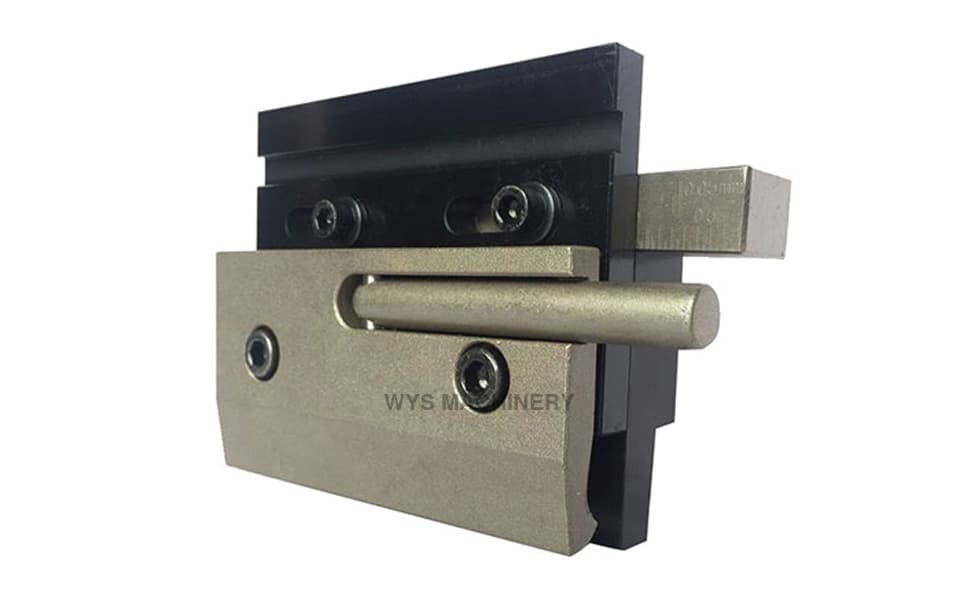
KJ-2-Q Single-Sided Mechanical Press Brake Quick Clamp
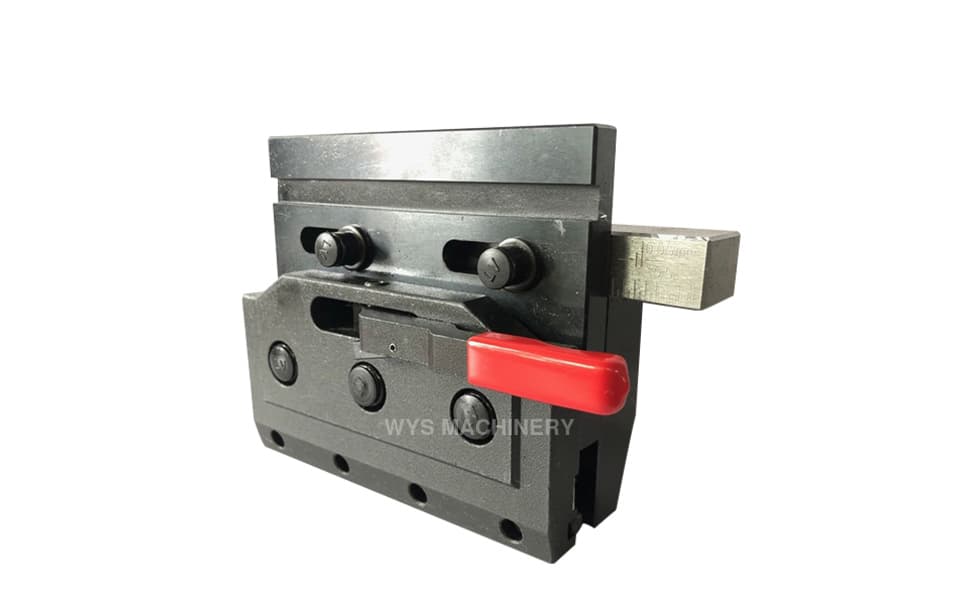
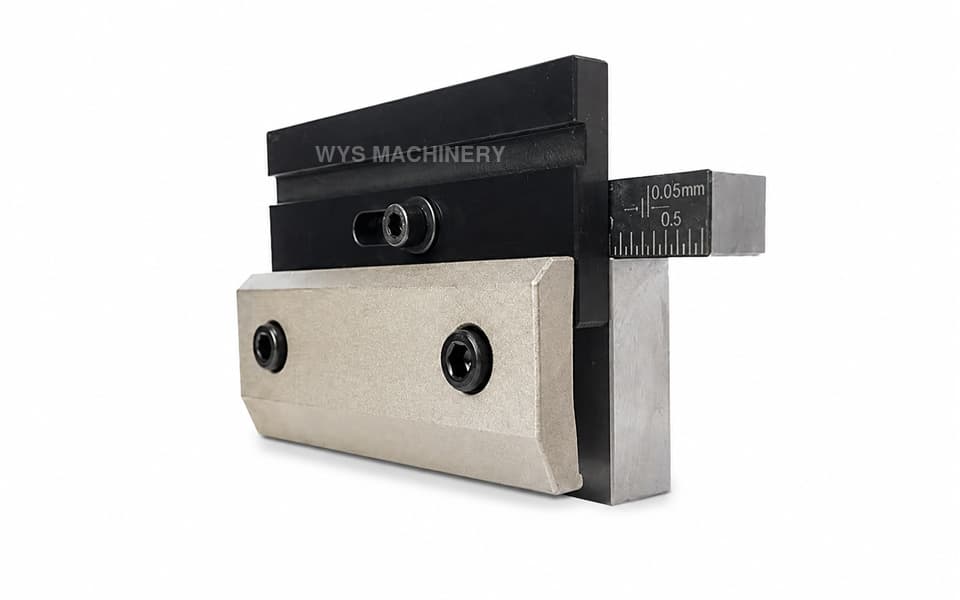
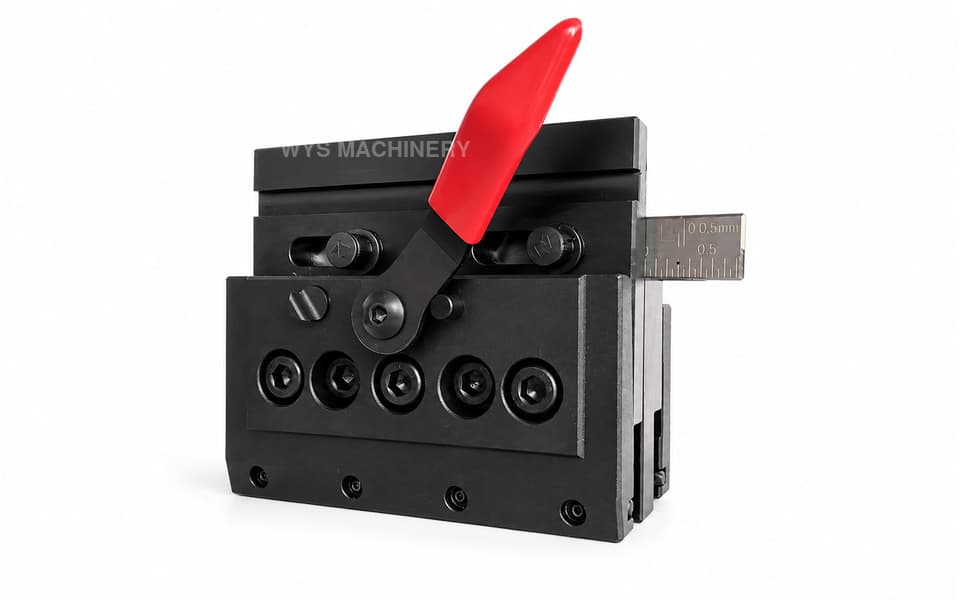
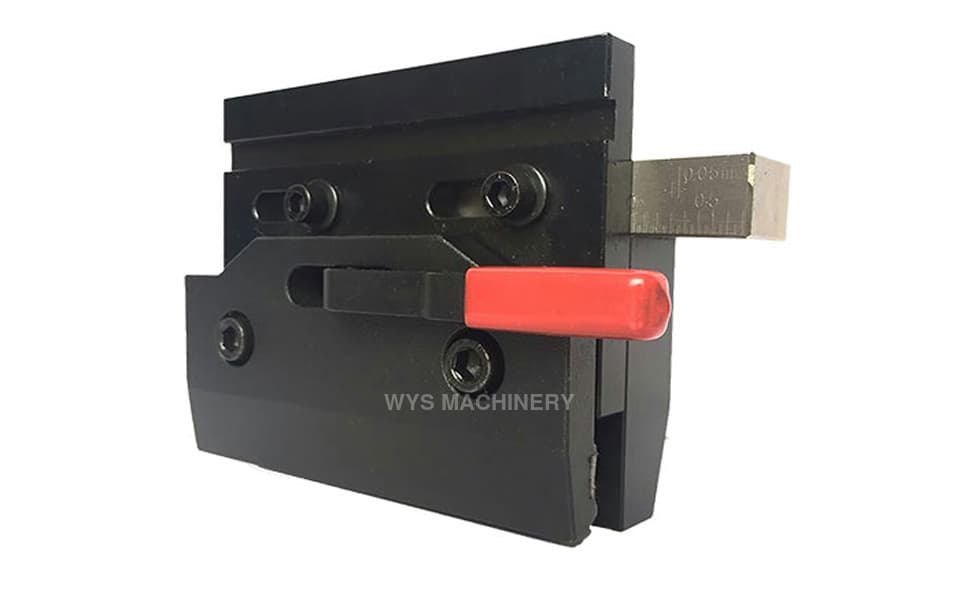
The KJ-2-Q is a single-sided mechanical press brake quick clamp designed for reliable upper tool installation and efficient manual tool changes. It features a side-loading configuration, 100 mm working height, 150 mm clamp width, and a phosphated surface for improved corrosion and wear resistance. An optional knurled handle provides enhanced grip and helps prevent hand slippage during operation.
Please add the quotation and send it to us and get in touch with us immediately
- Global service 24/7
- Lowest price for all products
- Best quality with Production Process
- After-Sale Warranty
- Technical Support
Description
The KJ-2-Q Single-Sided Mechanical Press Brake Quick Clamp provides a simple and dependable solution for clamping press brake upper tooling. Its manually operated mechanical structure enables the operator to clamp or release the upper punch without requiring hydraulic pressure, compressed air, or an electrical control system.
Designed for horizontal tool loading, the upper punch can be inserted into the clamp from the side of the press brake. The cylindrical operating handle activates the internal mechanical clamping structure, allowing the punch to be securely positioned for bending operations and conveniently released during tool changes.
The clamp has a working height of 100 mm and an overall width of 150 mm. Its main components are manufactured from 45# carbon steel, providing the strength and structural rigidity required for stable press brake tooling installation.
A phosphating treatment is applied to the clamp surface. This protective conversion coating helps improve corrosion resistance, increases surface durability, and provides a uniform industrial finish suitable for sheet metal fabrication environments.
For improved operating safety and comfort, the cylindrical handle can be supplied with an optional knurled surface. The knurled texture increases friction between the operator’s hand and the handle, improves grip, and helps reduce the possibility of hand slippage during clamp locking and releasing.
Critical mounting and alignment dimensions are precision-machined to a tolerance of ±0.02 mm. Parallelism and perpendicularity are controlled within 0.02 mm, supporting accurate upper punch positioning and consistent alignment between the punch and lower die.
Key Features
- Single-sided press brake upper tool clamp
- Fully mechanical manual clamping structure
- Cylindrical lever handle for locking and releasing
- Optional knurled handle for increased friction and grip
- Helps reduce accidental hand slippage during operation
- Horizontal side loading of compatible upper punches
- Faster tool replacement than conventional screw-only clamps
- No hydraulic, pneumatic, or electrical power required
- 100 mm working height
- 150 mm clamp width
- Main components manufactured from 45# carbon steel
- Phosphated surface for improved corrosion resistance
- Key dimensional tolerance of ±0.02 mm
- Parallelism controlled within 0.02 mm
- Perpendicularity controlled within 0.02 mm
- Suitable for new press brakes and clamping system upgrades
Technical Specifications
| Item | Specification |
|---|---|
| Model | KJ-2-Q |
| Product Type | Single-Sided Press Brake Quick Clamp |
| Clamping Structure | Mechanical |
| Operating Method | Manual Lever Operation |
| Handle Type | Cylindrical Rod Handle |
| Optional Handle Feature | Knurled Anti-Slip Surface |
| Tool Installation Method | Horizontal Side Loading |
| Application | Press Brake Upper Tool Clamping |
| Working Height | 100 mm |
| Clamp Width | 150 mm |
| Main Material | 45# Carbon Steel |
| Surface Treatment | Phosphating |
| Key Dimensional Tolerance | ±0.02 mm |
| Parallelism | ≤0.02 mm |
| Perpendicularity | ≤0.02 mm |
| External Power Required | No |
Mechanical Clamping Operation
The compatible press brake punch is inserted horizontally into the clamping position from the side of the machine. After the punch reaches the correct position, the operator moves the cylindrical handle to activate the mechanical clamping structure and secure the upper tool.
Moving the handle in the release direction opens the clamp, allowing the punch to be removed or replaced. This direct mechanical operation simplifies daily tool changes and eliminates the need for a separate hydraulic or pneumatic power unit.
Optional Knurled Anti-Slip Handle
The operating handle can be manufactured with a knurled surface according to customer requirements. Knurling creates a textured gripping area that increases friction between the handle and the operator’s hand.
This optional feature provides a firmer grip, particularly when the operator is wearing work gloves or when the handle surface is exposed to oil. It can improve operating control and help prevent the handle from slipping out of the hand during clamping and releasing.
Phosphated Surface Treatment
The KJ-2-Q features a phosphated surface rather than an untreated steel finish. Phosphating forms a protective conversion layer on the metal surface, helping improve corrosion resistance and reduce the effects of moisture and normal workshop exposure.
The treatment also creates a uniform industrial appearance and provides additional surface protection for the mechanical clamp during transportation, storage, installation, and routine press brake operation.
Side-Loading Upper Tool Installation
The KJ-2-Q is designed for press brake tooling that can be inserted horizontally from the side of the clamping line. This configuration is suitable for compatible full-length and segmented upper punches when adequate side access is available.
The upper tool tang profile, safety groove, mounting dimensions, and insertion direction must be checked before ordering. Side-loading clamps should not automatically be assumed to support vertical tool loading from below.
Precision and Alignment
Accurate punch positioning is important for maintaining consistent bending angles and reducing alignment differences along the press brake working length. The KJ-2-Q is therefore precision-machined at its critical mounting, locating, and clamping surfaces.
Key dimensional tolerances are controlled within ±0.02 mm. Parallelism and perpendicularity are maintained within 0.02 mm to support stable upper tool installation and accurate alignment between the press brake punch and lower die.
Typical Applications
- CNC and conventional hydraulic press brakes
- Mechanical clamping of press brake upper punches
- Side-loading press brake tooling systems
- Full-length and segmented upper tooling
- Frequent manual punch changeovers
- Electrical cabinet and enclosure production
- Metal door and equipment panel manufacturing
- HVAC duct and ventilation component fabrication
- Stainless steel and carbon steel sheet bending
- General sheet metal fabrication
- Press brake tool holder replacement
- Manual quick-clamping system upgrades
Mechanical Quick Clamp Advantages
The KJ-2-Q combines faster manual tool changes with a straightforward mechanical structure. Compared with conventional screw-only clamps, its lever-operated mechanism can reduce repeated tightening work and shorten upper punch changeover time.
Because it does not depend on hydraulic pressure, compressed air, or electrical controls, the clamp is convenient to install and maintain. It is particularly suitable for fabrication shops seeking an economical manual quick-clamping solution for compatible press brake upper tooling.
Compatibility and Customization
Press brake ram connections and upper tooling interfaces vary among machine models and tooling systems. Compatibility must be confirmed according to the press brake ram profile, intermediate dimensions, upper punch tang, safety groove, mounting-hole positions, and tool-loading direction.
Customers can provide machine drawings, clamp dimensions, upper tool profiles, or clear installation photographs. WYS Machinery can evaluate the mounting interface and provide customized dimensions, surface treatments, handle configurations, and press brake clamping solutions according to the actual machine and tooling requirements.