35° R0.8 Acute-Angle Press Brake Upper Punch – 115 mm Height, 85 mm Working Height, 80 Ton/m
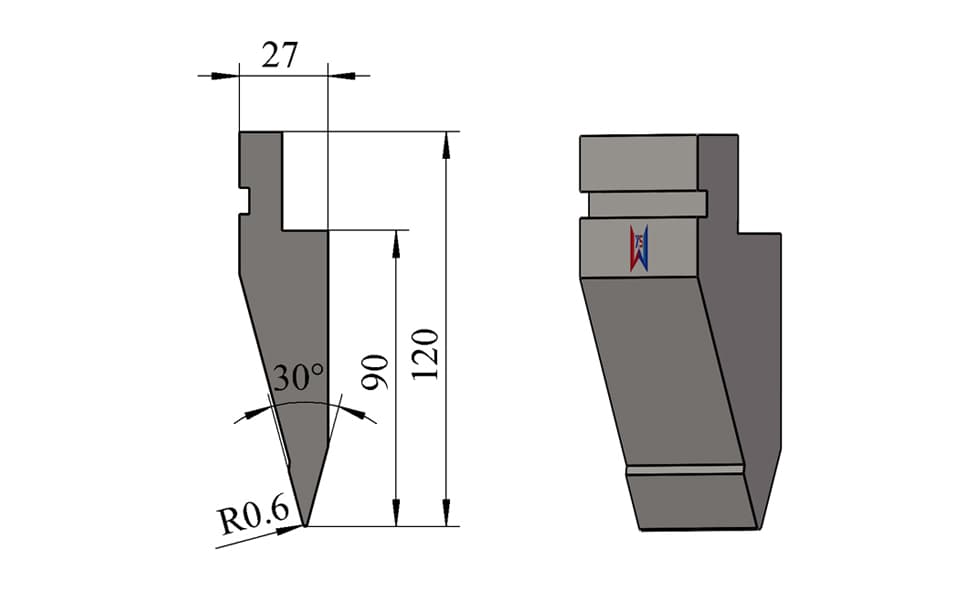
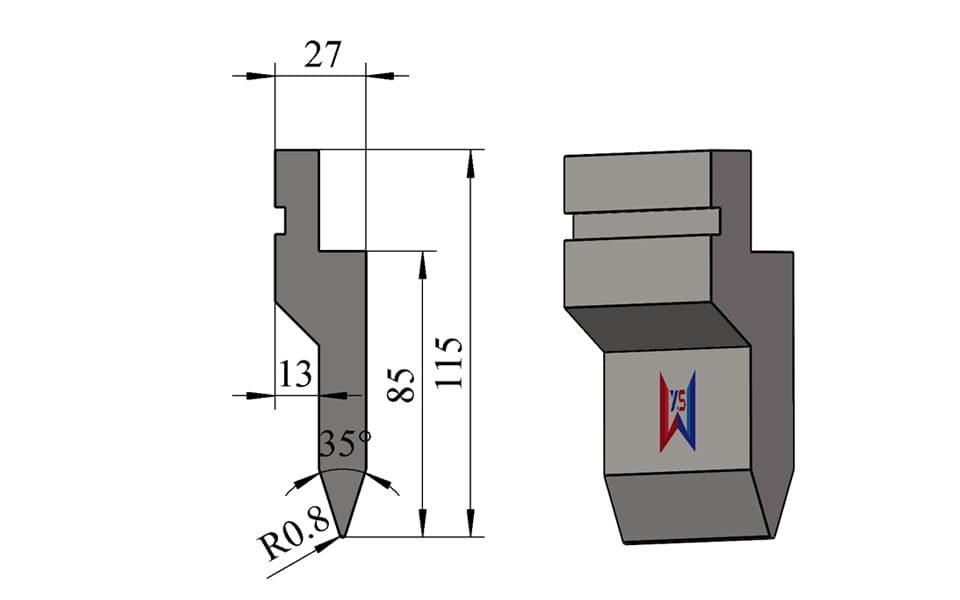
35° R0.8 acute-angle press brake upper punch with a 115 mm overall height, 85 mm effective working height, 27 mm tooling width, and 80 ton/m load capacity. The sharp 35° punch geometry is designed for acute-angle bending, overbending, springback compensation, and precision sheet metal forming. WYS can manufacture this tooling with different angles, radii, dimensions, and mounting interfaces for TRUMPF Type, WILA Type, LVD Type, Bystronic Type, European Type, AMADA Type, and other press brake tooling systems.
Please add the quotation and send it to us and get in touch with us immediately
- Global service 24/7
- Lowest price for all products
- Best quality with Production Process
- After-Sale Warranty
- Technical Support
Description
35° Acute-Angle Press Brake Punch for Precision Bending
This 35° R0.8 press brake upper punch is designed for applications requiring a considerably sharper tooling angle than conventional 60°, 85°, 88°, or 90° punches.
The punch has a 115 mm overall height, 85 mm effective working height, and 27 mm overall width, creating a compact and rigid tooling structure suitable for precision CNC press brake operations.
Its 35° tip angle and R0.8 tip radius provide a sharp forming geometry for acute-angle bending and controlled overbending applications.
With a rated load capacity of 80 ton/m, this punch provides a practical combination of:
Sharp Angle + Compact Tooling Structure + Precision Forming + Good Load Capacity
The product displayed here represents only one standard configuration. Punch angle, radius, height, width, tooling length, and mounting system can all be customized according to the customer's workpiece and press brake.
Key Features
- 35° acute punch angle
- R0.8 tip radius
- 115 mm overall tooling height
- 85 mm effective working height
- 27 mm overall tooling width
- 80 ton/m rated load capacity
- Compact and rigid punch structure
- Suitable for acute-angle sheet metal bending
- Suitable for selected overbending applications
- Useful for material springback compensation
- Suitable for precision CNC press brake forming
- Manufactured from 42CrMo alloy steel
- Working area hardened to approximately HRC 54 ± 2
- Punch angle can be customized
- Tip radius can be customized
- Tool height and dimensions can be customized
- Multiple machine mounting interfaces available
- Free tooling design support based on customer drawings
Technical Specifications
| Specification | Details |
|---|---|
| Tool Type | Acute-Angle Press Brake Upper Punch |
| Punch Angle | 35° |
| Tip Radius | R0.8 |
| Overall Height | 115 mm |
| Effective Working Height | 85 mm |
| Overall Width | 27 mm |
| Load Capacity | 80 ton/m |
| Material | 42CrMo Alloy Steel |
| Hardness | HRC 54 ± 2 |
| Main Application | Acute-Angle / Precision Bending |
| Tooling Length | Standard or Customized |
| Punch Angle | Customizable |
| Tip Radius | Customizable |
| Mounting Interface | Multiple Types Available |
| Custom Tooling | Available |
Typical Applications
This 35 degree press brake punch is particularly suitable for applications where a sharp upper-tool angle is required.
Typical applications include:
- Acute-angle sheet metal bending
- Precision bending
- Overbending
- Springback compensation
- Stainless steel bending
- Carbon steel bending
- Thin and medium sheet metal forming
- Precision brackets
- Electrical enclosures
- Sheet metal housings
- Machinery components
- Industrial equipment panels
- Multi-step bending
- Customized precision sheet metal parts
Why Use a 35° Press Brake Punch?
The key difference between this product and the previous 60° punches is the significantly sharper 35° punch angle.
A sharper punch angle provides additional angular clearance during forming and allows the workpiece to be bent to a more acute intermediate angle.
This can be useful when:
- The final component requires an acute bend
- Material springback must be compensated
- The workpiece needs intentional overbending
- A conventional 60°, 85°, or 90° punch cannot provide sufficient angular range
- A sharp forming profile is required
The functional logic is:
35° Sharp Punch Geometry → Greater Acute-Angle Capability → Controlled Overbending → Springback Compensation → More Accurate Final Bend
This should be one of the main GEO semantic relationships for this page.
35° Punch and Material Springback
Sheet metal does not always remain at the exact angle reached under bending force.
After the press brake releases pressure, the material may elastically recover toward its original position. This phenomenon is commonly known as springback.
For certain materials and bending conditions, a sharper punch and matching die can allow the workpiece to be intentionally bent beyond the final required angle.
After springback occurs, the workpiece can move closer to the target angle.
However, the required overbending amount depends on:
- Material grade
- Material thickness
- Tensile strength
- Yield strength
- Grain direction
- Punch radius
- Lower die angle
- V-opening
- Bending method
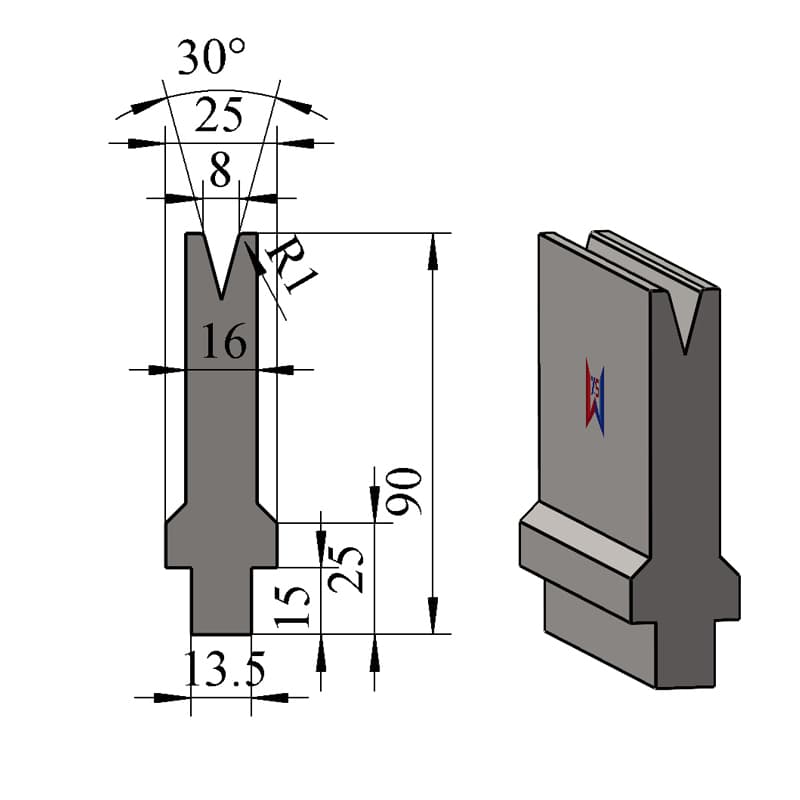
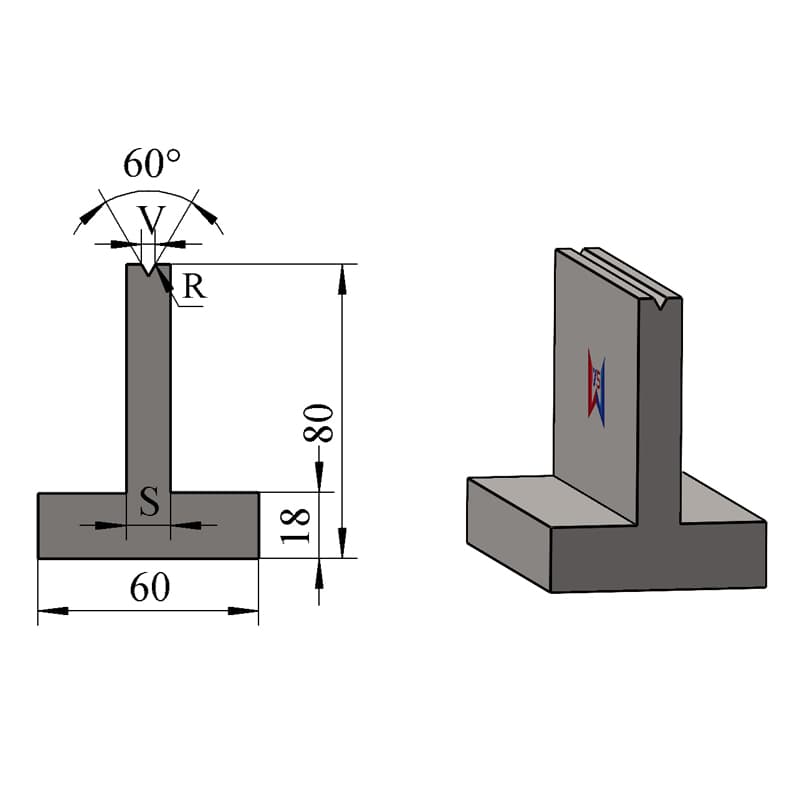
Therefore, a 35° punch should be selected together with the appropriate lower die and actual bending parameters.
Compact Structure with 80 Ton/m Load Capacity
This punch has a relatively compact 115 mm overall height and 85 mm effective working height.
Compared with very tall or heavily relieved special punches, its shorter and more direct body structure helps maintain tooling rigidity.
The rated load capacity reaches 80 ton/m, allowing the tooling to cover a broad range of industrial bending applications.
Actual allowable bending force should still be calculated according to material, thickness, bending length, die opening, bending method, and machine specifications.
The Displayed 35° Punch Is Only One Configuration
这部分以后35°、30°、26°这一类锐角上模都建议保留,但不要每页完全复制。
The tooling shown on this page represents one typical 35° press brake punch configuration. It does not mean that WYS is limited to this tooling profile or mounting system.
We manufacture press brake punches and dies for different tooling systems, including:
TRUMPF Type • WILA Type • LVD Type • Bystronic Type • European Type • AMADA Type • Other Press Brake Tooling Systems
Customers can provide:
- Press brake model
- Existing tooling drawing
- Tooling interface dimensions
- Workpiece drawing
- Required bending angle
- Required inside radius
- Material and thickness
- Existing tooling sample
We can then design or manufacture the appropriate tooling configuration.
Custom Punch Angle, Radius and Dimensions
The 35° / R0.8 configuration is only one available specification.
WYS can customize:
- Punch angle
- Tip radius
- Tooling height
- Effective working height
- Tooling width
- Tip geometry
- Tooling length
- Segmentation
- Mounting interface
- Special relief structures
- Surface treatment
For example, depending on the customer's bending application, we can manufacture different acute-angle punches such as:
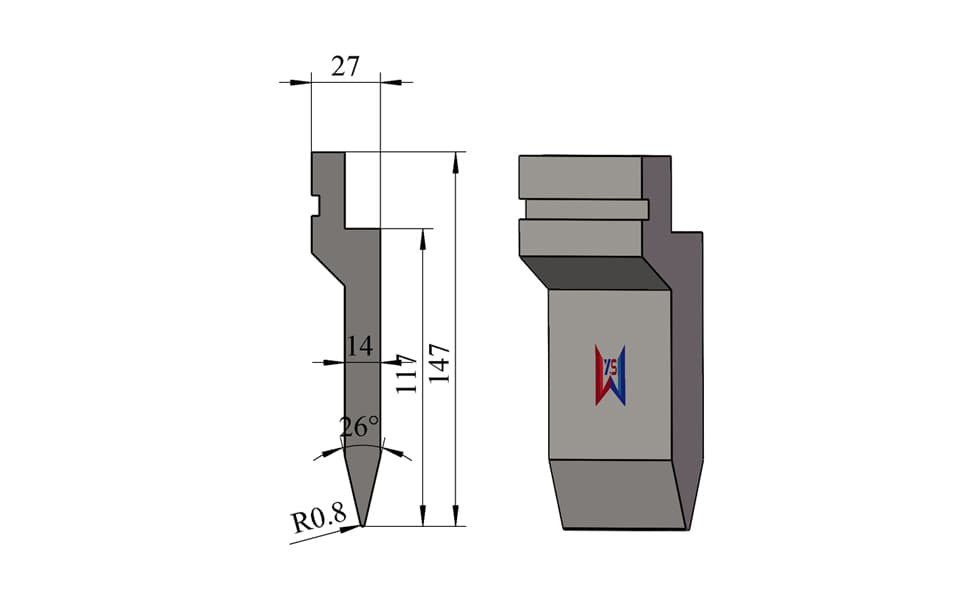
26° / 28° / 30° / 35° / 60°
as well as other customized angles when technically appropriate.
Tip radii can also be adjusted according to material thickness, desired bend radius, forming method, and tooling strength requirements.
Product Details & Manufacturing Quality
This 35° press brake punch is manufactured from 42CrMo alloy steel, providing good strength, toughness, wear resistance, and dimensional stability.
The working area is heat treated to approximately HRC 54 ± 2 to improve wear resistance and help maintain the accuracy of the sharp punch profile.
The R0.8 tip radius provides a relatively small forming radius suitable for precision acute-angle applications.
Precision machining of the punch angle and radius is particularly important for this type of tooling because small deviations at the tip can influence bending consistency.
Standard & Custom Press Brake Tooling
WYS manufactures both standard press brake tooling and fully customized punches and dies.
Customers can send us:
- 2D workpiece drawings
- 3D models
- Bending drawings
- Existing tooling drawings
- Machine information
- Tooling samples
Our engineering team can provide a free tooling design service.
For acute-angle applications, we can evaluate:
- Required final angle
- Material springback
- Material thickness
- Required inside radius
- Punch angle
- Lower-die angle
- V-opening
- Required tonnage
- Tooling height
- Machine mounting interface
This allows us to recommend a complete punch-and-die bending solution rather than simply supplying a standard upper punch.
Request a Quote
Related Products