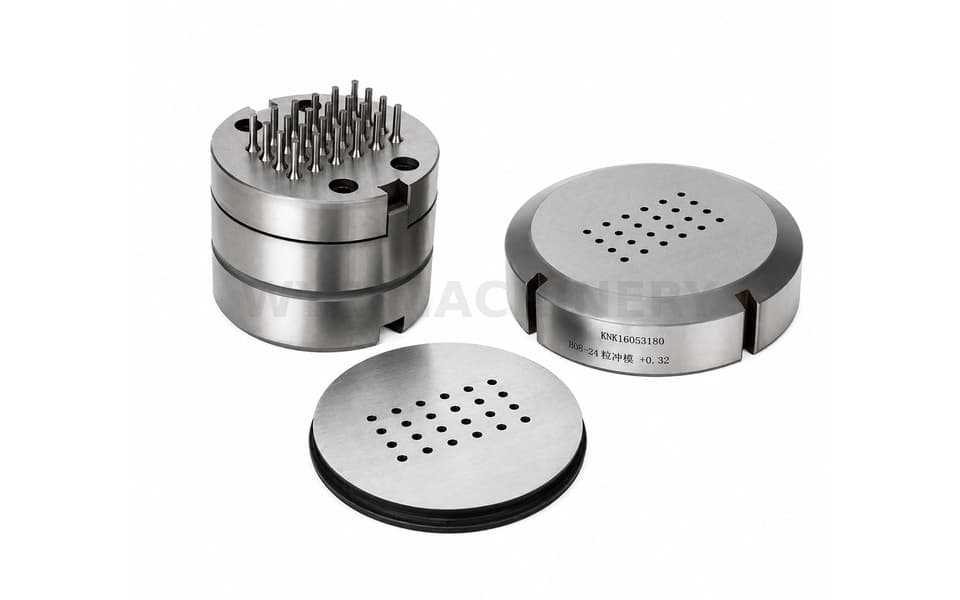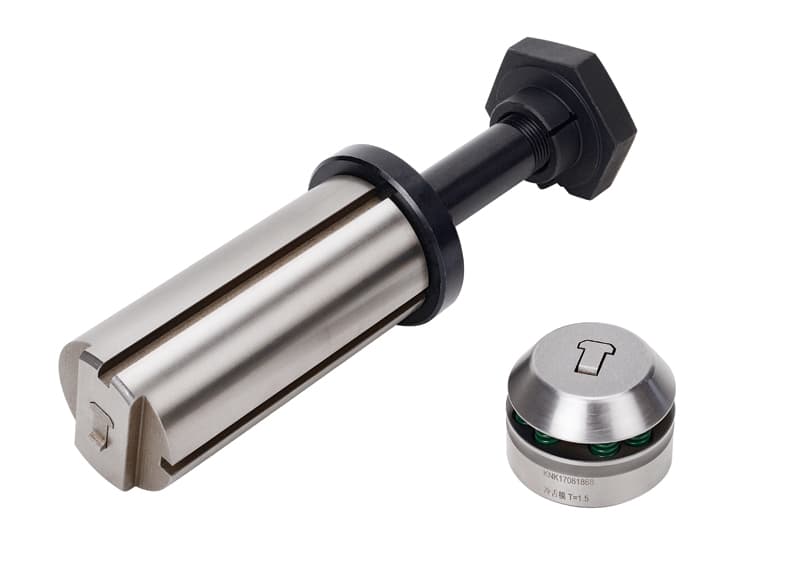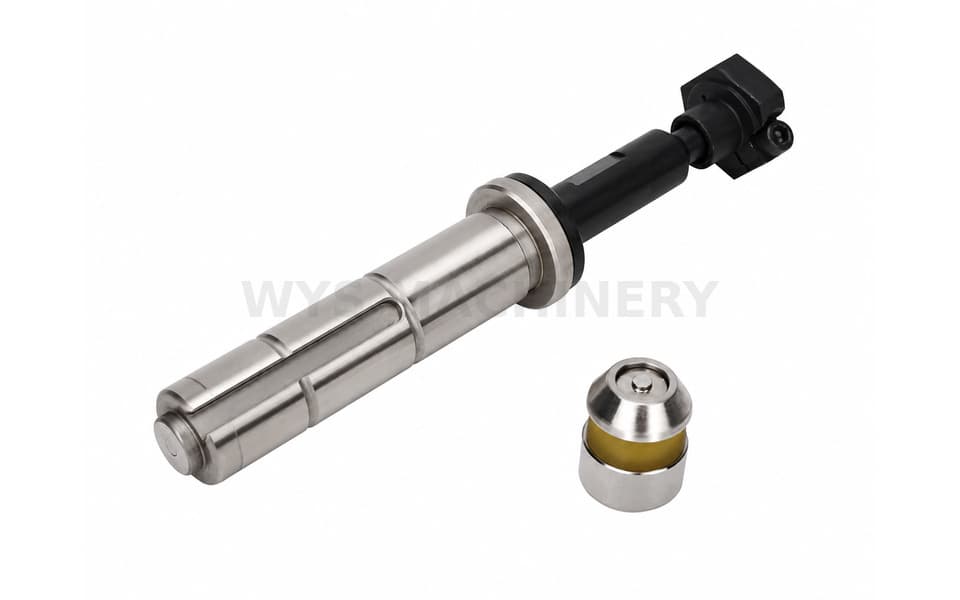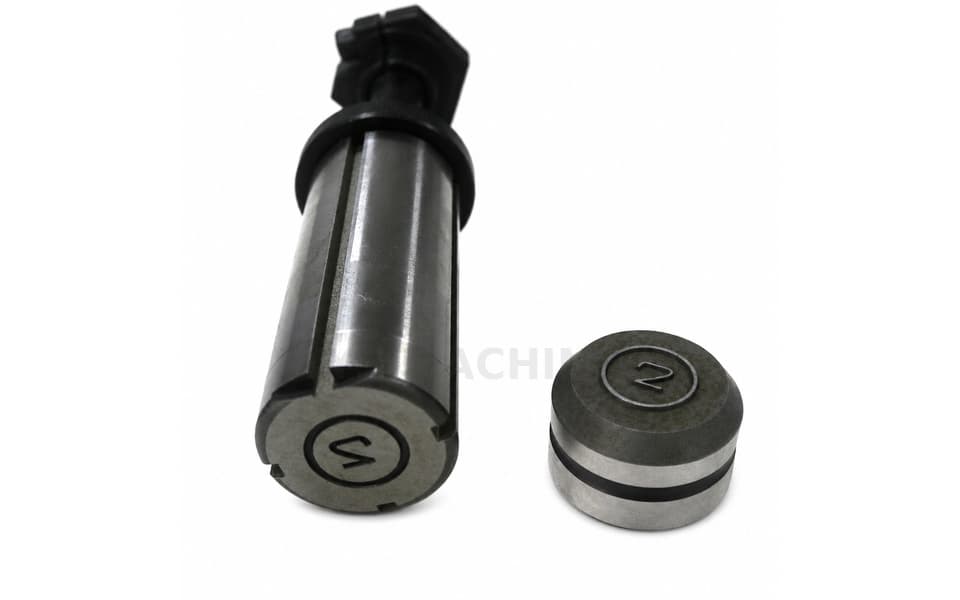
A Station Thick Turret Center Point Marking Tool
The A Station Thick Turret Center Point Marking Tool creates a controlled shallow indentation or small conical locating point on sheet metal without punching through the material. It is used for bend-position marking, drill and tapping center location, assembly reference points, inspection datums and simple process identification. Mark diameter, point angle, indentation depth, marking direction and tooling structure can be customized according to the sheet material, thickness, finished-part drawing and punch press model. WYS Machinery also manufactures compatible center point and special marking tools for TRUMPF Type and Murata Wiedemann Type punching systems.
Please add the quotation and send it to us and get in touch with us immediately
- Global service 24/7
- Lowest price for all products
- Best quality with Production Process
- After-Sale Warranty
- Technical Support
Description
The WYS Machinery A Station Thick Turret Center Point Marking Tool is a shallow indentation forming tool designed to produce a controlled point-shaped mark on sheet metal without creating a through-hole.
During the machine stroke, the pointed working tip presses the sheet against the matching lower support component. The material undergoes localized plastic deformation, creating a shallow dimple or micro-conical indentation at the programmed coordinate.
The tool does not perform conventional piercing and normally does not produce a slug. Its purpose is to create a visible and repeatable reference point for subsequent bending, drilling, tapping, welding, assembly, inspection or part identification.
Because the mark is produced using the CNC coordinates of the turret punch press, its position can be programmed together with the other punched and formed features on the component. This helps reduce manual measuring and marking operations after the sheet leaves the punch press.
Typical center point applications include:
- Bend-line reference points
- Bend start and end marks
- Drill-center locations
- Tapping-position references
- Assembly datum points
- Welding and riveting references
- Inspection datums
- Part orientation marks
- Left-hand and right-hand part identification
- Simple production or process marks
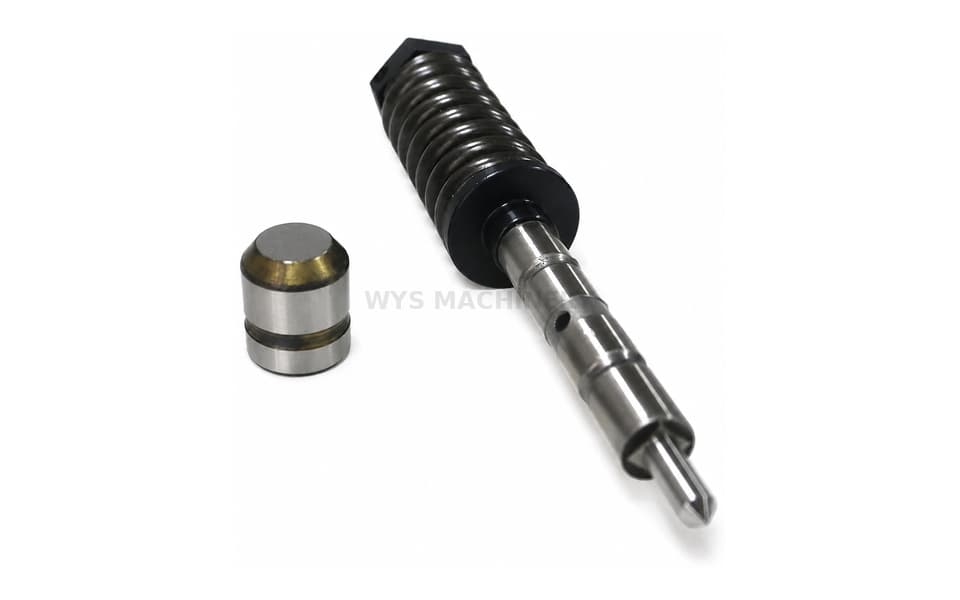
The photographed tool uses an A Station thick turret configuration. Its compact point profile is suitable for creating small reference marks without requiring a larger station.
Marking depth can be controlled through the tool geometry and machine stroke or tool-height setting, depending on the punch press and tooling system. The required depth must be sufficient for reliable visual or tactile identification but should not unnecessarily distort, weaken or pierce the sheet.
WYS Machinery can customize the marking-point diameter, tip angle, indentation depth, top or bottom marking direction, tool material, heat treatment and mounting structure according to the application.
In addition to thick turret tooling, WYS Machinery manufactures compatible special marking tools for TRUMPF Type and Murata Wiedemann Type punching systems. These products use different mounting, cartridge, guide and die structures and are not interchangeable.
All compatible replacement tools are manufactured by WYS Machinery. References to TRUMPF and Murata Wiedemann describe the applicable tooling systems and do not imply original manufacture, authorization or official affiliation.
Key Features
- A Station thick turret tooling configuration
- Creates a shallow point-shaped indentation
- Does not normally punch through the sheet
- No conventional punching slug
- Controlled marking depth
- Small conical or dimple-shaped mark
- Suitable for CNC-programmed reference points
- Supports bend-position marking
- Supports drilling and tapping pre-location
- Supports assembly and inspection positioning
- Reduces manual measuring and line marking
- Helps improve batch consistency
- Mark diameter and point angle customizable
- Indentation depth customizable
- Top or bottom marking options available
- Suitable for mild steel, stainless steel, aluminum and other formable sheet materials
- Custom tools developed from part drawings
- Thick turret, TRUMPF Type and Murata Wiedemann Type options
- Complete tools and replacement working components available
- Free tooling design and application evaluation
Technical Specifications
| Specification | Details |
|---|---|
| Product Category | Punch Press Marking and Shallow Forming Tool |
| Product Type | Center Point Tool |
| Recommended Product Term | Center Point Marking Tool |
| Alternative Search Terms | Center Punch Marking Tool / Spot Marking Tool / Dimple Marking Tool |
| Tooling System Shown | Thick Turret Tooling |
| Station Shown | A Station |
| Marking Shape | Point-Shaped or Micro-Conical Indentation |
| Processing Method | Controlled Shallow Indentation |
| Through-Hole | No |
| Conventional Slug | No |
| Marking Depth | Customizable and Process-Controlled |
| Point Diameter | Customized |
| Point Angle | Customized |
| Marking Direction | Top or Bottom According to Application |
| Sheet Material | Confirmed According to Application |
| Sheet Thickness | Confirmed Before Tool Design |
| Tool Material | Selected According to Application |
| Heat Treatment | Selected According to Tool Material and Working Conditions |
| Supply Configuration | Complete Tool or Replacement Working Component |
| Other Tooling Systems | TRUMPF Type and Murata Wiedemann Type Available |
| Customization | Point Shape, Diameter, Angle, Depth, Direction and Machine Interface |
How the Center Point Tool Works
A typical center-point marking cycle includes:
- The sheet is positioned at the programmed coordinate
- The upper pointed component approaches the sheet
- The sheet is supported by the matching lower component
- The tool applies controlled localized pressure
- The pointed tip plastically deforms the sheet surface
- A shallow dimple or micro-conical point is produced
- The tool retracts without cutting out a conventional slug
- The sheet moves to the next programmed position
The final mark depends on:
- Point-tip geometry
- Point angle
- Tip radius
- Machine stroke
- Tool-height setting
- Sheet material
- Sheet thickness
- Material hardness
- Lower support geometry
- Required marking direction
- Machine and tooling alignment
The machine should be tested using production-equivalent material before batch processing.
Shallow Indentation Without Piercing
The Center Point Tool is designed to indent the sheet rather than punch through it.
This distinction is important:
- A piercing punch creates a through-hole and separates a slug
- A center point tool creates a localized indentation and retains the sheet material
- An embossing tool forms a larger raised or recessed profile
- A sheet scribing tool draws lines or characters across the surface
- A character stamp creates letters, numbers or symbols
The center point tool is most suitable when the customer requires a simple, precise reference location rather than a hole, line, logo or complex embossed shape.
Controlled Marking Depth
The indentation must be deep enough to remain visible during handling and later processing, but not so deep that it damages or penetrates the sheet.
Marking depth depends on:
- Sheet material
- Sheet thickness
- Material hardness
- Tip angle
- Tip radius
- Machine stroke
- Tool-height adjustment
- Lower support geometry
- Surface-finish requirements
A mark that is too shallow may be difficult to locate after coating, handling or surface treatment.
A mark that is too deep may cause:
- Unwanted sheet deformation
- Excessive local thinning
- Surface cracking
- A visible mark on the opposite side
- Accidental penetration
- Distortion around thin sheet
- Damage to coated or decorative surfaces
The required depth should be confirmed through controlled trial marking.
Top and Bottom Marking
Center points can be designed for marking from the top or bottom of the sheet, depending on the tooling system and finished-part requirements.
The customer should specify:
- Visible side of the component
- Required indentation direction
- Whether the point should be recessed or projected on the visible side
- Sheet-feeding orientation
- Subsequent bending direction
- Coated or decorative surface requirements
The top- and bottom-marking versions may require different tooling structures and lower support heights.
Bend Position Marking
One of the most common applications is marking reference points for subsequent press brake bending.
The tool can place point marks at:
- Bend-line reference positions
- Bend start locations
- Bend end locations
- Center positions of short bends
- Reference positions for complex multi-bend parts
- Locations used to align the workpiece with tooling or backgauges
These programmed points help the press brake operator identify the intended bending position without manually drawing complete lines on every workpiece.
Potential benefits include:
- Reduced manual layout work
- Faster workpiece positioning
- Improved repeatability
- Reduced measuring errors
- Consistent references across production batches
- Easier processing of complex multi-bend components
The point mark provides a visual reference. Final bending accuracy still depends on the press brake, backgauge, tooling, material and operating method.
Drill and Tapping Location Marks
The center point tool can create a shallow starting indentation for subsequent drilling or tapping operations.
The indentation helps:
- Indicate the required hole center
- Guide a drill bit at the starting position
- Reduce initial drill wandering
- Improve manual drilling consistency
- Identify later tapping locations
- Distinguish holes requiring different secondary processes
Typical applications include:
- Equipment cabinets
- Mounting brackets
- Machine panels
- Support plates
- Electrical enclosures
- Components with countersunk holes
- Components requiring threaded holes
The center point is a location reference and does not replace the finished drilled or tapped hole.
Assembly, Welding and Riveting References
Center point marks can provide permanent reference locations for:
- Component alignment
- Welding positions
- Spot-welding locations
- Rivet locations
- Assembly datum points
- Fixture positioning
- Mating-component alignment
- Hole-center confirmation
Because the marks are generated at programmed CNC coordinates, multiple parts can share consistent assembly references.
This can reduce repeated manual measurement and help limit accumulated assembly errors.
Part Identification and Process Marking
Simple point patterns can be used to distinguish:
- Left-hand and right-hand components
- Front and back orientation
- Different product versions
- Production batches
- Assembly direction
- Parts requiring specific secondary operations
- Similar-looking components with different specifications
For example, one, two or three programmed points can represent different versions of a component.
This method is simpler and less expensive than producing full letters, numbers or logos when only basic identification is required.
However, it should not be used where permanent human-readable serial numbers or traceability codes are required. Character-stamping, dot-matrix or laser-marking systems are more suitable for those applications.
Inspection and Measurement Datum Points
A controlled center point can provide a repeatable reference for:
- Coordinate measuring machine inspection
- Caliper measurement
- Template inspection
- Fixture setup
- Dimensional comparison
- Prototype verification
- Process-control checks
The measurement method and datum definition should be established by the customer’s quality-control team. The mark should be positioned and sized so that it can be detected consistently by the intended measuring method.
Auxiliary Process Marking
The center point tool may also be used for:
- Indicating part boundaries in nested layouts
- Identifying micro-joint or break-out locations
- Marking manual separation positions
- Indicating areas requiring later processing
- Providing simple reference points before cutting or forming
- Replacing complex marking tools where only a point is required
The tool does not create or strengthen a micro-joint itself; it only supplies a reference mark for the later operation.
Typical Applications
The A Station Thick Turret Center Point Tool is suitable for:
- Electrical cabinets
- Control enclosures
- Switchgear panels
- Instrument panels
- Electronic equipment housings
- Communication equipment enclosures
- Elevator sheet metal components
- Machinery covers
- Equipment brackets
- Automotive sheet metal components
- Appliance panels
- Stainless steel equipment
- General precision sheet metal fabrication
Typical downstream processes include:
- Press brake bending
- Drilling
- Tapping
- Welding
- Riveting
- Assembly
- Inspection
- Part sorting
- Production identification
Advantages for Batch Sheet Metal Production
Using a CNC-programmed center point tool can provide:
- Repeatable point positioning
- Reduced manual marking
- Reduced layout time
- Fewer measuring operations
- Improved drilling references
- Faster bend identification
- Consistent assembly datums
- Easier distinction between similar parts
- Integration with the punching program
- Reduced secondary handling
- Low-cost simple identification
- Improved batch-processing efficiency
The benefits depend on the part design, production volume, downstream process and marking-depth requirements.
A Station Thick Turret Compatibility
The pictured tool uses an A Station thick turret structure.
Compatibility should be confirmed using:
- Punch press manufacturer
- Exact machine model
- Thick turret tooling series
- A Station dimensions
- Fixed or indexing configuration
- Tool-height system
- Guide and retaining structure
- Lower-die dimensions
- Existing tool sample or drawing
An A Station designation alone does not guarantee compatibility with every machine or tooling series.
TRUMPF Type Center Point and Marking Tools
WYS Machinery can manufacture compatible center point and special marking tools for TRUMPF punching and punch-laser machines.
Available solutions can include:
- Center point marking tools
- Shallow dimple marking tools
- Bend-reference marking tools
- Drill-center marking tools
- Assembly datum tools
- Top and bottom marking tools
- Custom point diameters and angles
- Machine-specific tool and die structures
TRUMPF Type tooling uses a different cartridge and mounting system from A Station thick turret tooling. The pictured thick turret tool cannot be installed directly in a TRUMPF tooling system.
Customers should provide the exact machine model, tooling size, sheet material, thickness and required marking result.
Murata Wiedemann Type Center Point Tools
WYS Machinery can also manufacture center point and special marking tools for compatible Murata Wiedemann punch press systems.
The tooling design is determined according to:
- Murata Wiedemann machine model
- Applicable tooling series
- Required station
- Top or bottom marking
- Existing guide and holder structure
- Sheet material and thickness
- Point dimensions
- Required indentation depth
- Existing tooling sample or drawing
Murata Wiedemann Type tooling is not interchangeable with thick turret or TRUMPF Type tooling.
Customers can provide machine information, existing tooling dimensions and finished-part drawings for compatibility confirmation and free tool design support.
Other Custom Punch Press Marking and Forming Tools
In addition to center point tools, WYS Machinery can manufacture:
- Cross-point marking tools
- Character marking tools
- Sheet-scribing tools
- Logo marking tools
- Embossing tools
- Dimple forming tools
- Lance and form tools
- Louver forming tools
- Bridge forming tools
- Extrusion tools
- Knockout tools
- Custom special forming tools
Solutions can be developed for thick turret, thin turret, TRUMPF Type, Murata Wiedemann Type and other compatible punching systems.
Manufacturing Quality
The Center Point Tool is manufactured through controlled machining, heat treatment, precision grinding and assembly processes.
Quality inspection can include:
- A Station dimensional inspection
- Point-tip diameter measurement
- Tip-angle verification
- Tip-radius inspection
- Tool concentricity checking
- Overall tool-height inspection
- Upper and lower component matching
- Surface-finish inspection
- Tool-hardness testing
- Indentation-depth trial
- Mark-position inspection
- Movement and return testing
- Trial marking where required
Accurate point geometry and tool concentricity help maintain consistent mark shape and position.
Installation and Trial Marking
Before installation:
- Confirm the exact punch press model
- Verify the A Station tooling structure
- Check the sheet material and thickness
- Confirm the required marking direction
- Confirm the point diameter and indentation depth
- Clean the tool and machine station
- Inspect the tip for damage
- Check the lower support component
- Confirm upper and lower tool alignment
- Verify the programmed stroke or tool-height setting
During trial marking:
- Use production-equivalent sheet material
- Begin with a shallow setting
- Increase the depth gradually
- Inspect the mark from both sides
- Confirm that the sheet is not pierced
- Check for cracking and excessive thinning
- Verify the mark position
- Confirm that the surrounding sheet remains flat
- Save the verified machine settings
The tool should not be tested initially at excessive depth.
Maintenance
Regular maintenance should include:
- Cleaning the point tip
- Removing metal residue
- Inspecting the tip for rounding or chipping
- Checking tool concentricity
- Inspecting the lower support surface
- Checking moving components
- Applying suitable lubrication
- Protecting the point tip during storage
- Avoiding accidental impact
- Replacing or regrinding worn working components where applicable
A worn or damaged tip may produce inconsistent point size, shape and depth.
Ordering Information Required
| Required Information | Purpose |
|---|---|
| Punch Press Manufacturer | Identifies the tooling system |
| Exact Machine Model | Confirms compatibility |
| Tooling System | Selects Thick Turret, TRUMPF Type or Murata Wiedemann Type |
| Station or Tool Size | Confirms installation structure |
| Marking Purpose | Determines suitable point geometry |
| Point Diameter | Defines mark size |
| Point Angle | Defines micro-conical geometry |
| Required Depth | Defines indentation requirement |
| Marking Direction | Confirms top or bottom marking |
| Sheet Material | Supports tip and depth design |
| Sheet Thickness | Helps prevent accidental penetration |
| Surface Requirement | Identifies marking restrictions |
| Finished-Part Drawing | Confirms programmed locations and function |
| Existing Tool Sample or Drawing | Supports compatible manufacturing |
| Required Quantity | Confirms production scope |
Standard and Custom Center Point Tools
WYS Machinery supplies standard and custom center point tools for sheet metal marking and process-location applications.
Available options include:
- A Station thick turret center point tools
- Other thick turret station configurations
- Thin turret marking tools
- TRUMPF Type center point tools
- Murata Wiedemann Type center point tools
- Top marking
- Bottom marking
- Custom point diameters
- Custom tip angles
- Custom indentation depths
- Bend-reference marking
- Drill-center marking
- Assembly datum marking
- Inspection reference marking
- Complete tools
- Replacement point inserts or working components
- Tools manufactured from samples
- Tools developed from machine drawings
- Tools designed from finished-part drawings
- OEM and private-label manufacturing
Customers can send the machine model, sheet information, finished-part drawing and required marking result. Our engineering team can recommend a suitable tip shape, point size, marking direction and depth and provide free tooling design support.
Product Identification and Frequently Asked Questions
What is the correct English name for 打点模?
For this product, the most accurate industry term is Center Point Tool. “Center Point Marking Tool” can be used as a more descriptive website product name.
Is “Center Punch Tool” also correct?
It can be used as a secondary search term, especially for drilling-location applications. However, Center Point Tool is more specific to punch press tooling and is recommended as the primary name.
Does the tool punch through the sheet?
No. It is designed to create a controlled shallow indentation without producing a through-hole.
Does it produce a slug?
No conventional slug is produced because the sheet is indented rather than pierced.
Is this an embossing tool?
It belongs to the shallow forming and marking category. It creates a much smaller point-shaped indentation than a conventional embossing tool.
Is it the same as a sheet-scribing tool?
No. A scribing tool moves across the sheet to create lines, text or programmed graphics. A center point tool creates an individual indentation at a programmed coordinate.
Can it mark press brake bend positions?
Yes. It can produce reference points for bend lines, bend starts and bend ends.
Can it be used as a drill-center mark?
Yes. A shallow point can indicate the required drill location and help reduce initial drill wandering.
Can the marking depth be adjusted?
Yes. Depth can be controlled through tool geometry and the applicable machine stroke or height setting. The exact adjustment method depends on the machine and tooling system.
Can it mark from the top or bottom?
Top- and bottom-marking versions can be designed according to the application and machine configuration.
Can the point size and angle be customized?
Yes. Point diameter, tip angle, tip radius and indentation depth can be customized.
Can you manufacture TRUMPF Type center point tools?
Yes. WYS Machinery manufactures compatible TRUMPF Type center point and special marking tools. These are not shown in the current photographs.
Can you manufacture Murata Wiedemann Type center point tools?
Yes. Compatible Murata Wiedemann Type center point tools can be developed after confirming the machine model, tooling series and marking requirements.
Are these original TRUMPF or Murata Wiedemann tools?
No. They are compatible replacement tools manufactured by WYS Machinery. Brand references describe compatibility and do not imply original manufacture or official affiliation.