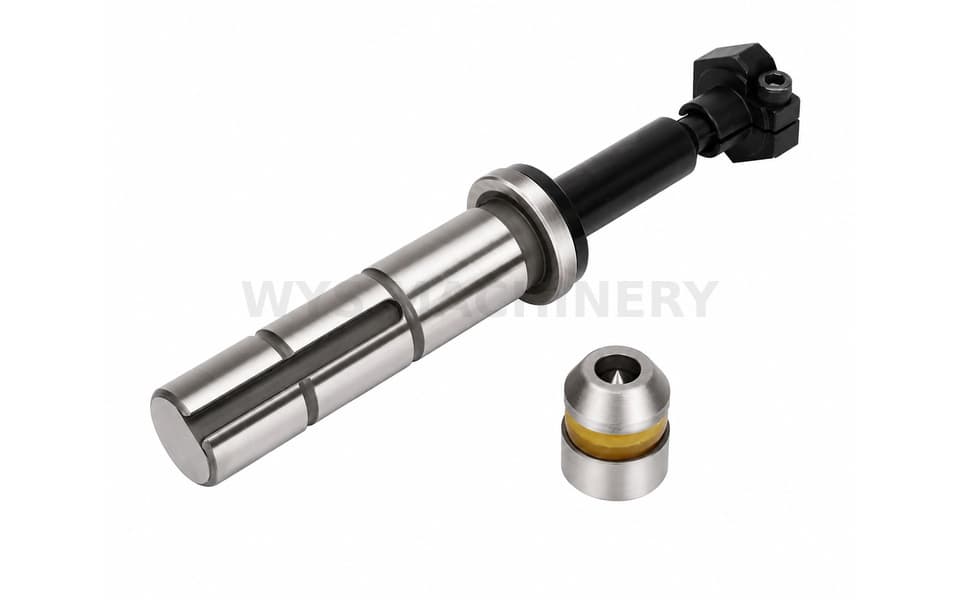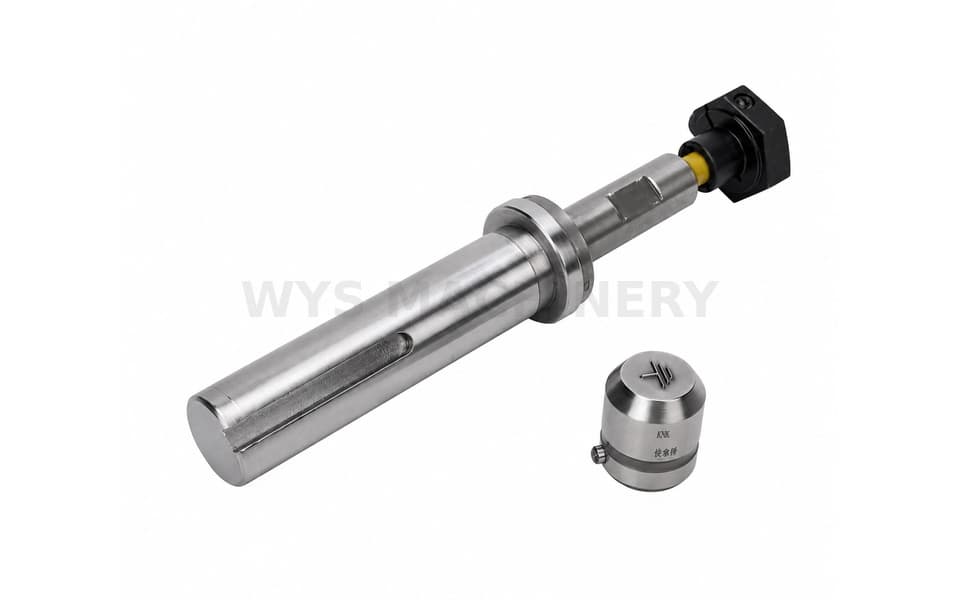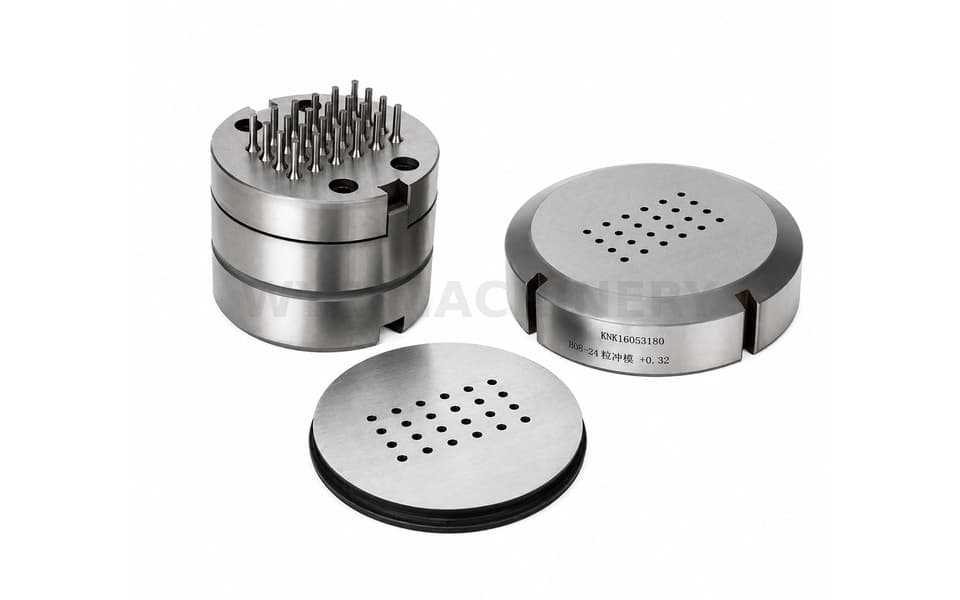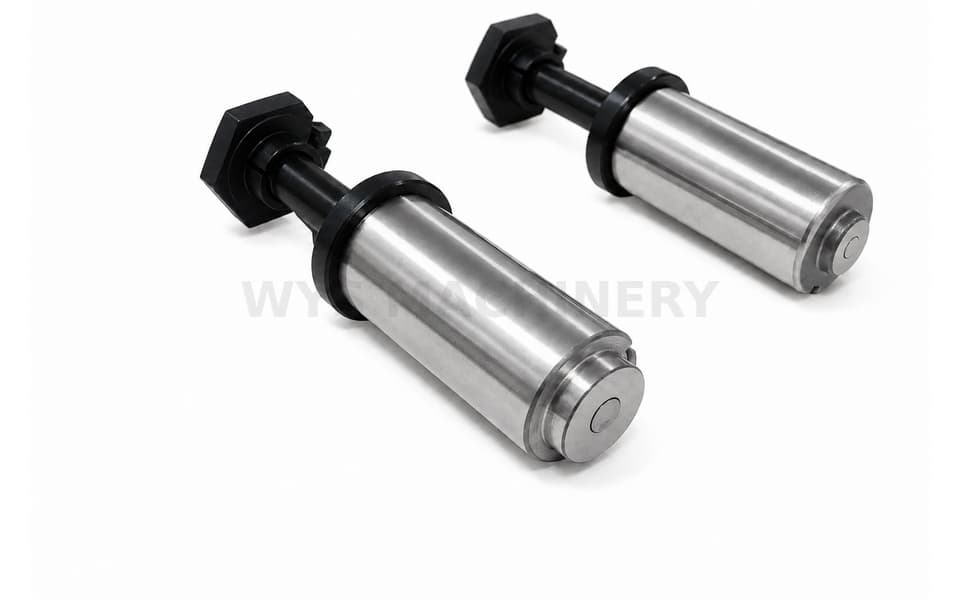
B Station Thick Turret Custom Logo Embossing Tool
The B Station Thick Turret Custom Logo Embossing Tool is designed to create permanent raised or recessed logos, symbols and identification marks directly on sheet metal using a compatible CNC turret punch press. The matching punch and die profiles are customized according to the customer’s authorized logo artwork, required mark size, sheet material, thickness and marking direction. Company logos, product symbols, orientation marks, inspection marks and simple identification graphics can be formed without ink, labels or a conventional through-hole. WYS Machinery also manufactures compatible custom embossing and marking tools for TRUMPF Type and Murata Wiedemann Type punching systems.
Please add the quotation and send it to us and get in touch with us immediately
- Global service 24/7
- Lowest price for all products
- Best quality with Production Process
- After-Sale Warranty
- Technical Support
Description
The WYS Machinery B Station Thick Turret Custom Logo Embossing Tool is a special marking and shallow forming tool developed to create a fixed logo, symbol or identification profile directly in sheet metal.
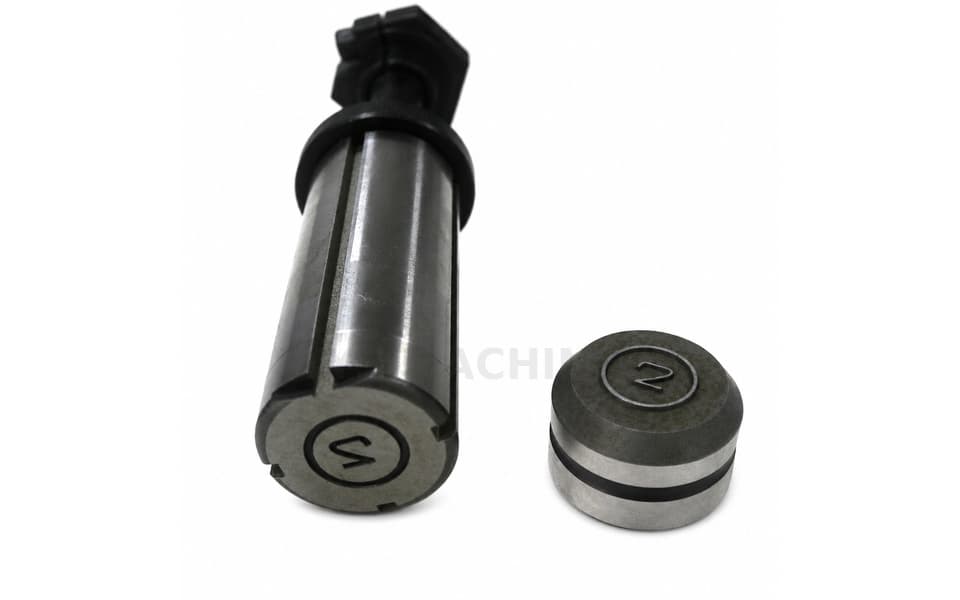
The photographed tool consists of a matching upper-tool and lower-die assembly. The two working faces contain corresponding male and female profiles. During the programmed punch press stroke, the sheet is pressed between these matched profiles, causing localized material displacement and producing the required raised or recessed mark.
Unlike an ordinary punching tool, the custom logo embossing tool does not normally cut through the sheet or create a conventional slug. The mark becomes a permanent physical part of the workpiece.
The tool can be customized for:
- Company logos
- Product-brand marks
- Simple graphic symbols
- Direction arrows
- Orientation marks
- Inspection symbols
- Assembly marks
- Electrical symbols
- Safety or warning symbols
- Part-identification marks
- Quality-control marks
- Customer-specific graphic profiles
Not every customer requires a company logo. Some applications only require a fixed symbol, simple graphic, orientation indicator or production mark. For this reason, the product is also described as a Custom Symbol Embossing Tool and Custom Identification Marking Tool.
The photographed product uses a B Station thick turret structure. The B Station provides sufficient space for many compact logo and symbol profiles, but the final design must remain within the station’s dimensional and forming-force capacity.
If the requested mark is too large or contains excessive detail, a larger station, simplified artwork, engraving tool, dot-matrix marking system or alternative marking process may be more suitable.
WYS Machinery can customize the graphic profile, overall mark size, line width, embossing depth, raised or recessed direction, visible side and tooling structure according to the customer’s requirements.
In addition to thick turret tooling, WYS Machinery can manufacture compatible custom logo, symbol and identification marking tools for TRUMPF Type and Murata Wiedemann Type punching systems.
These products are compatible replacement tools manufactured by WYS Machinery. References to TRUMPF and Murata Wiedemann describe the applicable tooling systems and do not imply original manufacture, authorization or official affiliation.
Key Features
- B Station thick turret tooling configuration
- Custom logo and symbol embossing
- Permanent physical marking on sheet metal
- Raised or recessed marking available
- Does not normally punch through the sheet
- No conventional punching slug
- Matching male and female working profiles
- Custom mark size and geometry
- Custom line width and embossing depth
- Suitable for logos, symbols and identification marks
- Can reduce labels, ink marking or separate stamping operations
- Repeatable CNC-programmed mark position
- Suitable for high-repeatability batch production
- Top-side or bottom-side marking options
- Material-specific forming geometry
- Custom manufacturing from vector artwork or drawings
- Thick turret, TRUMPF Type and Murata Wiedemann Type options
- Replacement working components available according to design
- Free artwork review and tooling design support
- Compatible replacement tooling manufactured by WYS Machinery
Technical Specifications
| Specification | Details |
|---|---|
| Product Category | Punch Press Marking and Embossing Tool |
| Product Type | Custom Logo Embossing Tool |
| Alternative Terms | Custom Symbol Embossing Tool / Logo Marking Tool / Identification Marking Tool |
| Tooling System Shown | Thick Turret Tooling |
| Station Shown | B Station |
| Mark Type | Fixed Logo, Symbol, Graphic or Identification Mark |
| Forming Result | Raised or Recessed |
| Processing Method | Matched-Profile Embossing |
| Through-Hole | No |
| Conventional Slug | No |
| Supply Configuration | Matching Upper Tool and Lower Die |
| Logo or Symbol Size | Customized |
| Embossing Depth | Customized |
| Line Width | Customized According to Artwork and Material |
| Marking Direction | Top or Bottom According to Application |
| Sheet Material | Confirmed According to Application |
| Sheet Thickness | Confirmed Before Tool Design |
| Tool Material | Selected According to Application |
| Heat Treatment | Selected According to Tool Material and Working Conditions |
| Artwork Input | Vector File, CAD Drawing or Dimensioned Graphic |
| Other Tooling Systems | TRUMPF Type and Murata Wiedemann Type Available |
| Customization | Graphic, Size, Depth, Direction and Machine Interface |
How the Custom Logo Embossing Tool Works
A typical embossing cycle includes:
- The sheet is positioned at the programmed coordinate
- The upper working profile approaches the sheet
- The lower die supports the corresponding area
- The sheet is pressed between the matched male and female profiles
- Material flows locally into the customized graphic geometry
- The logo or symbol reaches the controlled embossing depth
- The upper tool retracts
- The permanently formed mark remains in the sheet
The final quality depends on:
- Artwork design
- Mark dimensions
- Line width
- Detail spacing
- Embossing depth
- Sheet material
- Sheet thickness
- Material hardness and ductility
- Male and female profile matching
- Forming clearance
- Tool alignment
- Machine stroke control
- Surface-finish requirements
A production-equivalent sample sheet should be used during the initial trial.
Logo, Symbol and Identification Mark Options
The tool can be designed for more than a commercial logo.
Available custom profiles can include:
- Company initials
- Brand emblems
- Product-family symbols
- Up and down arrows
- Left and right marks
- Front and rear orientation marks
- Grounding symbols
- Electrical identification symbols
- Inspection approval marks
- Assembly-position symbols
- Part-version indicators
- Simple numbers or letters
- Quality-control graphics
- Customer-specified geometric marks
For variable serial numbers, changing dates, long text strings or frequently changing information, a fixed embossing tool may not be the most efficient solution. Interchangeable character tooling, dot-matrix marking, engraving or laser marking may be more suitable.
Raised and Recessed Embossing
The custom mark can be designed as:
- A raised logo on the selected visible surface
- A recessed logo on the selected visible surface
- A raised symbol on the reverse side
- A recessed identification mark on the reverse side
The customer should clearly specify:
- Visible side of the finished component
- Required raised or recessed effect
- Marking from the top or bottom
- Sheet-feeding orientation
- Finished-part installation direction
- Whether the opposite-side impression is acceptable
Changing between raised and recessed marking normally requires reversing or redesigning the male and female profile arrangement.
Embossing Depth
The embossing depth should create a clear and durable mark without unnecessarily distorting or damaging the sheet.
Depth selection depends on:
- Sheet thickness
- Material grade
- Material hardness
- Material elongation
- Logo size
- Line width
- Graphic complexity
- Surface coating
- Visible-side requirements
- Opposite-side appearance
- Required mark durability
An embossing depth that is too shallow may produce an unclear mark.
Excessive depth may cause:
- Material cracking
- Local sheet thinning
- Distortion around the mark
- Excessive opposite-side projection
- Loss of fine graphic detail
- Surface damage
- Difficulty releasing the workpiece
- Excessive forming force
The appropriate depth should be established through design evaluation and trial embossing.
Artwork and Graphic Design Requirements
For accurate tooling manufacture, customers should preferably provide:
- DXF
- DWG
- AI
- EPS
- PDF vector artwork
- STEP or other suitable CAD formats
- A fully dimensioned drawing
Raster images such as JPG or PNG may be used as visual references, but they may not contain sufficient geometric information for precision manufacturing.
The artwork should define:
- Overall width
- Overall height
- Required orientation
- Line thickness
- Minimum gaps
- Internal and external contours
- Raised or recessed areas
- Visible side
- Marking depth
- Position on the finished component
WYS Machinery can review customer artwork and recommend simplification where necessary.
Minimum Line Width and Detail Limitations
Very fine lines, sharp corners and narrow spaces may not reproduce clearly in sheet metal.
The minimum practical detail depends on:
- Sheet thickness
- Material type
- Material hardness
- Embossing depth
- Tool material
- Heat treatment
- Mark size
- Required service life
- Machine accuracy
- B Station capacity
Sharp internal corners may require small radii to improve tooling strength and material flow.
If the original logo contains very small text, thin decorative lines or complex gradients, a simplified manufacturing version may be recommended.
Fixed Embossing Tool Versus Engraving Tool
A fixed logo embossing tool and a programmable engraving tool serve different purposes.
| Comparison | Fixed Logo Embossing Tool | Engraving Tool |
|---|---|---|
| Graphic | One Fixed Customized Profile | Programmable Paths |
| Marking Method | Matched-Profile Forming | Surface Displacement Along a Path |
| Typical Result | Raised or Recessed Logo | Fine Engraved Lines |
| Production Speed | Efficient for Repeated Identical Marks | Flexible for Changing Information |
| Best Application | Repeated Logo or Symbol | Text, Serial Numbers or Variable Graphics |
| Tool Change for New Design | New Working Profile Required | Program Change May Be Sufficient |
The fixed embossing tool is generally more suitable for repeated production of the same logo or symbol.
Fixed Logo Tool Versus Character Marking Tool
A custom logo embossing tool produces one complete fixed design.
Character marking tools are more suitable when the customer needs:
- Changing numbers
- Changing dates
- Variable part codes
- Batch numbers
- Different text combinations
- Sequential identification
If the marking content remains unchanged, the fixed custom profile can provide efficient, consistent production.
Typical Applications
The B Station Thick Turret Custom Logo Embossing Tool is suitable for:
- Electrical cabinets
- Control panels
- Switchgear enclosures
- Electronic equipment housings
- Communication cabinets
- Server enclosures
- Appliance panels
- Elevator sheet metal components
- Machinery covers
- Automotive sheet metal parts
- Metal furniture
- Stainless steel equipment
- Industrial nameplate components
- General precision sheet metal fabrication
Typical marking purposes include:
- Permanent brand identification
- Product-series identification
- Assembly orientation
- Electrical-symbol marking
- Quality-control identification
- Part-version differentiation
- Safety or warning symbols
- Manufacturer identification
- Decorative graphic marking
- Traceability support using fixed symbols
Benefits for Batch Production
Producing the mark directly on a CNC punch press can provide:
- Permanent identification
- Repeatable graphic position
- Consistent mark depth
- No adhesive label
- No ink consumption
- No conventional punching chips
- Reduced secondary stamping
- Reduced workpiece transfer
- Integration with punching and forming programs
- High efficiency for repeated identical logos
- Improved resistance to label loss
- Reduced risk of printed marks fading
- Consistent branding across production batches
The exact mark appearance still depends on the material, coating and forming conditions.
Surface Coatings and Decorative Sheets
Extra care is required when embossing:
- Pre-painted sheet
- Galvanized sheet
- Brushed stainless steel
- Polished stainless steel
- Anodized aluminum
- Coated aluminum
- Decorative sheet
- Protective-film-covered material
Embossing may stretch, compress or damage surface coatings around the logo.
Before production, customers should confirm:
- Whether the protective film remains on the sheet
- Whether minor coating deformation is acceptable
- Whether the opposite-side impression is acceptable
- Required visible-surface quality
- Whether a sample trial is required
B Station Thick Turret Compatibility
The photographed tool uses a B Station thick turret structure.
Compatibility should be confirmed using:
- Punch press manufacturer
- Exact machine model
- Thick turret tooling series
- B Station dimensions
- Fixed or indexing station
- Tool-height system
- Guide and retaining structure
- Lower-die dimensions
- Existing tooling sample or drawing
The B Station designation alone does not guarantee compatibility with every machine.
TRUMPF Type Logo and Symbol Embossing Tools
WYS Machinery can manufacture compatible custom logo, symbol and marking tools for TRUMPF punching and punch-laser machines.
Available TRUMPF Type solutions can include:
- Fixed logo embossing tools
- Individual symbol embossing tools
- Raised or recessed marking
- Top-side or bottom-side marking
- Custom identification graphics
- Machine-specific punch and die structures
- Replaceable working components where structurally suitable
TRUMPF Type tooling uses a different cartridge and mounting system from B Station thick turret tooling. The photographed thick turret tool cannot be installed directly in a TRUMPF tooling system.
Customers should provide the exact machine model, tooling size, artwork, sheet material and thickness.
Murata Wiedemann Type Logo and Symbol Tools
WYS Machinery can also manufacture compatible custom logo and symbol embossing tools for Murata Wiedemann punch press systems.
Tooling design is determined according to:
- Murata Wiedemann machine model
- Applicable tooling series
- Required station
- Guide and holder structure
- Top or bottom marking
- Logo or symbol dimensions
- Sheet material and thickness
- Required marking depth
- Existing tooling sample or drawing
Murata Wiedemann Type tooling is not interchangeable with thick turret or TRUMPF Type tooling.
Customers can provide machine information, authorized artwork and finished-part requirements for compatibility confirmation and free design support.
Other Custom Marking Tools
In addition to fixed logo embossing tools, WYS Machinery can manufacture:
- Center point tools
- Cross-point marking tools
- Character marking tools
- Number and letter embossing tools
- Logo engraving tools
- Sheet-scribing tools
- V-line marking tools
- Identification-symbol tools
- Part-orientation marking tools
- Custom shallow embossing tools
- Other special marking and forming tools
Solutions can be developed for thick turret, thin turret, TRUMPF Type, Murata Wiedemann Type and other compatible punching systems.
Manufacturing Quality
The B Station Custom Logo Embossing Tool is manufactured through controlled machining, precision engraving or EDM, heat treatment, grinding and assembly processes.
Quality inspection can include:
- B Station dimensional inspection
- Artwork-profile comparison
- Overall logo-size verification
- Line-width measurement
- Male and female profile matching
- Embossing-clearance inspection
- Tool concentricity checking
- Tool-height inspection
- Surface-finish inspection
- Tool-hardness testing
- Marking-direction confirmation
- Trial embossing
- Finished-mark inspection
Accurate matching of the upper and lower profiles helps create a clear and consistent mark while reducing cracking and surrounding sheet distortion.
Installation and Trial Embossing
Before installation:
- Confirm the exact punch press model
- Verify the B Station tooling structure
- Check the upper tool and lower die as a matching set
- Confirm the correct logo orientation
- Confirm the visible side
- Verify raised or recessed marking
- Confirm sheet material and thickness
- Clean the tool and machine station
- Inspect all graphic details
- Confirm upper and lower tool alignment
- Check the programmed stroke and tool height
During trial embossing:
- Use production-equivalent sheet material
- Begin with a conservative forming depth
- Increase depth gradually
- Inspect the mark from both sides
- Check clarity of fine details
- Inspect for cracking and coating damage
- Measure the embossing depth
- Confirm the logo orientation
- Check surrounding sheet flatness
- Save the verified CNC and machine settings
Maintenance
Regular maintenance should include:
- Cleaning the male and female graphic profiles
- Removing metal particles and residue
- Inspecting fine lines and corners
- Checking for localized chipping
- Monitoring profile wear
- Inspecting upper and lower tool alignment
- Applying suitable lubrication where required
- Protecting graphic faces during storage
- Avoiding impact on the precision working profiles
- Replacing or repairing worn components where technically possible
The working profiles should never be cleaned using a method that damages fine logo details.
Intellectual Property and Artwork Authorization
Customers should only submit logos, trademarks, symbols or graphics that they own or are authorized to use.
By submitting custom artwork for tooling manufacture, the customer is responsible for confirming that:
- They own the relevant intellectual-property rights
- They have permission to reproduce the mark
- The requested design does not infringe third-party rights
- Any required brand authorization has been obtained
- The artwork is approved for manufacturing use
WYS Machinery manufactures the tool according to customer-supplied and customer-authorized designs.
Ordering Information Required
| Required Information | Purpose |
|---|---|
| Punch Press Manufacturer | Identifies the tooling system |
| Exact Machine Model | Confirms compatibility |
| Tooling System | Selects Thick Turret, TRUMPF Type or Murata Wiedemann Type |
| Station or Tool Size | Confirms installation capacity |
| Authorized Logo or Symbol File | Defines the custom profile |
| Overall Mark Width and Height | Defines the finished size |
| Required Line Width | Supports manufacturability evaluation |
| Embossing Depth | Defines the marking effect |
| Raised or Recessed Mark | Confirms profile arrangement |
| Visible Side | Confirms orientation |
| Top or Bottom Marking | Determines tooling structure |
| Sheet Material | Supports forming design |
| Sheet Thickness | Determines matching clearance |
| Surface Coating | Supports mark-quality evaluation |
| Finished-Part Drawing | Confirms mark position and direction |
| Existing Tool Sample or Drawing | Supports compatible manufacturing |
| Required Quantity | Confirms production scope |
Standard and Custom Logo Embossing Tools
WYS Machinery supplies custom sheet metal embossing tools for logos, symbols and fixed identification marks.
Available options include:
- B Station thick turret logo embossing tools
- Other thick turret station configurations
- Thin turret custom marking tools
- TRUMPF Type logo embossing tools
- Murata Wiedemann Type logo embossing tools
- Raised logos
- Recessed logos
- Individual symbols
- Orientation marks
- Electrical and safety symbols
- Simple letters and numbers
- Custom graphic marks
- Top or bottom marking
- Complete upper and lower tool sets
- Replacement working components
- Tooling manufactured from authorized artwork
- Tooling developed from finished-part drawings
- OEM and private-label manufacturing
Customers can send the machine model, authorized artwork, required mark dimensions, sheet material and thickness. Our engineering team can evaluate graphic manufacturability, station capacity and forming requirements and provide free tooling design support.
Product Identification and Frequently Asked Questions
What is the correct English name for Logo模具?
For the pictured matched-profile tool, the recommended name is Custom Logo Embossing Tool.
Can the tool produce marks other than a company logo?
Yes. It can produce symbols, arrows, orientation marks, identification graphics, inspection marks and other fixed profiles.
Does the tool cut through the sheet?
No. It normally forms the mark by displacing the material without producing a through-hole.
Does it produce a slug?
No conventional punching slug is produced.
Can it produce both raised and recessed logos?
Yes. The tool can be designed according to the required visible-side effect.
Is this the same as an engraving tool?
No. A fixed embossing tool produces one matched-profile logo or symbol in a stroke. An engraving tool normally follows a programmed path and is more flexible for changing graphics or text.
Can variable serial numbers be produced?
A fixed logo tool is not ideal for frequently changing serial numbers. Character tooling, dot-matrix, engraving or laser marking may be more suitable.
Can the logo size be customized?
Yes, provided the design remains within the station, material and forming-force limits.
Can a highly detailed logo be reproduced exactly?
It depends on the mark size, line width, sheet thickness and material. Very fine details may need to be simplified.
What artwork format should be provided?
DXF, DWG, AI, EPS, vector PDF or a dimensioned CAD drawing is preferred.
Can the tool mark coated or painted sheet?
It may be possible, but trial embossing is recommended because forming can stretch or damage the coating.
Can WYS Machinery manufacture TRUMPF Type logo tools?
Yes. Compatible TRUMPF Type logo and symbol embossing tools can be manufactured. They are not shown in the current photographs.
Can WYS Machinery manufacture Murata Wiedemann Type logo tools?
Yes. Compatible Murata Wiedemann Type logo and symbol tools can be developed after confirming the machine and tooling information.
Are these original TRUMPF or Murata Wiedemann tools?
No. They are compatible replacement tools manufactured by WYS Machinery. Brand references describe compatibility and do not imply original manufacture or official affiliation.