B Station Thick Turret Lance and Form Tool
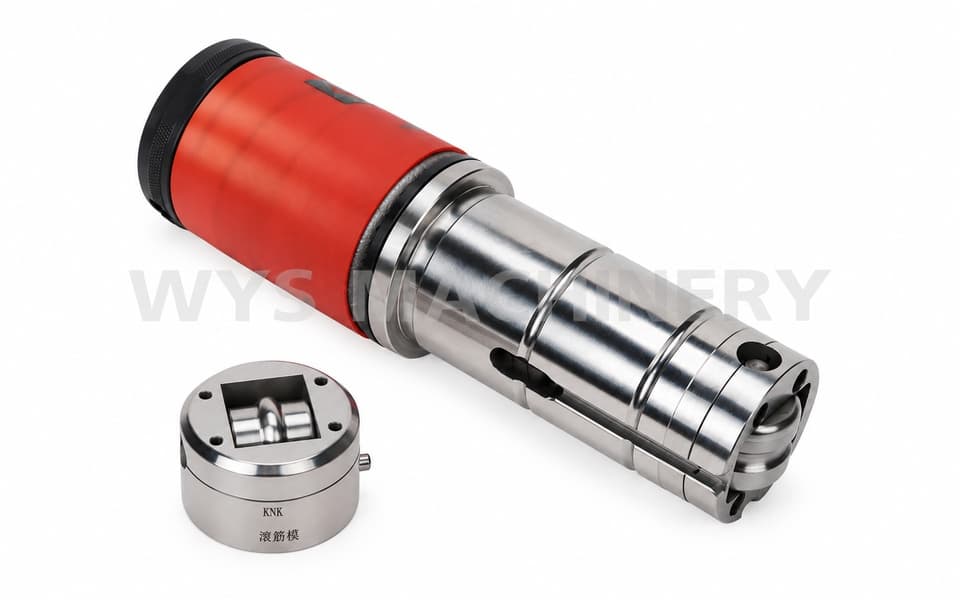
The B Station Thick Turret Lance and Form Tool is a custom punch press forming tool designed to cut and raise a connected tab directly from sheet metal. The matching upper-tool and spring-loaded lower-die assembly can create tabs, clips, stops, locators and fastening features in a controlled punching stroke. Tab length, width, forming height, bend angle, opening direction and tooling structure can be customized according to the finished-part drawing, sheet material, thickness and punch press model. WYS Machinery also manufactures compatible lance and form tooling for TRUMPF Type and Murata Wiedemann Type punching systems.
Please add the quotation and send it to us and get in touch with us immediately
- Global service 24/7
- Lowest price for all products
- Best quality with Production Process
- After-Sale Warranty
- Technical Support
Description
The WYS Machinery B Station Thick Turret Lance and Form Tool is a special punch press forming tool developed to cut and form a raised tab while keeping one section of the tab connected to the original sheet.
In sheet metal terminology, this process is known as lance and form. “Lance” refers to cutting selected sides of the profile without completely separating a conventional slug, while “form” refers to displacing or bending the connected material into the required three-dimensional shape.
Unlike an ordinary piercing punch, which removes a complete piece of material, the lance and form process retains the formed tab as an integrated part of the workpiece.
Depending on the customized profile, the formed feature can function as:
- A locating tab
- A sheet stop
- A retaining clip
- A component support
- A wire-harness holder
- A card guide
- A connecting tab
- An assembly feature
- A spacing feature
- A ventilation or decorative element
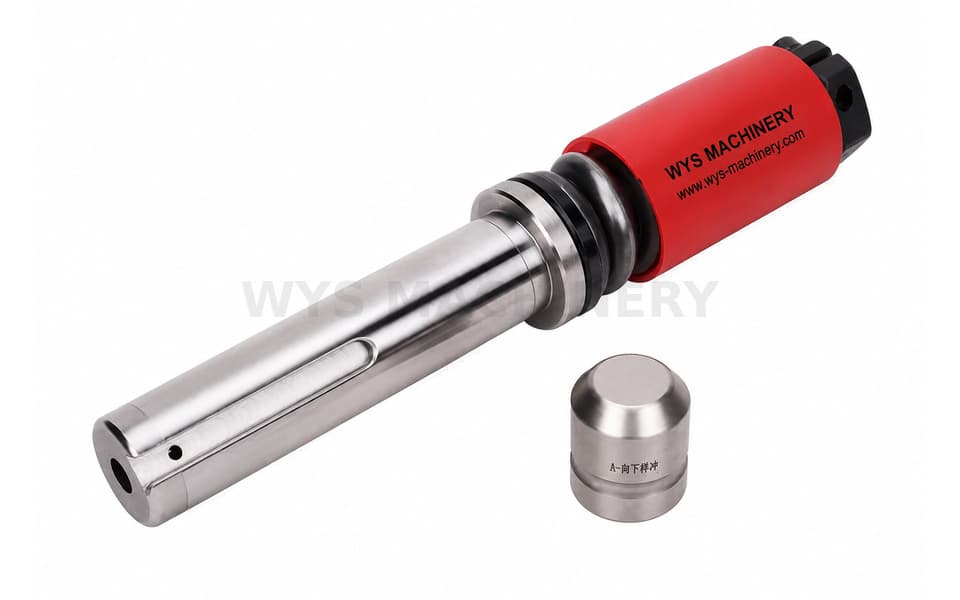
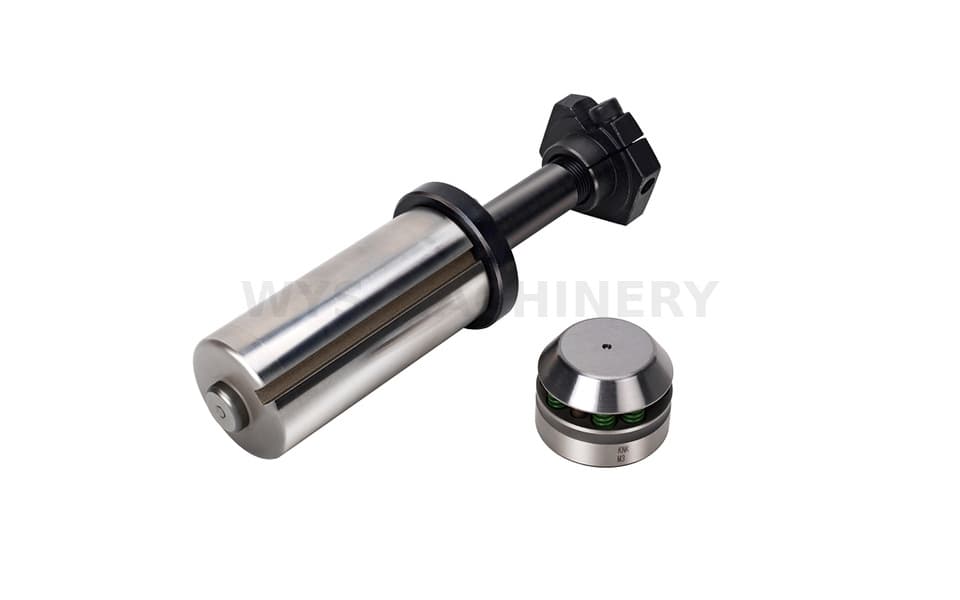
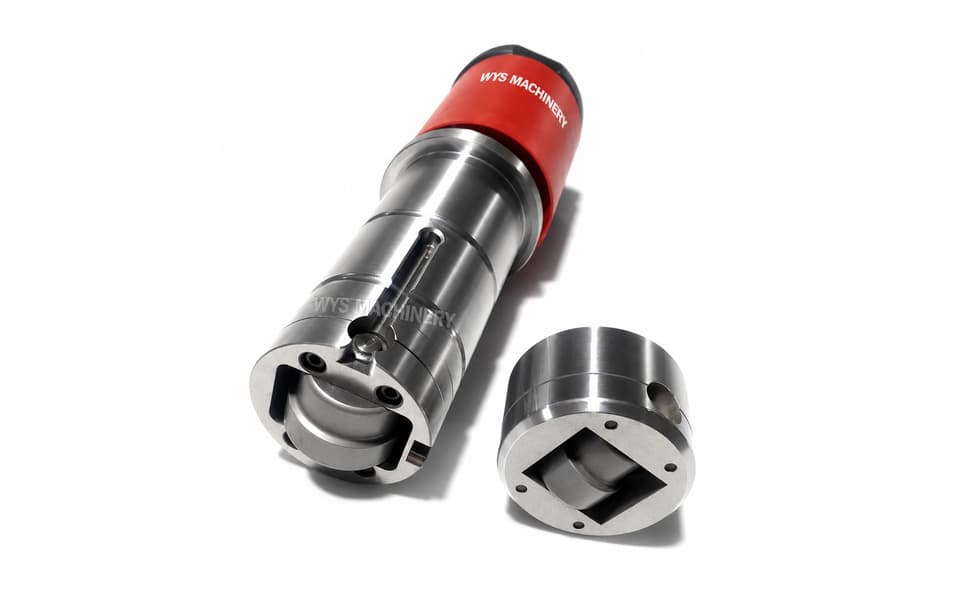
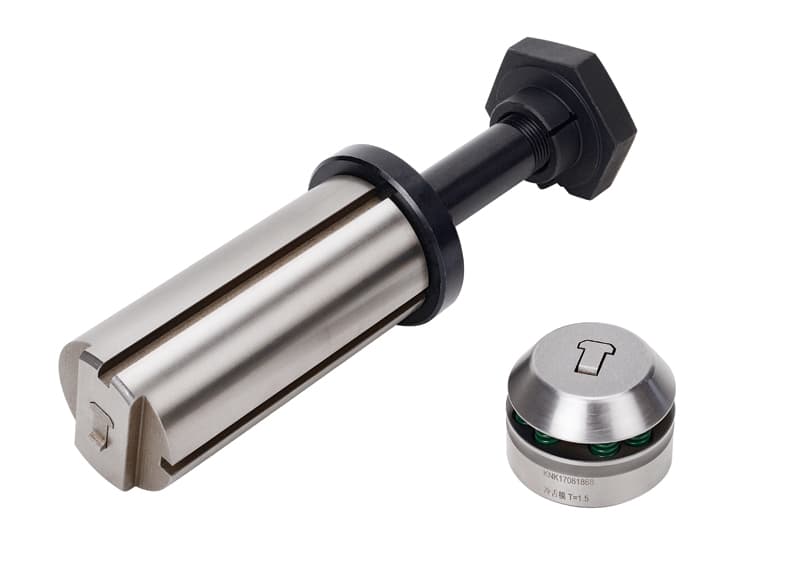
The photographed product uses a B Station thick turret structure and consists of a matching upper forming assembly and lower die. The visible spring-loaded lower-die construction supports controlled sheet forming and helps the lower component return after the forming stroke.
The tab dimensions and forming geometry are not fixed. WYS Machinery can customize the cutting profile, tab length, width, height, bend angle, opening direction and detailed forming radii according to the customer’s finished-part drawing.
In addition to thick turret tooling, WYS Machinery can manufacture custom lance and form tools for compatible TRUMPF Type and Murata Wiedemann Type punching systems. These systems have different holder, cartridge, guide and die structures and are not interchangeable. Each tool is designed only after the applicable machine and tooling configuration has been confirmed.
The products are compatible replacement tools manufactured by WYS Machinery. References to TRUMPF and Murata Wiedemann describe the applicable tooling systems and do not imply original manufacture, authorization or official affiliation.
Key Features
- B Station thick turret tooling configuration
- Special cutting and forming tool
- Produces a raised tab while keeping it connected to the sheet
- Cutting and forming completed in a controlled machine stroke
- Matching upper-tool and lower-die assembly
- Spring-loaded lower-die structure
- Custom tab length and width
- Custom forming height
- Custom bend angle
- Custom upward or downward forming direction
- Custom opening and installation orientation
- Designed according to sheet material and thickness
- Suitable for locating, stopping, clipping and fastening applications
- Reduces separate cutting and bending operations
- Can reduce additional hardware in suitable assemblies
- Precision-machined cutting and forming profiles
- Complete tools and replacement components available
- Thick turret, TRUMPF Type and Murata Wiedemann Type options
- Custom manufacturing from drawings or samples
- Free tooling design and application evaluation
Technical Specifications
| Specification | Details |
|---|---|
| Product Category | Punch Press Special Forming Tool |
| Tool Type | Lance and Form Tool |
| Alternative Terms | Lance Forming Tool / Raised Tab Forming Tool / Sheet Metal Lancing Tool |
| Tooling System Shown | Thick Turret Tooling |
| Station Shown | B Station |
| Formed Feature | Connected Raised Tab |
| Primary Process | Cutting and Forming |
| Supply Configuration | Matching Upper Tool and Lower Die |
| Lower-Die Structure | Spring-Loaded |
| Tab Length | Customized |
| Tab Width | Customized |
| Forming Height | Customized |
| Bend Angle | Customized |
| Forming Direction | Upward or Downward According to Application |
| Tab Orientation | Customized According to Part Drawing |
| Transition Radius | Customized |
| Sheet Material | Confirmed According to Application |
| Sheet Thickness | Confirmed Before Tool Design |
| Tool Material | Selected According to Application |
| Heat Treatment | Selected According to Tool Material and Working Conditions |
| Machine Tonnage | Verified According to Profile, Material and Thickness |
| Other Tooling Systems | TRUMPF Type and Murata Wiedemann Type Available |
| Customization | Profile, Size, Height, Angle, Direction and Machine Interface |
How the Lance and Form Tool Works
A lance and form tool combines localized cutting and controlled plastic deformation.
A typical working cycle includes:
- The sheet is positioned between the upper tool and lower die
- The punch press initiates a controlled forming stroke
- The cutting section separates the required sides of the tab
- One edge or designed connection area remains attached to the sheet
- The forming profile raises or bends the connected material
- The matching lower die controls the tab geometry
- The machine reaches the programmed forming depth
- The upper tool retracts
- The spring-loaded lower component returns
- The finished workpiece is released for continued processing
The exact sequence depends on the tool design. Some applications cut and form the feature in one stroke, while more complex profiles may require pre-punched openings or multiple operations.
The finished-part drawing should be reviewed before manufacturing to determine the most suitable process.
Cutting Without Removing a Conventional Slug
A standard piercing punch normally cuts a closed profile and separates a slug from the sheet.
A lance and form tool cuts only the sides required to release the tab while leaving a designed area connected to the workpiece. The retained material is then bent or raised into the required shape.
This integrated feature can reduce the need for:
- Welding a separate tab
- Installing an additional clip
- Adding a separate spacer
- Drilling secondary mounting holes
- Performing a separate press-brake bending operation
- Manually positioning a locating component
Whether additional operations can be eliminated depends on the finished-part design and loading requirements.
Custom Tab Geometry
A complete lance-and-form specification requires more than the outside length and width.
The customer’s drawing should define:
- Tab length
- Tab width
- Forming height
- Bend angle
- Opening direction
- Upward or downward forming
- Number of cut sides
- Connected-edge position
- End shape
- Transition radius
- Clearance under the tab
- Sheet thickness
- Sheet material
- Distance to nearby holes
- Distance to sheet edges
- Required functional load
The formed tab may be straight, angled, offset, stepped or specially shaped according to its intended function.
Forming Height and Bend Angle
Forming height and bend angle determine how far the tab projects from the sheet and how it interacts with the mating component.
Possible configurations include:
- Shallow raised tabs
- Lance and form profiles below 90°
- Approximately 90° raised tabs
- Offset tabs
- Tabs with an additional bend
- Tabs with customized contact surfaces
Excessive forming height or a very small transition radius may cause:
- Material thinning
- Cracking near the connected edge
- Tearing at the corners
- Excessive forming force
- Distortion around the feature
- Inconsistent springback
- Difficulty releasing the sheet
The tab geometry should therefore be designed according to the material’s strength, elongation and thickness.
Upward and Downward Forming
The connected tab can be designed to form upward or downward according to:
- Assembly direction
- Visible side of the component
- Required clearance
- Position of the mating part
- Sheet-feeding direction
- Machine configuration
- Clamp and worktable interference
The forming direction must be clearly marked on the drawing. Upward and downward forming generally require different upper and lower tool configurations.
Cutting and Forming Clearance
A lance and form tool requires both cutting clearance and forming clearance.
Cutting clearance controls the shearing action along the cut edges.
Forming clearance provides space for the connected material to bend and flow into the required profile.
Clearance design depends on:
- Sheet material
- Sheet thickness
- Material tensile strength
- Material elongation
- Tab dimensions
- Bend angle
- Forming height
- Transition radius
- Required edge quality
- Material springback
- Tool-release requirements
Incorrect clearance may cause:
- Excessive burrs
- Poor cutting quality
- Corner tearing
- Cracking at the connected edge
- Inaccurate forming height
- Excessive springback
- Tool sticking
- Surface scratches
- Punch or die damage
Spring-Loaded Lower Die
The photographed lower die uses a spring-loaded structure.
During forming, the movable component supports or controls the sheet according to the tool design. After the upper tool retracts, the springs return the lower component toward its starting position.
Potential benefits of an appropriate spring-loaded design include:
- Controlled sheet support
- Improved return after forming
- Easier workpiece release
- Reduced risk of the formed tab catching on the lower tool
- More stable repeated production
- Reduced surrounding sheet distortion
- Improved component movement
Spring force and travel must be matched to the tab dimensions, sheet material, forming height and machine stroke.
Punching Force and Station Capacity
The required machine force includes both the cutting load and forming load.
Important factors include:
- Total cutting length
- Sheet thickness
- Material shear strength
- Tab width
- Forming height
- Bend angle
- Material tensile strength
- Transition radii
- Tooling condition
- Machine stroke and speed
Although this tool uses a B Station structure, not every tab size is suitable for a B Station.
If the required form is too large or the calculated force exceeds the available station capacity, a larger station or alternative tooling design may be required.
Before manufacturing, WYS Machinery evaluates:
- Punch press manufacturer and model
- Available machine tonnage
- Station capacity
- Existing tooling structure
- Tab dimensions
- Sheet material
- Sheet thickness
- Forming height
- Bend angle
- Machine stroke-control capability
Typical Applications
The B Station Thick Turret Lance and Form Tool can be used in:
- Electrical cabinets
- Control enclosures
- Switchgear panels
- Electronic equipment housings
- Communication cabinets
- Server and data equipment enclosures
- HVAC components
- Machinery guards
- Automotive sheet metal components
- Appliance panels
- Metal furniture
- Shelving systems
- Cable-management products
- Stainless steel equipment
- General precision sheet metal fabrication
Typical functions include:
- Component location
- Sheet stopping
- Clip attachment
- Panel connection
- Wire-harness retention
- Cable support
- Card guidance
- Shelf support
- Assembly positioning
- Airflow features
- Decorative sheet metal features
- Integrated fastening
Reducing Secondary Operations
A properly designed lance and form feature can integrate a functional tab directly into the workpiece.
Depending on the application, it may help reduce:
- Separate tab fabrication
- Additional purchased clips
- Welding operations
- Spot welding
- Drilling
- Riveting
- Screw installation
- Manual positioning
- Secondary press-brake bending
- Workpiece transfer between machines
This can reduce component count and simplify assembly, but the final feature must still be evaluated for its required load and service conditions.
B Station Thick Turret Compatibility
The pictured product is designed for a B Station thick turret tooling system.
Compatibility should be confirmed using:
- Punch press manufacturer
- Exact machine model
- Thick turret tooling series
- Station dimensions
- Track configuration
- Fixed or indexing station
- Tool height
- Guide and retaining structure
- Lower-die dimensions
- Existing tooling sample or drawing
A B Station designation alone does not guarantee compatibility with every machine.
TRUMPF Type Lance and Form Tools
WYS Machinery can manufacture custom lance and form tooling for compatible TRUMPF punching and punch-laser machines.
Available TRUMPF Type forming solutions can include:
- Raised tab forming tools
- Locating-tab tools
- Clip-forming tools
- Connecting-tab tools
- Sheet-stop forming tools
- Custom lance and bend tools
- Upward and downward forming tools
- Custom tab lengths, widths, heights and angles
- Machine-specific cartridge and die structures
TRUMPF tooling uses a different mounting and cartridge system from B Station thick turret tooling. The pictured thick turret tool cannot be installed directly in a TRUMPF tooling system.
Customers should provide the exact TRUMPF machine model, tooling size, sheet information and finished-part drawing for a compatible replacement-tool design.
Murata Wiedemann Type Lance and Form Tools
WYS Machinery also manufactures special lance and form tooling for compatible Murata Wiedemann punch press systems.
The tooling design is determined according to:
- Murata Wiedemann machine model
- Applicable tooling series
- Required station
- Guide and holder structure
- Existing tooling dimensions
- Tab profile
- Forming direction
- Sheet material and thickness
- Finished-part drawing
Murata Wiedemann Type tooling is not interchangeable with thick turret or TRUMPF Type tooling.
Customers can send machine information, existing tool samples and finished-part drawings for compatibility confirmation and free tooling design support.
Other Custom Punch Press Forming Tools
In addition to lance and form tooling, WYS Machinery can manufacture:
- Louver forming tools
- Embossing tools
- Dimple forming tools
- Extrusion tools
- Bridge forming tools
- Knockout tools
- Rib forming tools
- Countersink tools
- Marking tools
- Hinge forming tools
- Bending tools
- Special custom forming tools
Custom solutions can be developed for thick turret, thin turret, TRUMPF Type, Murata Wiedemann Type and other compatible punch press tooling systems.
Manufacturing Quality
The B Station Lance and Form Tool is manufactured through controlled machining, heat treatment, precision grinding and assembly processes.
Quality inspection can include:
- B Station mounting-dimension inspection
- Cutting-profile measurement
- Tab-length and width verification
- Forming-height inspection
- Bend-angle verification
- Cutting-clearance inspection
- Forming-clearance inspection
- Transition-radius measurement
- Upper and lower tool alignment checking
- Spring travel inspection
- Spring return-force checking
- Working-surface inspection
- Tool-hardness testing
- Assembly and movement testing
- Trial forming where required
Accurate coordination between the cutting and forming sections helps create a consistent tab while reducing tearing, excessive burrs and surrounding sheet distortion.
Installation and Trial Forming
Before installation:
- Confirm the punch press manufacturer and model
- Verify the B Station tooling configuration
- Check the upper tool and lower die as a matching set
- Confirm the sheet material and thickness
- Confirm the tab dimensions
- Confirm the forming height and bend angle
- Verify the forming direction
- Clean the tool and machine station
- Inspect the cutting and forming surfaces
- Confirm upper and lower tool alignment
- Check spring movement
- Confirm the programmed stroke
- Verify machine tonnage and station capacity
During trial forming:
- Use production-equivalent sheet material
- Begin with a conservative forming depth
- Increase forming depth gradually
- Measure the tab height and angle
- Inspect the cut edges
- Check the connected edge for cracking
- Check surrounding sheet flatness
- Confirm smooth workpiece release
- Verify the spring-loaded return
- Save the confirmed CNC and machine settings
Maintenance
Regular maintenance should include:
- Cleaning the cutting and forming surfaces
- Removing metal particles and residue
- Inspecting the cutting edges
- Monitoring burr formation
- Checking the connected-tab corners
- Inspecting forming surfaces for galling
- Checking upper and lower tool alignment
- Inspecting springs for damage or fatigue
- Checking spring travel and return
- Applying suitable lubrication
- Checking screws and retaining components
- Protecting precision surfaces during storage
Because the tool performs both cutting and forming, maintenance must evaluate the complete profile rather than only sharpening a conventional cutting edge.
Ordering Information Required
| Required Information | Purpose |
|---|---|
| Punch Press Manufacturer | Identifies the tooling system |
| Exact Machine Model | Confirms compatibility |
| Tooling System | Selects Thick Turret, TRUMPF Type or Murata Wiedemann Type |
| Station or Tool Size | Confirms installation capacity |
| Finished-Part Drawing | Defines the complete formed feature |
| Tab Length | Defines the longitudinal dimension |
| Tab Width | Defines the tab width |
| Forming Height | Defines tab projection |
| Bend Angle | Defines the final angle |
| Forming Direction | Confirms upward or downward forming |
| Connected-Edge Position | Defines tab orientation |
| Sheet Material | Supports cutting and forming design |
| Sheet Thickness | Determines clearance and profile |
| Material Strength | Supports force evaluation |
| Functional Purpose | Supports tab-geometry design |
| Existing Tool Sample or Drawing | Supports replacement manufacturing |
| Required Quantity | Confirms production scope |
Standard and Custom Lance and Form Tooling
WYS Machinery supplies standard and custom lance and form tooling for a wide range of sheet metal applications.
Available options include:
- B Station thick turret lance and form tools
- Other thick turret stations where technically suitable
- Thin turret lance and form tools
- TRUMPF Type lance and form tools
- Murata Wiedemann Type lance and form tools
- Raised locating tabs
- Sheet-stop features
- Clip-forming tools
- Wire-retaining tabs
- Connecting tabs
- Tabs below or approximately 90°
- Upward and downward forms
- Custom tab lengths and widths
- Custom forming heights and angles
- Material-specific cutting and forming clearances
- Complete upper and lower tool sets
- Individual replacement components
- Tools manufactured from samples
- Tools developed from machine drawings
- Tools designed from finished-part drawings
- OEM and private-label manufacturing
Customers can send the finished-part drawing, machine model, sheet material and thickness. Our engineering team can evaluate the profile, tooling system, station capacity and forming requirements and provide free tooling design support.
Product Identification and Frequently Asked Questions
What is the correct English name for 冲舌模?
For this product and forming effect, the most accurate industry term is Lance and Form Tool.
Why is it not called a tongue punch?
“Tongue punch” is a literal translation and is not the preferred industry term for a tool that cuts and forms a connected sheet metal tab.
Is this a cutting tool or a forming tool?
It is classified as a special forming tool, but it combines both cutting and forming actions.
Does the process remove a conventional slug?
Normally, no. The tool cuts selected sides while leaving a designed edge connected to the sheet. The connected material becomes the raised tab.
Is this the same as a louver tool?
No. A louver tool mainly creates ventilation openings. A lance and form tool generally creates tabs, clips, stops, locating features or fastening elements.
Is this the same as an embossing tool?
No. An embossing tool deforms the sheet into a raised or recessed profile without producing the same open, connected tab structure.
Is the pictured tooling a B Station tool?
Yes. The photographed product is a B Station thick turret lance and form tool.
Does it include both the upper tool and lower die?
Yes. The images show a matching upper forming assembly and spring-loaded lower die.
Can the tab dimensions be customized?
Yes. Length, width, height, bend angle, radius and orientation can be customized.
Can it form upward and downward?
Yes. The direction can be customized, but it must be confirmed before manufacturing.
Can you produce TRUMPF Type lance and form tools?
Yes. WYS Machinery manufactures compatible TRUMPF Type special forming tools according to machine and part requirements. These tools are not shown in the current images.
Can you produce Murata Wiedemann Type lance and form tools?
Yes. Compatible Murata Wiedemann Type lance and form tools can be developed after confirming the machine model, tooling series and finished-part drawing.
Are these original TRUMPF or Murata Wiedemann tools?
No. They are compatible replacement tools manufactured by WYS Machinery. Brand references describe compatibility and do not imply original manufacture or official affiliation.
Can WYS Machinery design the tooling from our part drawing?
Yes. Customers can provide the finished-part drawing, machine model, material and thickness. Free tooling design and application evaluation are available.