WYS 30° Bystronic-Type Acute-Angle Gooseneck Punch, H175 R1
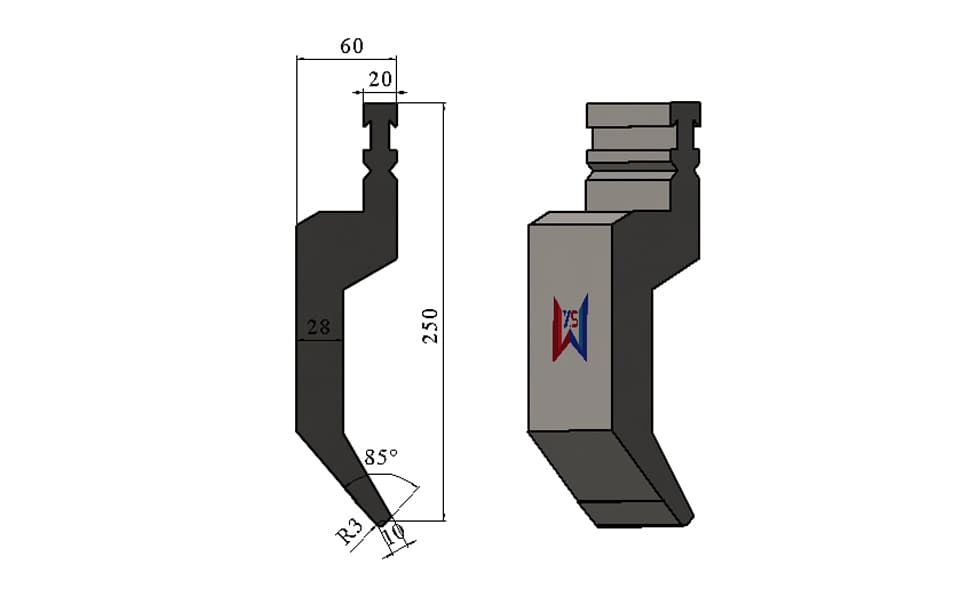
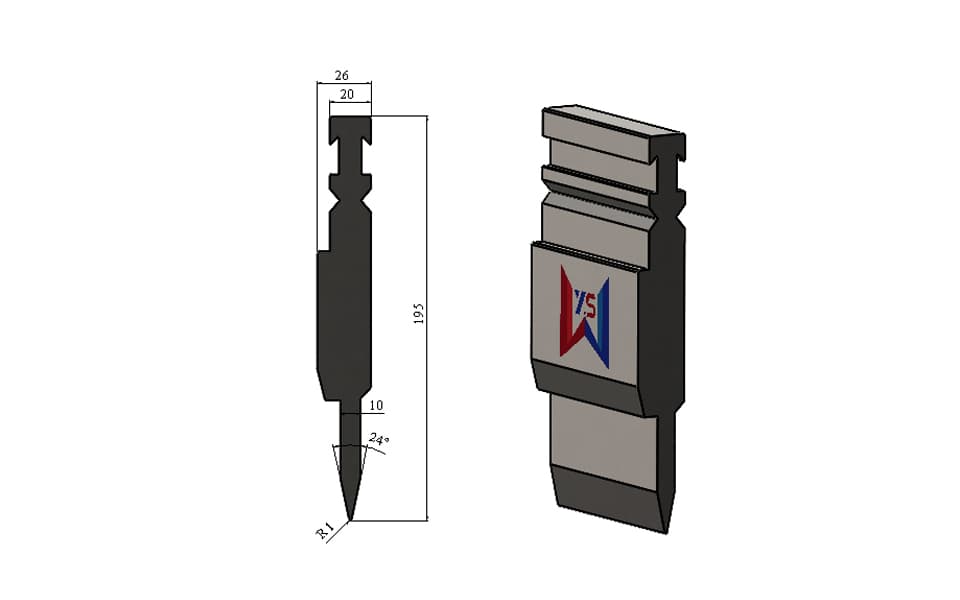
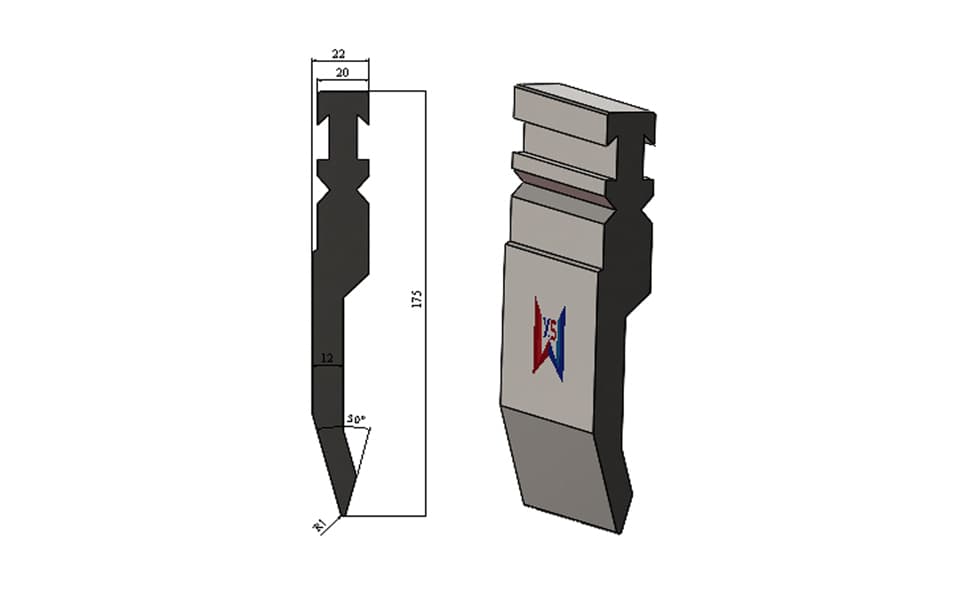
This Bystronic-type acute-angle gooseneck punch features a 175 mm overall height, 22 mm width, 30° working angle and R1 tip radius. Its relieved profile provides additional clearance for return flanges and previously formed workpieces. With a maximum load capacity of 80 ton/m, it is suitable for precision acute bending, overbending and pre-hemming applications.
Please add the quotation and send it to us and get in touch with us immediately
- Global service 24/7
- Lowest price for all products
- Best quality with Production Process
- After-Sale Warranty
- Technical Support
Description
The WYS 30° Bystronic-type acute-angle gooseneck punch is designed for precision bending applications that require both a sharp forming angle and additional workpiece clearance. The tool has an overall height of 175 mm, a width of 22 mm, an R1 punch-tip radius and a maximum rated load of 80 ton/m.
Unlike a conventional straight punch, its relieved gooseneck profile creates space behind the working tip. This clearance helps prevent interference when bending return flanges, U-shaped parts, channels and components that already contain one or more formed edges.
The 30° working angle allows the material to be formed below 90° when paired with a suitable lower die. It can therefore be used for acute-angle bending, controlled overbending to compensate for springback and pre-bending before a separate flattening or hemming operation.
The small R1 tip supports relatively tight bend radii where permitted by the material and forming conditions. The final inside radius, however, also depends on sheet thickness, material properties, lower-die opening and the selected bending method.
Precision-machined mounting and working surfaces help maintain accurate tool alignment and repeatable bending results. Different heights, widths, working angles, tip radii, mounting profiles and sectional lengths can be manufactured according to the customer’s press brake and finished-part drawings.
Key Features
- Bystronic-type upper press brake tool
- Acute-angle gooseneck punch profile
- 175 mm overall tool height
- 22 mm overall width
- 30° working angle
- R1 punch-tip radius
- Maximum load capacity of 80 ton/m
- Relieved body for increased return-flange clearance
- Suitable for bending preformed and box-type components
- Supports acute bending and springback compensation
- Suitable for pre-bending before hemming
- Precision-machined working and mounting surfaces
- Custom angles, radii, dimensions and lengths available
- Continuous and segmented tooling configurations available
Technical Specifications
| Specification | Details |
|---|---|
| Tool Type | Acute-Angle Gooseneck Punch / Upper Tool |
| Tooling Style | Bystronic-Type Press Brake Tooling |
| Overall Height | 175 mm |
| Overall Width | 22 mm |
| Working Angle | 30° |
| Punch Tip Radius | R1 |
| Maximum Load | 80 ton/m |
| Profile Feature | Relieved gooseneck body |
| Primary Function | Acute bending with return-flange clearance |
| Typical Bending Methods | Air Bending, Overbending and Pre-Hemming |
| Available Lengths | Continuous or Segmented |
| Customization | Height, width, angle, radius, profile and length |
The stated 80 ton/m is the maximum punch load. The actual permissible working force must not exceed the rated capacity of any component in the complete setup, including the punch, lower die, holder, clamping system and press brake.
Typical Applications
- Acute-angle sheet-metal bending
- Overbending for springback compensation
- Pre-bending before flattening or hemming
- Bending return flanges without tool interference
- Forming U-shaped profiles and channels
- Producing boxes, cabinets and enclosure components
- Bending workpieces with existing adjacent flanges
- Forming brackets and complex sheet-metal parts
- Precision bending of mild steel, stainless steel and aluminum
- Use on compatible Bystronic-type CNC, hydraulic and servo-electric press brakes
Product Details / Manufacturing Quality
The principal advantage of this punch is the combination of a 30° working tip and a relieved gooseneck body. The pointed profile enables acute-angle forming, while the recessed section provides clearance for previously bent flanges that could interfere with a straight punch.
With an overall height of 175 mm, the tool also provides extended reach for deeper or more complex parts. Press-brake daylight, stroke, shut height and lower-tool height must be checked before use to ensure that the complete tooling setup is compatible with the machine.
The R1 tip can produce a tight bend line, but tooling selection should not be based on tip radius alone. Material grade, thickness, grain direction, minimum permissible bend radius, V-opening and required tonnage must be evaluated to reduce the risk of cracking, marking or overloading.
For segmented tooling sets, WYS can supply standard or customer-specified section arrangements to simplify loading and support box-bending operations. Tool dimensions and profiles can also be adapted to existing clamping systems or special workpiece geometries.
Standard & Custom Press Brake Tooling
WYS manufactures Bystronic-type straight punches, gooseneck punches, acute-angle punches, radius punches, single-V dies, hemming tools, die holders and special forming tools.
This model can be customized in overall height, body width, working angle, punch-tip radius, relief geometry, mounting profile and tooling length. Continuous lengths, standard segmented sets and special section arrangements are available according to production requirements.
Customers can send WYS their finished-part drawings, material grade, sheet thickness, bending length and press brake specifications. Our engineering team can evaluate flange clearance, minimum bend radius, V-opening, required forming force and bending sequence before recommending or designing a suitable tooling solution.
This product is manufactured by WYS for use with compatible Bystronic-type tooling and clamping systems. WYS is an independent press brake tooling manufacturer, and no official affiliation with the referenced machine brand is implied.