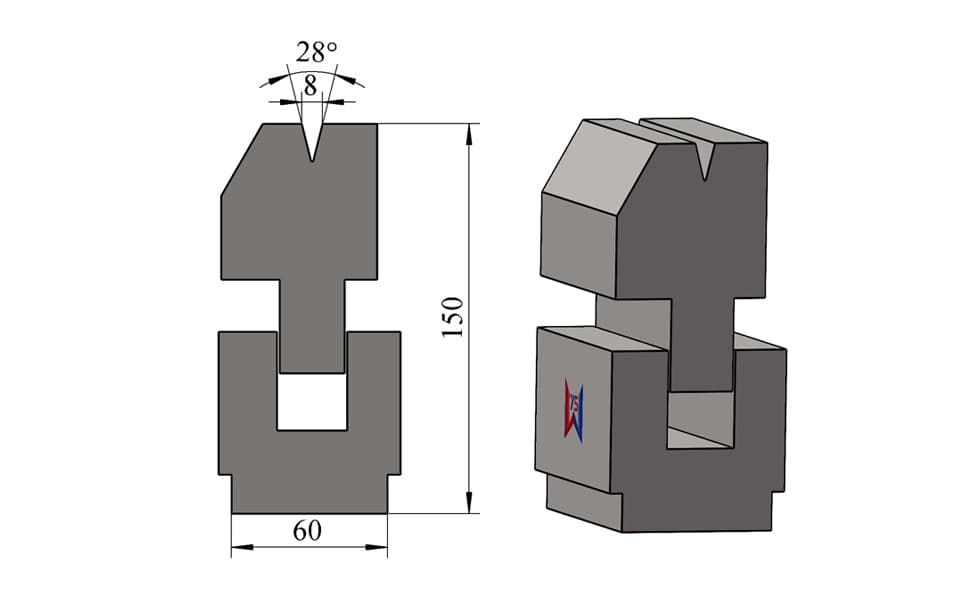
28° V8 Spring-Loaded Hemming Die for 1 mm Sheet Metal
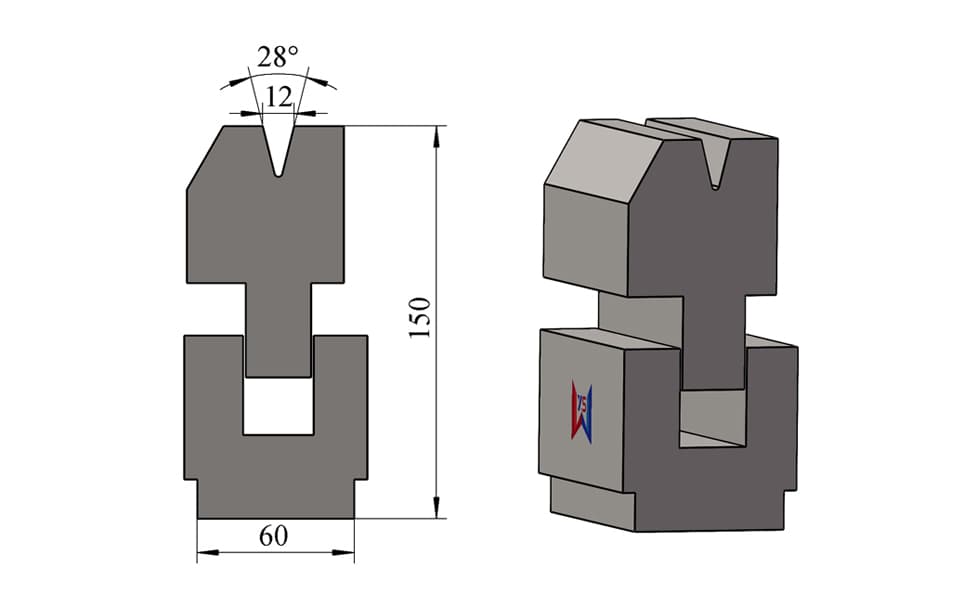
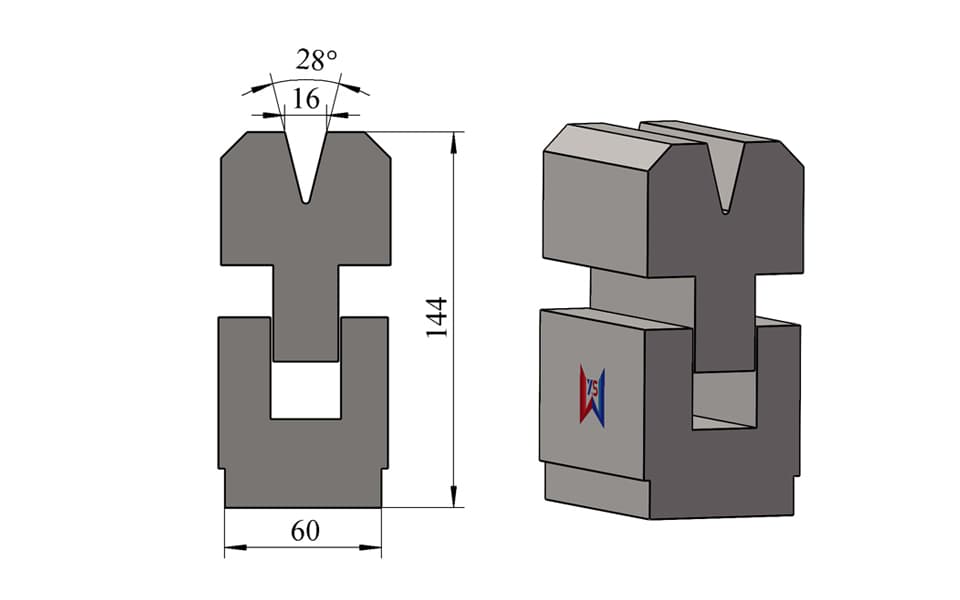
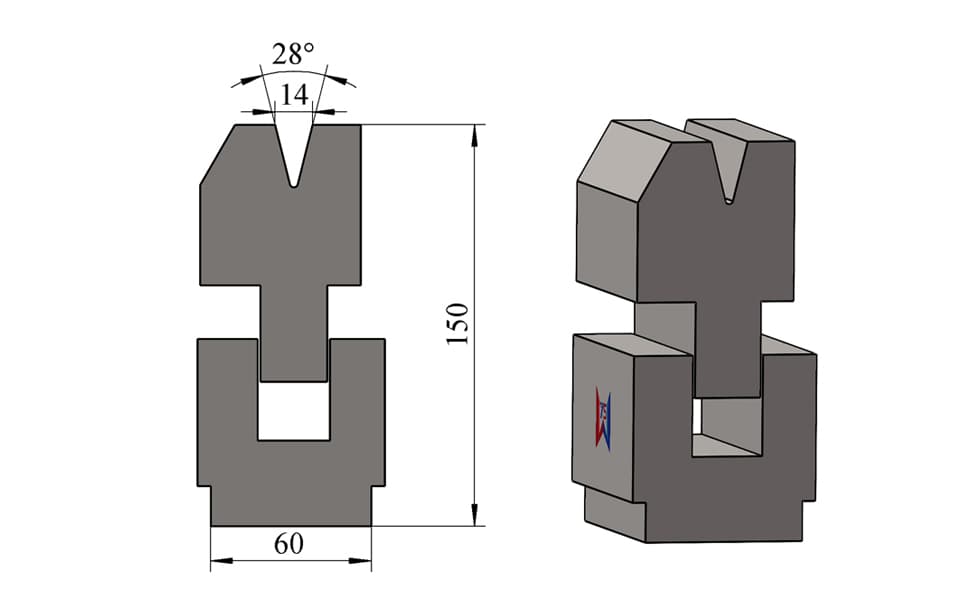
A custom spring-loaded press brake hemming die designed for acute pre-bending and final flattening of thin sheet metal. The tooling shown features a 28° V8 opening, a 60 mm wide base, and a maximum rated load capacity of 100 ton/m. It is typically used for hemming and flattening approximately 1.0 mm sheet metal. Unlike fixed U-groove hemming dies or pneumatic hemming systems, this design uses internal springs to support the movable die section, assist the flattening operation and return the tooling to its open position after each press brake cycle. The tooling dimensions, angle, V-opening, overall height, base width and lower-die mounting interface can all be customized for different press brake systems and bending requirements.
Please add the quotation and send it to us and get in touch with us immediately
- Global service 24/7
- Lowest price for all products
- Best quality with Production Process
- After-Sale Warranty
- Technical Support
Description
28° V8 Spring-Loaded Hemming Die for Thin Sheet Metal
This spring-loaded hemming die is designed for sheet metal applications that require an acute pre-bend followed by a flattening or hemming operation.
The tooling incorporates a spring-assisted moving structure inside the die body.
During the first forming operation, the upper working surface provides a 28° V8 opening for acute pre-bending.
After the initial bend is completed, the workpiece is repositioned for the second operation. The press brake then compresses the spring-supported tooling structure and applies the required force to flatten the pre-bent flange.
When the ram returns, the internal springs push the moving section back to its original position, preparing the tooling for the next cycle.
This two-stage working principle allows the same hemming die assembly to perform both acute bending and final flattening while maintaining a compact tooling arrangement.
Two-Stage Hemming Process
First Operation – 28° Acute Pre-Bending
During the first press brake stroke, the sheet is formed in the 28° V8 opening.
This creates the acute preliminary bend required before the final hemming operation.
Second Operation – Spring-Assisted Flattening
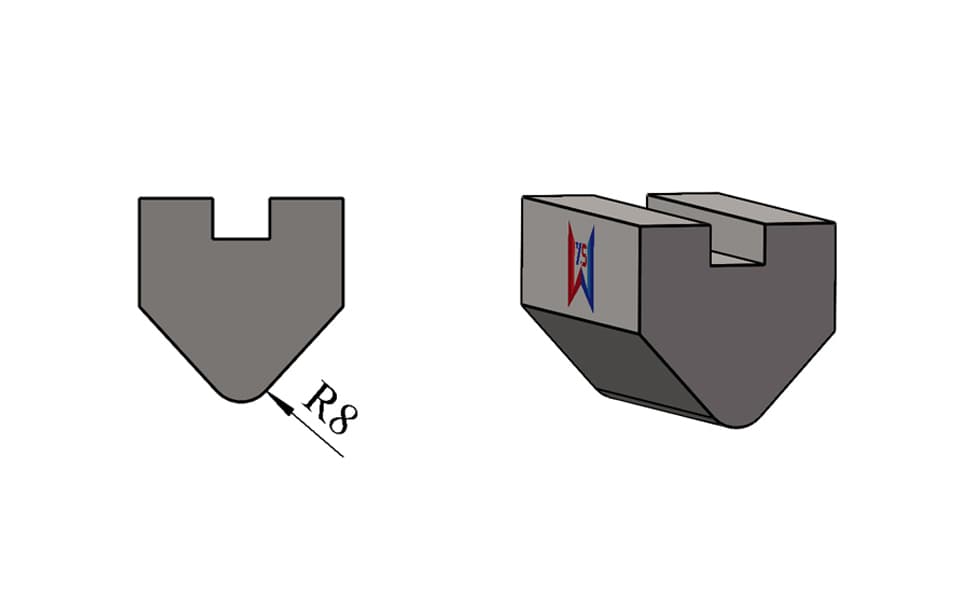
After the acute bend is completed, the workpiece is repositioned into the flattening area of the hemming tool.
As the press brake closes, the movable section compresses against the internal springs and applies pressure to the folded edge.
The flange is then flattened to produce the required hem.
After the press brake ram retracts, the spring force returns the movable section to its open position.
Key Features
Spring-Loaded Hemming Structure
Internal springs support the moving section of the die and automatically return it after each flattening cycle.
28° Acute Bending Angle
The tooling shown uses a 28° acute angle for the first bending operation.
V8 Opening
The illustrated tooling incorporates a V8 opening, suitable for the specified thin-sheet application.
Designed for 1 mm Sheet Metal
The tooling shown is designed primarily for approximately 1.0 mm sheet thickness.
100 ton/m Load Capacity
Maximum rated tooling load:
100 ton/m
60 mm Wide Base
The lower tooling base is 60 mm wide, making this configuration particularly suitable for press brakes with a relatively large lower working table or die support surface.
Two Functions in One Tooling Assembly
The tooling combines acute bending and flattening functions in one spring-loaded hemming system.
Automatic Mechanical Return
The spring mechanism restores the moving tooling section after the press brake ram retracts.
Technical Specifications
| Parameter | Specification |
|---|---|
| Tool Type | Spring-Loaded Hemming Die |
| Tooling Function | Acute Pre-Bending + Flattening |
| Pre-Bending Angle | 28° |
| V Opening | V8 |
| Overall Tooling Height | 150 mm |
| Base Width | 60 mm |
| Designed Sheet Thickness | Approx. 1.0 mm |
| Maximum Rated Load | 100 ton/m |
| Flattening Mechanism | Spring-Loaded |
| Tool Return | Spring-Assisted Automatic Return |
| Pneumatic System | Not required |
| Custom Angles | Available |
| Custom V Openings | Available |
| Custom Heights | Available |
| Custom Base Widths | Available |
| Custom Mounting Interfaces | Available |
Working Principle
The spring-loaded hemming die performs the hemming process in two operations.
First, the sheet is bent to an acute angle using the 28° V8 opening located on the upper portion of the tooling.
The pre-bent workpiece is then repositioned into the flattening area.
During the second press brake stroke, the movable die section is compressed against the internal springs. This movement allows the tooling to apply flattening pressure to the folded sheet metal edge.
After the ram retracts, the springs expand and automatically return the movable section to its original position.
This spring-assisted design provides a practical solution for repeated two-stage hemming operations without requiring a pneumatic control system.
Advantages of Spring-Loaded Hemming Tooling
Integrated Pre-Bending and Flattening
Acute bending and final flattening functions are integrated into the same hemming tool assembly.
Automatic Return
The internal spring system automatically resets the movable section after each forming cycle.
No External Air Supply Required
Unlike pneumatic hemming tools, this design does not require compressed air, cylinders or pneumatic control components.
Compact Tooling Structure
The acute V-opening and flattening function are incorporated into one tooling assembly, helping reduce the need for completely separate tooling stations.
Suitable for Repetitive Production
The automatic mechanical return makes this structure suitable for repetitive sheet metal hemming applications.
Customizable Tool Geometry
The V-opening, acute angle, tooling height and hemming clearance can be designed according to the workpiece.
Typical Applications
This spring-loaded press brake hemming die can be used for sheet metal parts requiring folded or flattened edges, including:
- Electrical enclosures
- Control cabinets
- Cabinet doors
- Sheet metal housings
- Equipment covers
- Stainless steel panels
- Appliance panels
- Sheet metal boxes
- Light-gauge fabricated components
- Industrial equipment panels
- Decorative sheet metal parts
- Custom enclosure fabrication
Suitable Materials
Depending on sheet thickness, material strength, ductility and final hem geometry, spring-loaded hemming tooling can be designed for:
- Mild steel
- Stainless steel
- Galvanized steel
- Aluminum sheet
- Pre-painted sheet metal
- Other sheet metal materials
Actual V-opening, flattening clearance, spring force and required press brake tonnage should be determined according to the material and application.
Large-Table Press Brake Configuration
The tooling shown uses a 60 mm wide lower base.
This relatively wide base configuration is commonly suitable for press brakes with a larger lower worktable or die support area.
However, the 60 mm base is only one available configuration.
For machines with different lower-table structures, the tooling base and mounting interface can be redesigned accordingly.
Custom Spring-Loaded Hemming Tooling
The Tool Shown Is Only One Example
The tooling shown on this page represents one specific spring-loaded hemming solution.
It does not represent the full range of spring hemming dies that we can manufacture.
We can customize:
- Acute bending angle
- V-opening
- Hemming clearance
- Spring force
- Overall tooling height
- Base width
- Upper working geometry
- Lower mounting interface
- Tooling length
- Segmentation
- Load capacity
- Tooling material
- Heat treatment
- Surface treatment
The tooling can be designed according to the customer's part drawing, material thickness and actual press brake configuration.
Compatible Press Brake Tooling Systems
Spring-loaded hemming dies can be manufactured with different mounting interfaces for a wide range of press brake systems.
Available configurations include:
AMADA Type
TRUMPF Type
WILA Type
LVD Type
Bystronic Type
and other press brake tooling systems.
Custom mounting profiles can also be produced according to machine specifications, customer drawings or tooling samples.
Custom Tooling Design Service
For special hemming applications, selecting only a standard catalogue tool may not always provide the required forming result.
Customers can provide:
- Finished part drawings
- Sheet thickness
- Material grade
- Required hem dimensions
- Bend length
- Press brake model
- Tool mounting interface
- Available press brake tonnage
Our engineering team can evaluate the forming process and recommend an appropriate custom press brake hemming solution.
Important design factors include:
- Pre-bending angle
- V-opening
- Sheet thickness
- Material tensile strength
- Material springback
- Hemming clearance
- Spring force
- Final hem geometry
- Tooling load
- Press brake tonnage
- Workpiece interference
Spring-Loaded vs. Other Hemming Tool Structures
| Hemming Tool Type | Pre-Bending | Flattening Method | Return / Operating Mechanism |
|---|---|---|---|
| Spring-Loaded Hemming Die | Acute V-opening | Moving die section compresses the hem | Internal springs |
| U-Groove Hemming Die | Acute bending | Flattening in the same fixed groove | Fixed structure |
| Pneumatic Hemming Tool | Acute bending | Pneumatically assisted flattening | Air cylinder / pneumatic system |
| Separate Flattening Tool | Separate acute bend | Independent flattening operation | Separate tooling station |
Spring-loaded hemming dies are widely recognized in the industry as a two-function solution in which the upper acute opening performs the initial bend and the spring-supported structure enables the subsequent flattening operation. Mate specifically describes this tooling principle and offers different angles and material-thickness ranges for spring-loaded hemming applications.
Related Press Brake Hemming Solutions
Depending on the workpiece and production requirements, we can provide:
- Spring-Loaded Hemming Dies
- U-Groove Hemming Dies
- Pneumatic Hemming Tools
- Flattening Dies
- Acute Angle Punches
- Two-Stage Hemming Tools
- Custom Hemming Punches
- Special Press Brake Forming Tools
The suitable tooling structure should be selected according to material thickness, strength, hem geometry, available tonnage and production requirements.